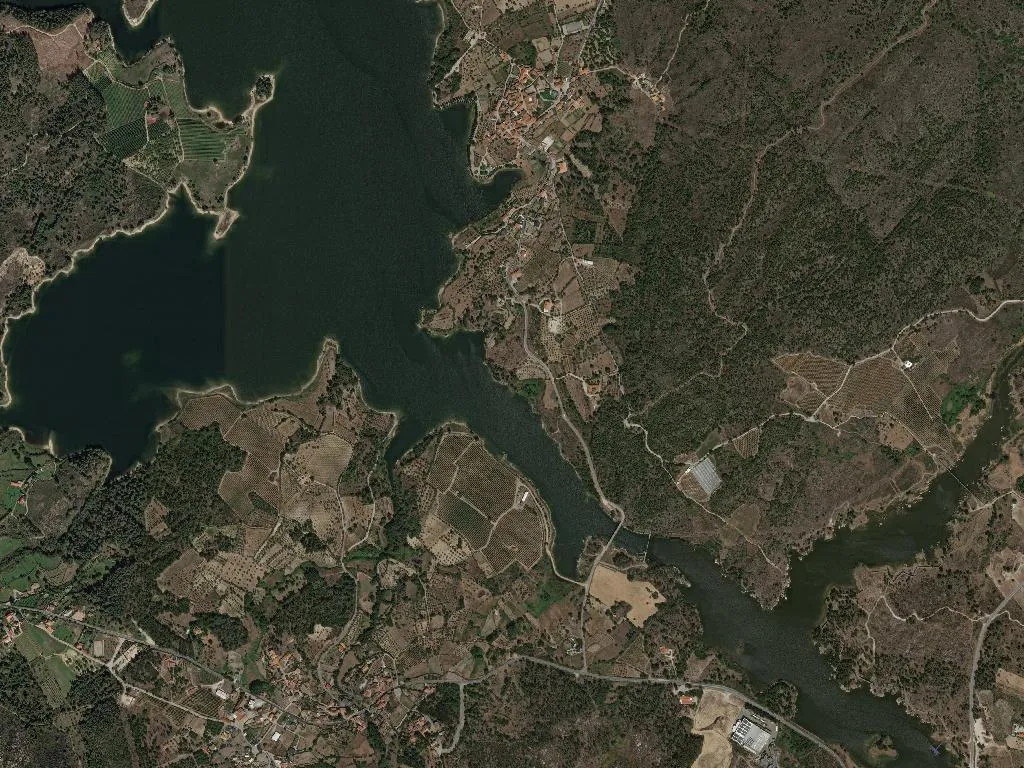
Full article about Penso & Freixinho: Bell at Half-Seven, Wine at Dusk
Bronze clangs, stone cools, feet crush grapes—daily rituals in Penso e Freixinho, Sernancelhe.
Hide article Read full article
The bell that rings at half-seven
The bell of Penso’s church strikes at 07:30 sharp. There is no tower, just a iron rod thwacking a cracked bronze cup; the clang tumbles down the church steps, along Rua da Fonte and is finally swallowed by chestnut scrub. Sunday fog gums the slate roofs like wet cotton wool and Café O Cántaro is still shuttered. Yesterday’s newspaper lies folded outside, waiting for the first customer.
Stone that stores the cold
Inside, the nave smells of beeswax and 200 years of candle smoke. Walls a metre thick hold winter like a battery; forget your jacket and the chill settles in your bones. In the Capela da Lapa the door always groans on the same hinge. Silver eyes glint when the draught stirs: the right one offered in 1953 after a barn wall collapsed without touching the owner; the left in 1978 when Ana’s sight came back – no one believed her until she described Mário’s black dog trotting past the altar. The Franciscan friar says ex-votos multiply after the grape harvest, when the new wine is frothing and promises are remembered.
Grapes underfoot, hands on the rail
By September the air is alcoholic by dawn. In the stone cellars the concrete troughs creak as Mário flings in bunches with a pitchfork. The younger crew kick off their shoes, climb into the lagar and start the tread: left, right, turn the grapes, mind the jack-beam. The chanting is strictly functional – no one wants to be there at two o’clock when the kid goat is already in the bread-oven and Amélia’s sister is arriving with cornbread from Tapada. The wine runs light, tasting of schist, exactly as the grandfather used to say: “If you want something burly, go to the Douro.”
A path that refuses to hurry
The granary trail begins just after the single-arch stone bridge – a warped aluminium sign last repainted in 2004 points the way. Five huts on stilts remain; only the third still has its door. Inside, straw from 2019 cushions a blackbird’s nest. The track drops to the Távora through ash and gorse – nothing spectacular, just ankle-deep pools warmed by the sun. Anyone wanting a river-beach can continue to the Varosa; here there is only stone and hush, overlaid by the thump of water against the wheel-wall of Moinho do Carvalho, the mill Zé’s son tried to restore and abandoned halfway up the slope.
A feast that ends in song
On 16 August the chapel square fills with double-parked cars. Half the procession detours into Café dos Pires where a draught beer still costs 60 cents. After mass, sardines are handed out from a plastic sack with half-kilo loaves – latecomers go without. Dancing starts at ten with Duo Oliveira’s first schottische; by one in the morning the accordion is drunk and the bass is wandering, but no one leaves. Eventually the sky splits open: the Milky Way a spilled pail across the black. Children sleep on grandmothers’ laps. You stay perched on the church wall, listening to the Távora slide below, until the stone’s cold finally sends you home.