Full article about Adorigo: Where Vineyards Cling Above the Douro
Steep schist terraces, Romanesque arches and chestnut smoke scent this 301-soul ridge village.
Hide article Read full article
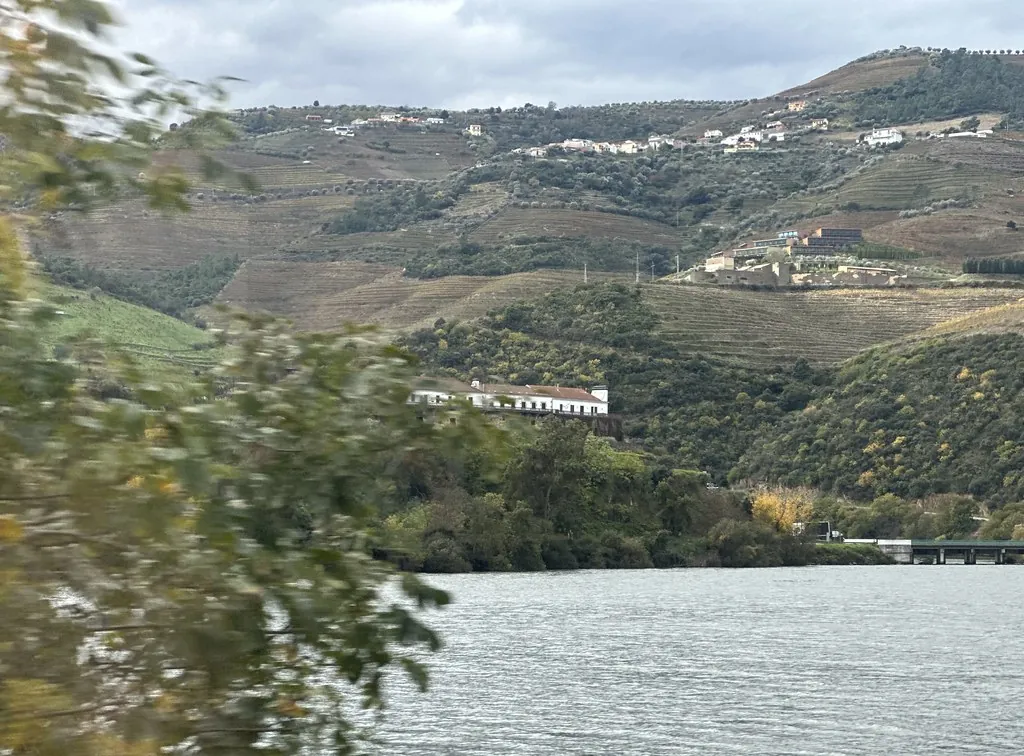
The chapel bell drifts across the valley, ricocheting off schist terraces where seventy-year-old vines grip granite boulders like arthritic fingers. At 477 m above the Douro’s sluggish ribbon, Adorigo occupies a slender ridge just outside the Unesco buffer zone, close enough for legitimacy, far enough for silence. Only 301 residents remain, spread across nine square kilometres of incline so steep that even the village dogs seem to climb diagonally.
Late-afternoon light here behaves like a physical substance. It pools in the abutting terraces, ignites the underside of vine leaves, then slides off the loose-stone walls in slow motion. By dusk the temperature collapses; altitude sucks the heat skywards and river-cool air rushes up to replace it. October dawns arrive muffled in valley fog that smells faintly of fermenting must and wood smoke.
What to see
The 13th-century Igreja de Santa Maria do Sabroso survived the 1755 earthquake with its side portal intact – a perfect Romanesque arch that the parish council now keeps locked except on feast days. Walk 400 m east to the 1742 cruzeiro at the Vilarinho junction and you’ll still detect carmine pigment in the folds of Christ’s robe, a rare survivor of centuries of whitening attempts. Between these two markers the lanes yield fragments of a pre-phylloxera economy: manor gates eroded to the point that coats of arms resemble abstract sculpture, granite box-shrines the size of microwave ovens that once guided muleteers after dark.
What to eat
Look for road signs marked “Soutos da Lapa” and you’ll reach the protected chestnut groves that carpet the ridge above the village. The harvest happens in late October; villagers slit the glossy burrs with penknives, then tumble the nuts into burlap sacks for slow-smoking over oak. Taberna do Correia, Correia family’s weekend-only grill room, roasts them in the same wood oven used for goat. Order a half-kilo, crack the shells yourself, and wash the sweet flour down with a pitcher of house red drawn straight from the barrel.
When to go
The Feast of Santa Maria do Sabroso and Santa Bárbara on 4 December doubles the population for forty-eight hours. Emigrants fly in from Paris and Neuchâtel, long tables appear on the church forecourt, and clay jugs of tinto keep refilling themselves. Oak-fire smoke clings to wool coats; accordions duel until the priest claims the socket for midnight mass. Mid-summer brings São João on the night of 23-24 June: a single bonfire in the yard of the shuttered primary school, children launching waxed paper balloons that drift over the vines like low satellites.
Where to sleep
Adorigo has no hotel, only Casa da Dona Rosa at 23 Rua do Ferrador – two spare rooms with shared bathroom at €30 a night including coffee and half a loaf of chestnut bread. The real amenity is acoustic: total silence broken only by tawny owls and, at 06:00, the bell of Santa Maria. If you need Wi-Fi or a pool, drive 12 km to Tabuaço’s municipal campground where river-level temperatures allow vines to ripen two weeks earlier.
How to get here
From Viseu take the N226 east to Moimenta da Beira, switch to the N212 north to Tabuaço, then peel off onto the EN323 towards Adorigo. The final eight kilometres climb through cork oak and olive before the road flattens onto the ridge. No bus has ever bothered. Park on the beaten-earth square beside the church; leave the handbrake engaged – the camber is steeper than it looks.
Dusk settles; the last sun threads the terraces like copper wire. Somewhere below, a wood fire starts and the bell, faithful, calls the day to order.