Full article about Chavães: chestnuts, stone terraces & 299 souls at 889 m
Tabuaço’s ridge-top hamlet breathes roasted-chestnut air, Romanesque keys and 13th-century ledgers.
Hide article Read full article
Roasted-chestnut air at 889 m
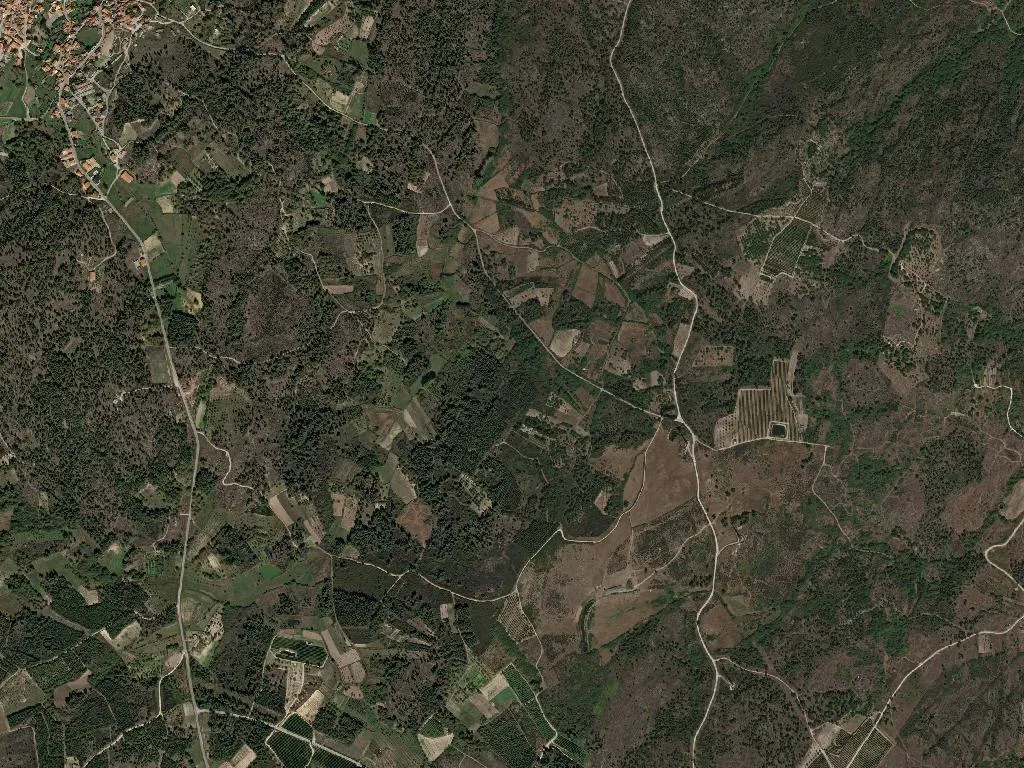
Winter arrives early on the ridge. One smells the chestnuts before the smoke curls into view, a perfume of burnt sugar and forest floor that drifts through Chavães’ single street. At 889 m the wind has teeth; locals duck into the two tascas where wine is served steaming and conversation is conducted at full volume. The village census now stands at 299 – another two gone since last Christmas – yet every resident can still walk you through the 200 ha of soutos, the ancient chestnut groves that earn the protected DOP label “Castanha dos Soutos da Lapa”.
Stone terraces and vines above the Douro
The Romanesque church of Santa Maria do Sabroso locks its doors at six. The key hangs in Mário’s kitchen fifty metres away; he’ll open up for €2, “for Sunday’s offertory,” he shrugs. Beyond the porch the valley drops away in micro-terraces so narrow the tractor has never been invented here; on gradients above 45° the hoe is still wielded from the back of a sure-footed Miranda donkey. Schist walls laid before Columbus grip the soil like crampons; without them the first November deluge would shave the mountain clean.
What time forgot to erase
There is no castle, no pillory, not even a bus stop. Instead, halfway to Tabuaço, the whitewashed chapel of São Sebastião stores gilded saints from 1723 beneath a duvet of dust. In the parish chest the baptismal ledger opens in 1689 – worm has nibbled the margins into lace. The place-name first surfaces in a 1220 royal charter, though philologists still argue whether “Chavães” refers to keys (chaves) or to summer pastures (chãos).
Feasts that re-assemble the village
Santa Bárbara, 4 December: a canvas marquee is erected on the churchyard because it always rains and because the thermometer will not crawl above 4 °C. A folk troupe from Covas do Douro strikes up vira and chula; caldo verde is ladled into plastic bowls, each portion crowned with a dice of smoked belly pork. São João in June draws the diaspora back: sardines at €8 a plate, a bonfire in the Cruzeiro square, children blackening fish until the skin crackles like cellophane.
At table
Chestnuts appear at every course – folded into baked rice, puréed into pudding, standing in for potato in the Sunday cozido. At O Céu – open Saturday and Sunday only – wild boar is braised with chestnuts and juniper; bookings essential (tel. +351 254 789 123). The house red, Quinta da Veiga three kilometres down the road, is decanted straight from the barrel for €4; vegetarians should pack a sandwich.
Walking
The Soutos Trail, 7 km, begins by the cemetery gate and climbs to 950 m. Carry water – there is no café, no fountain, no mobile signal. Yellow-and-white waymarks fade in the sun; on a clear afternoon the Douro glints all the way to Pocinho. Farm dogs announce you like town criers; they are, locals insist, all bark.
By dusk the only bar shutters at eight. A final bica costs 60 cêntimos; afterwards the village switches on its lights one cautious window at a time. There are no street lamps – pack a torch for the walk back to the car and the winding municipal road that drops toward Tabuaço.