Full article about Paradela-Granjinha: Douro air at 654 m, 99 souls
Granite terraces, chestnut DOP groves and mineral wine above the Távora
Hide article Read full article
A silence you can feel
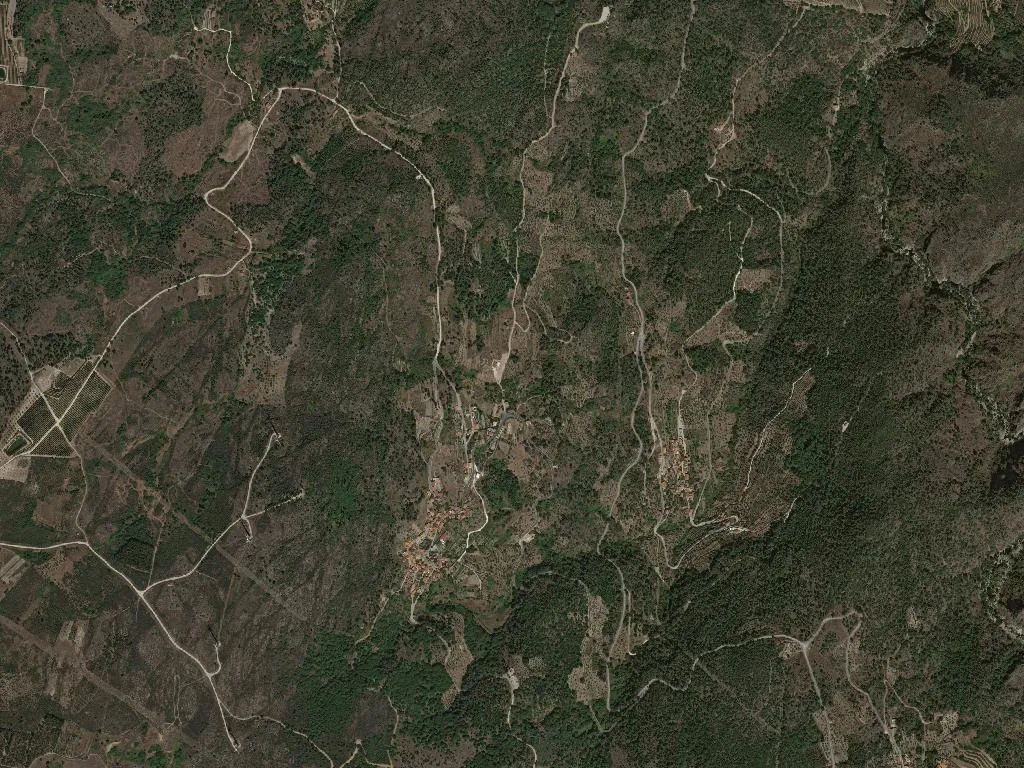
The air at 654 m is different—thin, bright, sharpened by the Douro’s upper reaches. In Paradela and Granjinha, ninety-nine souls occupy a combined territory the size of a London borough, yet the only rush-hour is when nine children spill out of the parish bus at 16:00. Granite outcrops push through the terraces like knuckles through skin; schist walls shoulder the earth so that vines can pretend the slope is flat. The resulting wine is not the velvet Port of downstream quintas but something sterner: high-acid, tongue-scrapingly mineral, bottled by farmers whose labels still read simply “Paradela”.
Two hamlets, one lung
A 2013 administrative merger stitched on paper what topography had long since decided. Paradela sits higher, its granite houses arranged like stadium seating to watch the river; Granjinha clings three kilometres below, where the Távora narrows and chestnut trees fatten. Between them, 43 pensioners remember when these terraces heaved with pickers during the vindima; now the only queue is for António Ribeiro’s 4×4 on market day. The retired GNR officer doubles as unpaid taxi, ambulance and custodian of São Pedro das Águias, a twelfth-century Cistercian outpost that receives 296 curious visitors a year—most of whom arrive breathless from the 22-percent-gradient lane that doubles as the village high street.
Brown gold of the soutos
Interlaced with the vines are 40-odd chestnut groves whose fruit carries DOP status: Soutos da Lapa, glossy-shelled, sweet enough to eat raw but better roasted over vine-prunings. Each tree is known by the fracture pattern of its trunk; every October the sound of spiked husks hitting shale is the parish’s unofficial percussion section. What isn’t sold to Viseu middle-men is distilled into aguardente, the clear firewater that appears unlabelled on every dinner table after the soup plates are cleared.
Calendar of the vine
Festivity is brief but loud. On the first weekend of August, Santa Maria do Sabroso and Santa Bárbara share a procession that starts in Paradela’s single-aisle church and ends under the walnut trees with paper cups of red wine drawn from demijohns. Three weeks later, São João repeats the formula—bonfires whose smoke blackens freshly limed walls, accordion riffs bouncing across the valley until the fuel runs out. The remaining 360 days obey the vineyard: January pruning, spring desbudding, September’s hand-pick, November’s quiet.
Vertical geometry
There are no sign-posted trails, just a lattice of cobbled paths that contour the 900-hectare micro-basin. Walk and you will gain, then lose, 200 m of altitude in twenty minutes. Each switchback reveals another pleat of schist and sky; the river below thins to a silver filament, the opposite slope a mirror of terraces. Night erases even that. Without street lighting—or streets—the Milky Way feels close enough to snag on the telegraph wire. The temperature drops like a stone; only the crackle of newly lit oak reassures you the village is still there, 99 heartbeats wrapped in granite, waiting for the sun to climb back up the terraces.