Full article about Granite, chestnuts & silence in Pinheiros-Vale de Figueira
239 souls, pre-phylloxera vines and hand-stacked walls above the Douro
Hide article Read full article
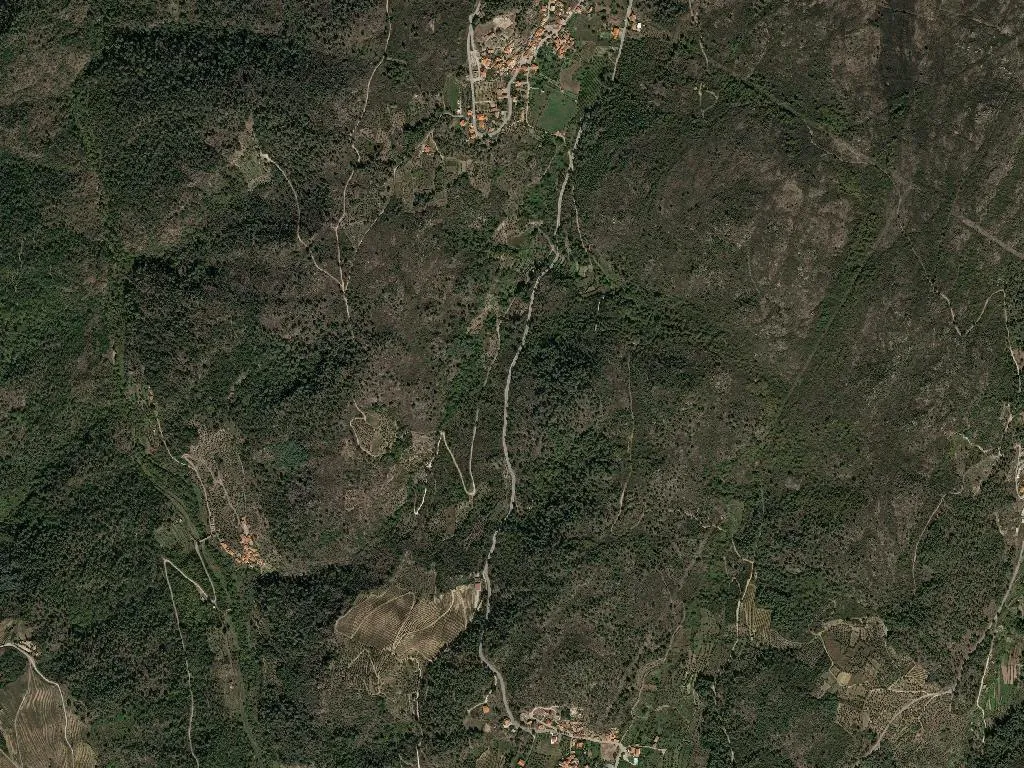
The afternoon granite still holds the day’s heat; it rasps against your palms as you steady yourself on a terrace wall. Air carries the scent of crumbling schist and sap bleeding from cut vine canes. At 578 m the Douro River is only a rumoured stripe below; what matters here are the hand-stacked walls corseting every slope, each one propping up pre-phylloxera vines and infant chestnut groves. Pinheiros and Vale de Figueira were bureaucratically stitched together in 2013, but the census needle has not moved: 239 souls, give or take an émigré.
Grapes, chestnuts, and the in-between
Stone lagares inside the cottages yield both Port and unfortified Douro DOC; the soutos—chestnut groves granted DOP status—deliver mahogany-coloured nuts that appear in everything from soup to aguardiente. When the last bunches of Touriga Nacional are ferried down the slopes in early October, the village hearth-fires are re-lit for magusto: burnt-shell aroma drifts uphill, braids with the sweet reek of fermenting must. Santa Eufémia’s church bell marks time; knock on the adjoining door and Sr António will pour you a glass instead of giving directions. Summer brings the emigrants back from France for Santa Maria do Sabroso; in December the log pile for Santa Bárbara is already three rows high.
Walking without way-marks
Paths are simply the gaps between dry-stone walls. No fingerposts, no GPS signal in the steepest folds. Pack water: Pinheiros’ café unbolts at seven and shutters by dusk; Vale de Figueira’s only unlocks on Saturday. There is one holiday rental—no hotel, no taxi rank, no streetlights. You navigate by the sound of your own footfall echoing off schist, and by the knowledge that every terrace was levered into place two centuries before you arrived.
What stays
The 2021 tally: 78 aged over 65, 21 children under ten. Hollow houses keep their doors, so the clack of a latch can travel right across the valley. Yet pruning knives still flash in January; someone still treads grapes in open stone troughs; the church bell still divides the day into three. When the sun drops behind the Marão ridge the temperature plummets, dogs bark once, and the entire parish seems to exhale and settle into its own shadow.