Full article about Sendim: Silence, Schist & Smoky Tinto at 621 m
Visit Sendim in Tabuaço, Viseu: hear gates creak, taste DOP chestnuts, sip granite-edged Douro reds amid UNESCO terraces.
Hide article Read full article
Earth and incense at 621 metres
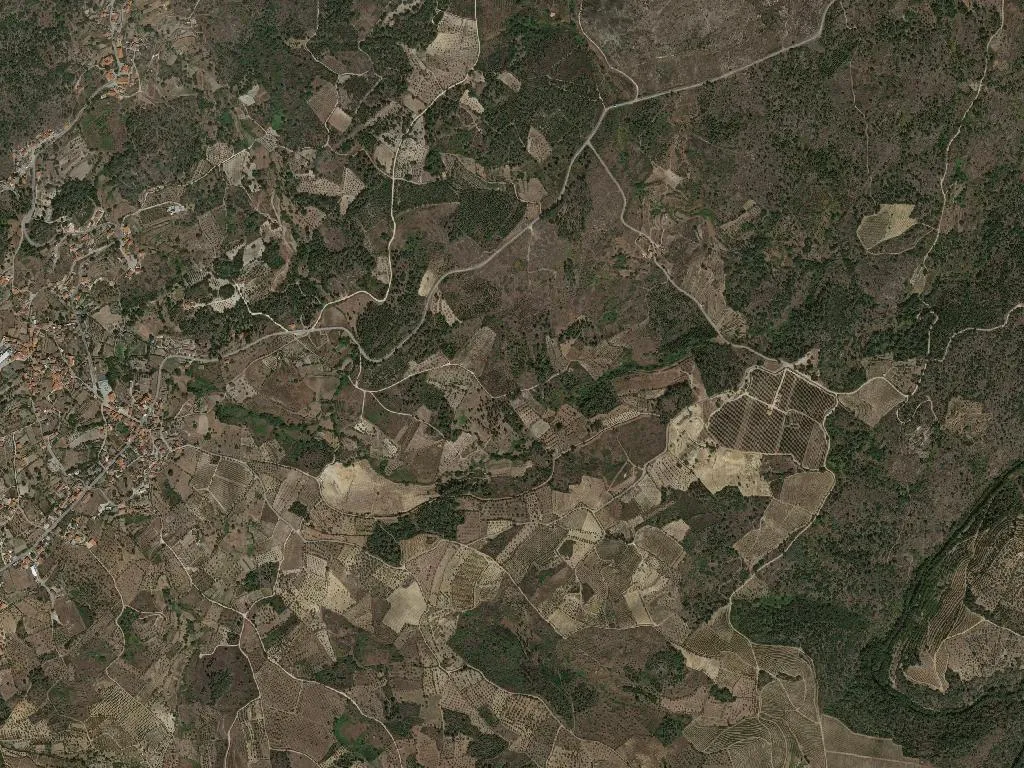
The scent of wet schist rises from the terraces while morning still wavers between mist and sun. At 621 m above the Douro, Sendim’s only soundtrack is the groan of a wooden gate, a dog barking two lanes away, the clink of a hoe striking stone. Vineyards drop away in stern black-stair steps until the view dissolves into the UNESCO-listed Alto Douro Vinhateiro, the planet’s oldest demarcated wine region.
Stone and quiet faith
Santa Maria do Sabroso, the parish church, stands squarely in the village centre with the reticence common to Trás-os-Montes building. No gilded altarpieces, no story-tiled walls—just whitewash, a single bell that keeps its own time, and granite crosses set where footpaths converge. Architecture here accretes like moss: a niche for St Anthony round a bend, a wayside fountain chiselled in 1703, tiny chapels locked but candle-scented. Sendim does not perform for visitors; it yields detail by detail, the longer you linger.
Sweet chestnuts among the vines
Seek out the soutos—chestnut groves—on north-facing slopes where the air smells of moss and humus. Castanha dos Soutos da Lapa carries Portugal’s DOP seal, one of the very few products north of the Douro to do so. The trees share the schist-walled terraces with olives warped by decades of wind and with vines whose roots have worked into every fissure. Continental-Mediterranean climate swings—freezing winter nights, 40 °C summer noons—shock the grapes into intensity and give Douro reds their closed-fist concentration.
Recipes that refuse to date
Inside low-ceilinged kitchens, feijoada transmontana stews for hours over vine-prunings; alheira sausages smoke in rooftop sheds; Sunday’s bacalhau à Brás is whisked just before the 13:00 bell. Of 675 residents, 288 are over 65; only 40 are under 15, so every meal is an act of memory rather than invention. Wine poured is always local—tinto with the grit and generosity of the terraces that produced it.
Calendar days when the village exhales
Join the Festa de Santa Maria do Sabroso (mid-August) or the Festa de São João (24 June) and you fall into the parish rhythm. Processions trundle along dirt lanes, concertinas echo off stone, grilled sardines appear from makeshift braziers. There are no wristbands or set times—just benches dragged into the square, jugs of mateus-style red, and stories traded until the moon clears the ridge. Walk the narrow loops at dusk and you tread generations of dry-stone graft: each terrace a hand-built bulwark against gravity and forgetting.
Afternoon slides west; oblique light ignites the schist, turns vine leaves translucent, stretches shadows the length of walls. Somewhere below, the Douro holds the sky’s reflection without hurry. What lingers is the smell—warm slate, woodsmoke, must from the last of the grapes—the precise perfume of a place that is not viewed, but worked.