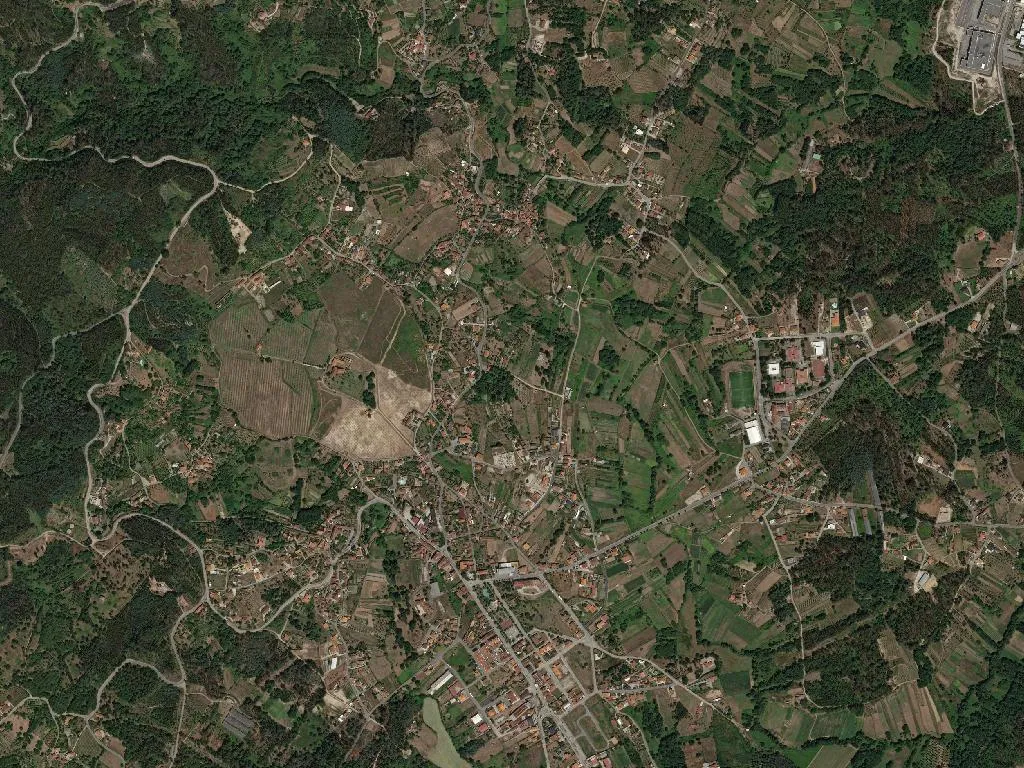
Full article about Campo de Besteiros
Follow the scent of split oranges and oak fire to a Tondela village stitched with vines and stories
Hide article Read full article
The scent arrives before the village does
Citrus drifts uphill on schist terraces, braids with the tang of oak smoke curling from chimneys, settles over orchards where fruit still clings to December branches. In Campo de Besteiros the landscape introduces itself by smell: damp earth, split orange skin, the ghost of curing blood-sausage. The Besteiros stream slips between vineyards; silence is clipped only by the chapel bell or the low telemetry of a Serra da Estrela sheepdog.
Field of beasts, land of pasture
The name is a Latin relic—campus bestiarum—a reminder that these slopes once served as communal grazing for half a dozen hill villages. Vine has been planted here since the thirteenth century, surviving the 1514 royal charter, phylloxera, the steamship to Rio, the night train to Paris. The parish unrolls across 792 ha, tilting from 250 m to 400 m on a geological hinge between the Dão plateau and the first ridges of the Caramulo. Terraces stitch the hillsides, centenarian olives occupy the sunniest outcrops; in the deeper hollows orange trees still grow the thin-skinned variety that, until the 1950s, was loaded at Santa Comba Dão station, rattled to the Douro, then shipped to Covent Garden.
São Sebastião and the altarpiece that outran the flames
The eighteenth-century chapel stands alone at the ridge-top hamlet of Cimo da Igreja, the only building in the parish listed for national protection. Inside, gilded carving catches late-afternoon light; 1723 tiles narrate the life of the saint in cobalt. When fire gutted the high altar in 1936, the carved image of Sebastião was found unscathed—proof, the older residents say, that arrows can’t kill a protector. On 20 January, after a dawn procession accompanied by accordion-driven vira dancers, horses, donkeys and house-dogs receive a sprinkle of holy water outside the chapel door.
Lamb, Jaen and the pruning ritual
Cooking here obeys altitude and aspect. Leg-of-lamb stew is scented with Serra da Estrela mint and sharpened with Dão white; kid is braised in black clay pots once produced in Molelos, twenty minutes south. Winter calls for papas de milho—coarse maize porridge with kale and smoked belly—while rice blood-sausage smokes for three days over oak, and buckwheat gives the local farinheira its darker note. Cheese is still coagulated with cardoon thistle in slate dairies; dessert is an orange cake made only with the thin-skinned laranja de Besteiros. All of it washed down with Jaen-dominant reds that wear their granite minerality like a knife sheath. During the January serração, neighbours move from row to row pruning each other’s vines; dusk brings caldo verde, corn broa and the year’s first tank sample.
Tracks, orchards and the lizard press
An 8 km loop, signposted by the town hall in 2018, climbs from the chapel to the Cimo da Serra viewpoint where, on clear days, the Dão valley unrolls westward and the Caramulo massif floats like a battleship. The path threads olive groves planted in the reign of Maria II, peach orchards, whin and heather. At Quinta do Vale da Laranjeira you can pick and taste on the spot—book via Facebook two days ahead. Saturday mornings the Queijaria da Vinha runs Serra da Estrela DOP tastings in a converted hayloft. Restaurant “O Lagar” serves the lamb stew with a magnum of parish Jaen beside a 1754 stone press once powered by the stream; water still rushes through the channel cut for the wooden screw.
Late light settles on the terraces like set honey. Granite of the medieval bridge stores the day’s heat; the stream keeps its small applause going; somewhere a blackbird rehearses tomorrow’s sermon. What lingers is not the view but weight: an orange in the palm, zest breaking under the thumbnail, oil varnish bright on the fingers.