Full article about Woodsmoke & Wine: Castelões’ Granite Dawn
Chouriços curing, Touriga vines rooting deep, snow-capped Serra on the horizon
Hide article Read full article
The scent arrives before the village does
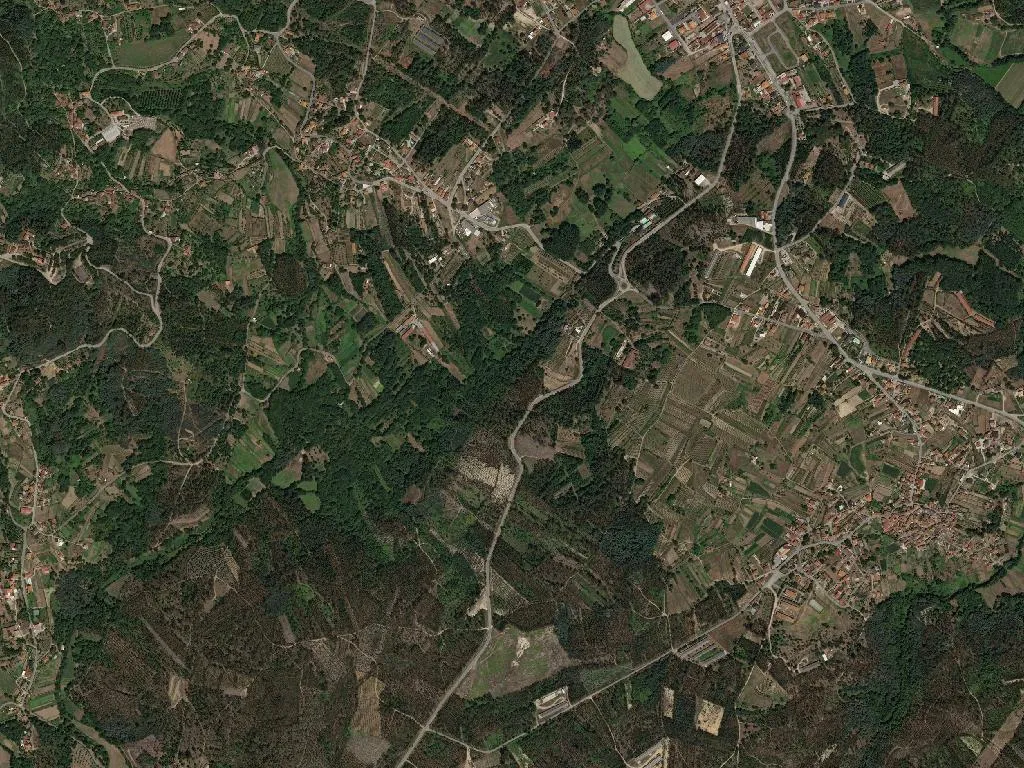
Woodsmoke drifts up the Dão valley at dawn, thin grey threads unravelling in air so still they seem almost architectural. Follow the scent and you reach Castelões, 269 m above sea level, population 1,414, density 83 souls per km². Behind the first row of terraced cottages, zinc-clad smokehouses exhale a second breath of alder and bay; inside, chouriços and paleta hang like burgundy-coloured metronomes, keeping slow time. Granite doorsteps are still wet with night dew, and the only soundtrack is the scrape of a metal gate and, somewhere further off, a dog negotiating the echo of its own bark.
How the land earns its living
The parish unrolls across 17 km² of granite wrinkles planted mainly to Touriga Nacional and Tinta Roriz. Vine roots prize apart schist seams, forcing depth in exchange for sunlight; the resulting wines age in 225-litre Portuguese oak, the same cooperage once used for port further east. Between the rows, small meadows are cut twice a year for hay that will feed the region’s Arouquesa cattle—stocky, chestnut-coloured animals whose DOC-status beef ends its life roasting in a wood-fired stone oven, scented with nothing more than Atlantic sea salt and a branch of wild marjoram. On clear winter mornings the snowline of the Serra da Estrela floats 80 km away, a white horizon that reminds you altitude here is modest but sufficient to trap Atlantic breezes and preserve acidity in both grapes and tempers.
What the table remembers
Friday is bakery day: the wood oven behind the parish council ignites at 4 a.m.; by 9 a.m. a queue of string bags has formed for pão de mistura, its crust blistered like burnt sugar. Spread it with Serra da Estrela DOP cheese so ripe it must be spooned, or fold in a spoonful of requeijão, the ricotta-like whey cheese that shepherds set in wicker baskets overnight. Lamb arrives as borrego estonado—shoulder braised in Dão red, garlic and laurel until the meat slides from the bone at the touch of a fork. The wine list is short: local co-operatives such as Quinta dos Roques or Casa de Santar pour juicy Jaen and austere Alfrocheiro by the carafe; no vintage worship, just the honest conviction that what grows together, goes together.
Stone that outlives language
São Pedro’s church, built 1247, stands at the junction of two lanes too narrow for anything wider than a Citroën van. Its Manueline portal—locals still call it “the new door”—frames a limestone tympanum worn satin-smooth by 500 years of fingertips. Walk on and you read the settlement like sediment: 17th-century marriage stones carved with interlaced initials; 19th-century façades washed the colour of fresh buttermilk; granite milestones that once told travellers how far they had to haul their wine barrels to the river. Even the irrigation tanks beside vegetable plots are lidos of carved stone, the rope grooves as deep and polished as the font in the narthex.
The arithmetic of fading
More than a third of Castelões’ residents are over 65; only 121 children under 14 remain. The café facing the war memorial opens at seven for the commute to Tondela’s industrial estate, then shuts at two, its metal grille padlocked before the afternoon school run. Vegetable gardens are clipped with the precision of topiary by widows in house slippers; benches outside the pharmacy host a daily parliament of cardigans and gossip. Three granite cottages have been quietly converted into guest accommodation—wood-burning stoves, wool throws, starlight you can actually navigate by. Luxury here is temporal: a dawn without notification pings, a night whose only illumination is the moon bouncing off schist.
Dusk paints the vineyards copper and the tracks home glow like fired terracotta. No one suggests you “discover” Castelões; the place declines the concept. Instead it offers equilibrium: bread when the oven is lit, wine when the barrel is broached, silence you can weigh in your hand. You leave not having “done” anything, which, for once, feels like the most complete itinerary of all.