Full article about Ferreirós do Dão: Stew-Smoked Hamlet Above the River
Where granite lanes echo with clogs and wood-smoke, winter plates groan with chanfana and Arouquesa
Hide article Read full article
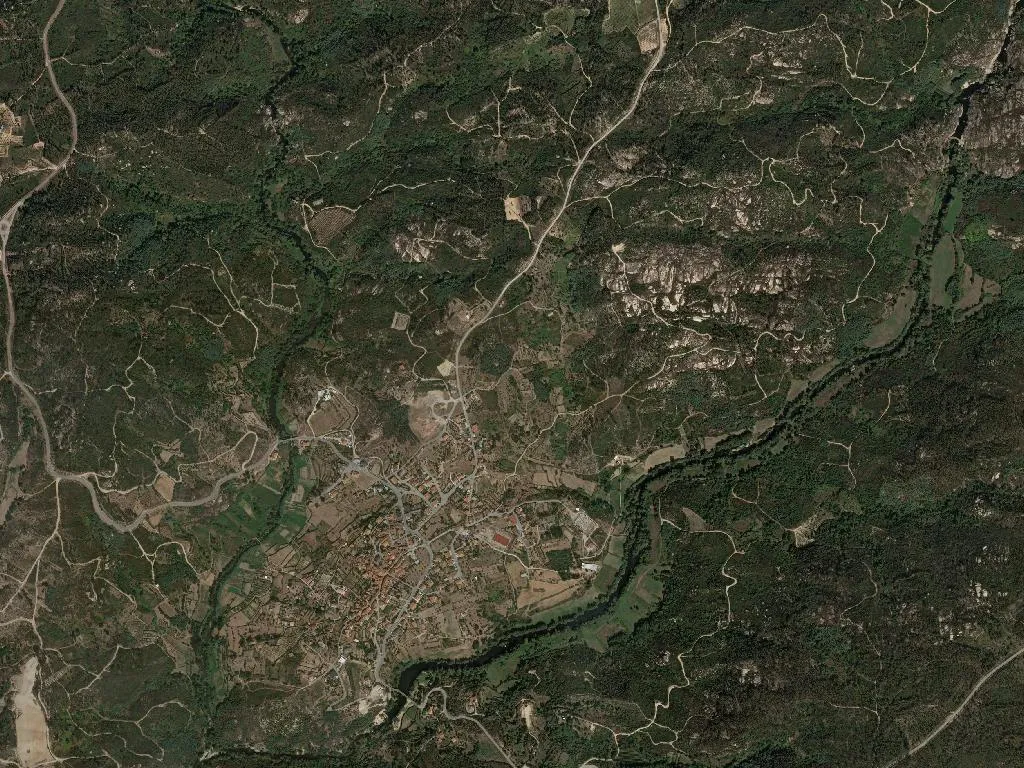
Smoke unspools from chimneys in slow vertical threads, stitching the grey January sky of Beira Alta to the slate roofs below. At 207 m above sea-level the night’s rain still clings to the soil of the kitchen gardens; the only sounds are a collie’s half-hearted bark and the scuff of rubber boots on granite cobbles. Ferreirós do Dão wakes as if it has never heard of haste—three-hundred-and-fifty-five inhabitants spread across eight square kilometres of valley and incline, forty souls to the kilometre, the demographic equivalent of a held breath.
A table that forgets nothing
Inside houses where the pig is still killed each December, rojões fry in lard until the edges bronze, then are tipped onto plates punched with dimpled potatoes and a thread of vinegar sharp enough to slit the richness. Chanfana—kid goat braised all morning in red wine, bay and a clay pot—arrives when the thermometer stalls below ten degrees, its sauce thick enough to coat the spoon like velvet. On Sundays the stew is reheated, a loaf of broa still warm from the wood oven used to mop the pan.
In the smokehouse, paprika-dark chouriço, farinheira and blood morcela hang like punctuation marks in a story passed on by muscle memory rather than cookbooks. Carne Arouquesa (PDO) and Serra da Estrela lamb travel only a few postcodes from pasture to plate, while the eponymous cheese appears at every meal—first in dense, oily slices, later melted over toast and finally sweetened with heather honey for an impromptu pudding.
Schist in the glass
Vines have clawed into the granite and schist here since the Dão was demarcated in 1908. Touriga Nacional, the region’s sovereign red, lands on the table with enough tannic spine to shoulder the winter stews; the quieter whites, Encruzado and Malvasia Fina, are best poured at cellar-cool when summer heat ricochets off the river. Locals still debate whether the Roman bridge 2 km downstream was built for legions or for grape carts; either way, its single arch has watched the harvest come and go for eighteen centuries.
When the plates are finally empty, queijadas crumble like fallen masonry, golden ovos moles catch the lamplight, and the last slices of pão-de-ló vanish. A glass of late-harvest Dão or a bone-dry Bairrada espumante is lifted without ceremony—an unspoken contract that eating here is both act of remembrance and quiet defiance.
Dusk settles; windows glow one by one, yellow pixels scattered across the hillside. Oak-wood smoke lifts again, carrying the scent of winter and the stubborn weight of a parish that refuses to be counted out.