Full article about Lajeosa do Dão: Where Vineyards Whisper in Granite
Stone cottages, river-mist and Touriga Nacional vines at 312 m above the Dão
Hide article Read full article
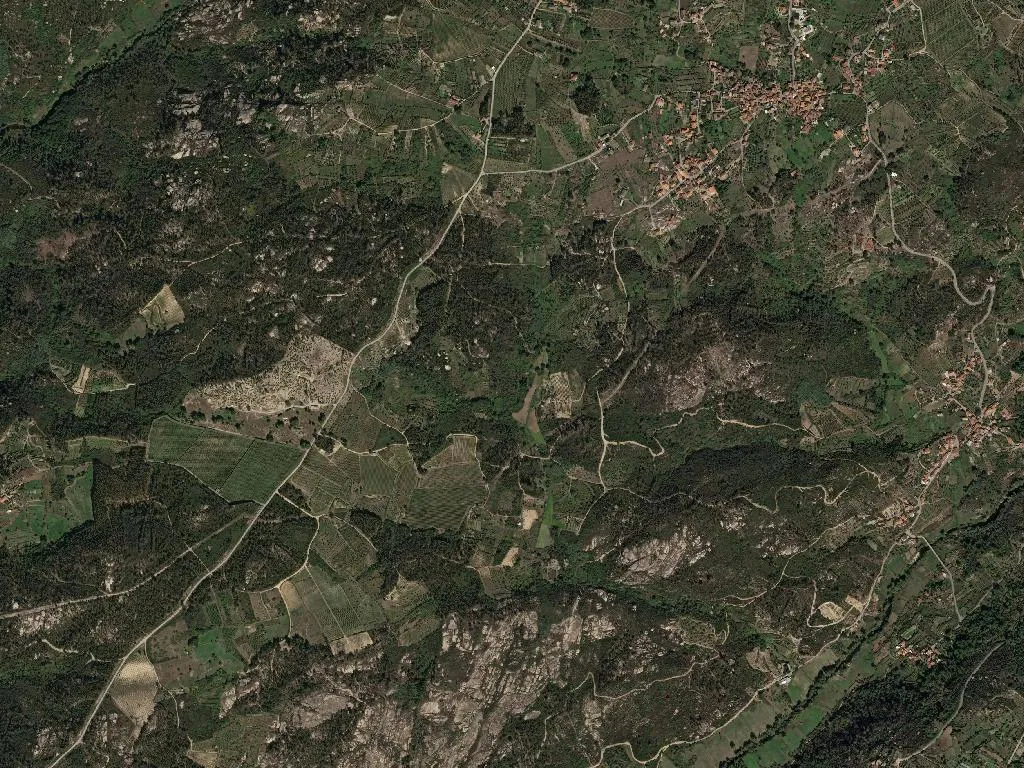
The road climbs and exhales, then drops again, threading ruler-straight vineyards that overlook the river Dão far below. Moisture rises from the valley like breath on glass, softening the granite that pokes through the schist at 312 m. Light here is neither the glare of the high plateau nor the bruised gloom of the Serra; it is a slow, honeyed wash that rounds the edges of lime-washed stone, as if the village agreed long ago that nothing need hurry.
Vineyard time
Twenty-four square kilometres where the calendar is a vine. Locals pronounce Touriga Nacional, Tinta Roriz and Alfrocheiro the way other people check the weather, eyes still flicking skyward. Granite bedrock acts like a discreet friend: warming through the day, releasing heat after dusk without fuss. Locals call it “conversa”, not chemistry – a conversation learned by living alongside the same rows for generations.
Talking stone
The state lists only two formal monuments; the real architecture is in the carved doorways, the north-facing walls thick enough to blunt Atlantic winds, the dark-timber haylofts still hoarding hoes and chestnut poles last used by grandmothers. There are no manor houses with silver bell-pulls; honesty is the local style. Single-storey cottages keep an annexe where the winter pig is dispatched; boundary walls are for leaning on when July sun drums the cobbles.
The medieval lanes are barely shoulder-wide, their uneven granite sets pitching the uninitiated onto the stone. On foggy mornings door-sills blacken and silence is so complete you can hear a neighbour grinding coffee two rooms away. With 1,537 residents, the electoral roll is short enough to memorise – and still leave head-space for every family saga.
What you eat (and drink)
The menu is dictated by topography. Serra cheese arrives either spoonably ripe or stubborn enough to bend a knife blade. Arouquesa beef, named after the neighbouring municipality, tastes better here – perhaps because the pace is slower, perhaps because the glass alongside is a Dão white poured from a quinta you can see from the table.
In the five places offering beds – spare rooms opened by farmers, not hotels with concierge desks – meals are served when the cook is ready, not when the clock says. A density of 62 people per km² leaves room to hear Zé’s tractor gear-change across the valley and still count the day’s traffic without removing your shoes.
Village arithmetic
One hundred and thirty-two children under fourteen, 587 residents over sixty-five. The numbers tell an old story: the young leave, the old stay. Yet the vines are still pruned by hand, lemon trees still overwinter in concrete pots outside vegetable plots, and bread still goes into the wood oven when the parish saints demand it. Dusk washes the terraces copper, and the Serra da Estrela massif rises in the distance, reminding you that other places exist – but none bounded by granite and grape quite like this.