Full article about Lobão da Beira: Footfalls in Schist & Chestnut Smoke
Signed stone crosses, azulejo-lit church and August concertina suppers above the Dão.
Hide article Read full article
The echo of your own footfall ricochets off schist walls, chasing you down a lane no wider than a cart-track. Chestnut-wood smoke drifts from a chimney, braiding with the smell of rain-soaked soil that still remembers yesterday’s storm. Lobão da Beira – 263 m above sea-level, 1,002 souls, no traffic lights – wakes at the pace of hens scratching in back yards and the single bell of São Julião tolling seven slow strokes.
Stone, saint and signature
The parish church sits square in the middle of the village, a plain Beirão rectangle dressed with two Baroque altarpieces and an 18th-century azulejo panel that throws milky blue light across the nave. Outside, a granite crucifix dated 1786 carries a rarity in these parts: the mason’s name – “António Luís, pedreiro” – chiselled into the base. While most village crosses are anonymous, this one is a signed portrait of Beira stone-craft, protected since 1982 as a building of public interest.
Smaller cross-shafts still mark the medieval drift-way that once linked Viseu to the Serra da Estrela. Two granite wash-fountains – Fonte da Vila and Fonte do Vale – spill cold water over lips polished by centuries of laundry. On the threshing terraces above, dry-stone schist walls stand without mortar, built from necessity and now a fingerprint of the region.
A microphone in the chicken-run
Lobão’s calendar contains only two inked-in dates. On the first Sunday of August the parish stages São Julião’s romaria: an open-air mass, a concertina-driven village supper, caldo verde served in clay bowls. No jousting knights or tour-bus phalanxes – just call-and-response singing and white Dao wine poured from brown jugs. In November the magusto turns the square into a chestnut roast and an impromptu oral-archive: transhumance tales, field-work chronologies, lives pegged to the agricultural year.
In 2020 the cultural association ACERT handed six residents a microphone and filmed their memories. The resulting documentary, Lobão da Beira – Histórias de Vidas, is now part of Portugal’s national sound archive, a bulwark against forgetting in a parish where three in ten residents are over 65.
Fireside gastronomy
The kitchen runs on DOP produce and hardwood embers. Serra da Estrela lamb stews in Dão white wine; chanfana – goat slow-cooked in a black clay pot – spends half a day in a wood-fired oven and emerges glossy and trenchant, ready to be mopped up with corn-bread. Chouriço de vinho, farinheira and blood sausage flavoured with rice dangle in the chimney throat, perfuming the house with paprika and smoke.
For feast days there are tijeladas – yolk-thread custards – and walnut cake, washed down with Touriga Nacional from terraced vineyards that rib the hillsides. A final plate of Serra da Estrela DOP cheese and fresh requeijão is anointed with olive oil the colour of early spring grass.
Water-mills and black-bellied kites
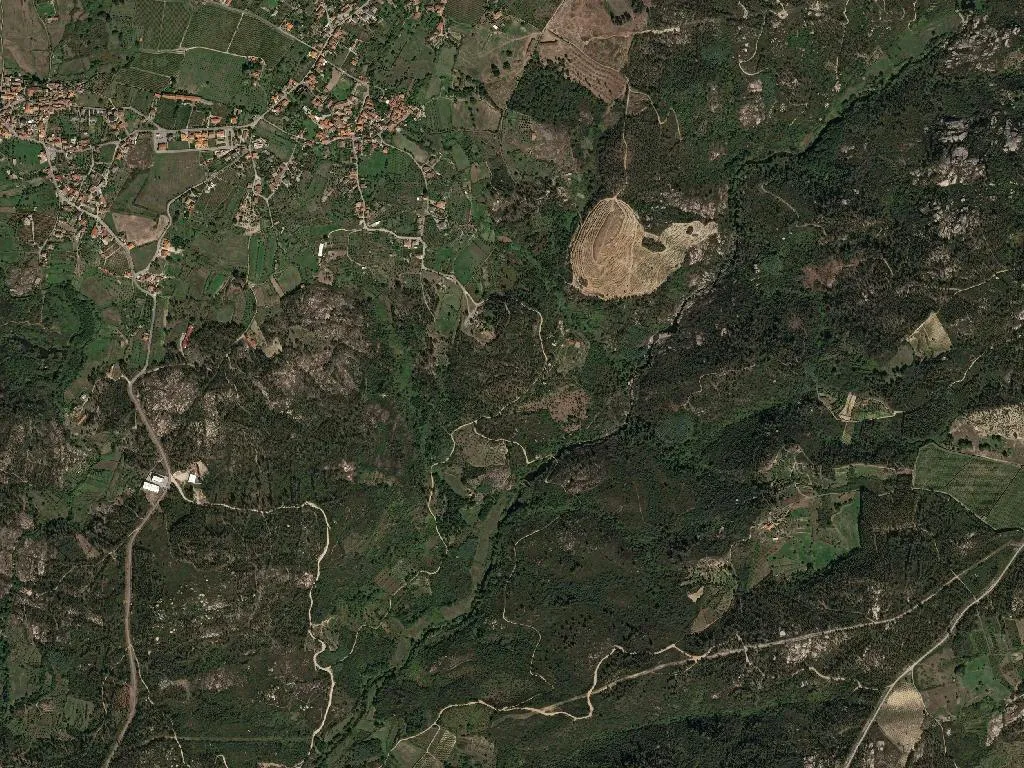
The PR4 “Trilho dos Moinhos” strings together six kilometres of yellow-way between Lobão and the neighbouring hamlet of Moleiros. The path corkscrews through chestnut groves, irrigation levadas and three granite water-mills that no longer grind rye but still keep their axle-holes intact. From the high points the Dão valley unrolls in greens and chestnut browns, black-bellied kites planing overhead. At dusk you may hear the thin scream of a little owl threading the scrub of rock-rose and heather.
Beside the Besteiros stream natural pools give summer respite; the communal threshing-floor – one of the oldest in Tondela – is still pressed into service for rye, medieval gestures the machines have not erased. In the former primary school a one-room museum displays hoes, wooden pitchforks and sepia photographs: unsmiling faces stare down the lens with the composure of people who expected nothing from a camera but the truth.
Smoke rises straight as a plumb-line into the orange dusk; somewhere a chouriço is being tonged from the smoker for supper. Memory in Lobão da Beira is not shelved behind glass – it is kneaded into tomorrow’s bread, carved into the next cross, and sung back and forth across the square long after the bell has counted the day to bed.