Full article about Molelos: Dão Smoke & Granite Silence
Slow-roast lamb, purple lagares and 1737 bell-echoes in Tondela’s high granite hamlet
Hide article Read full article
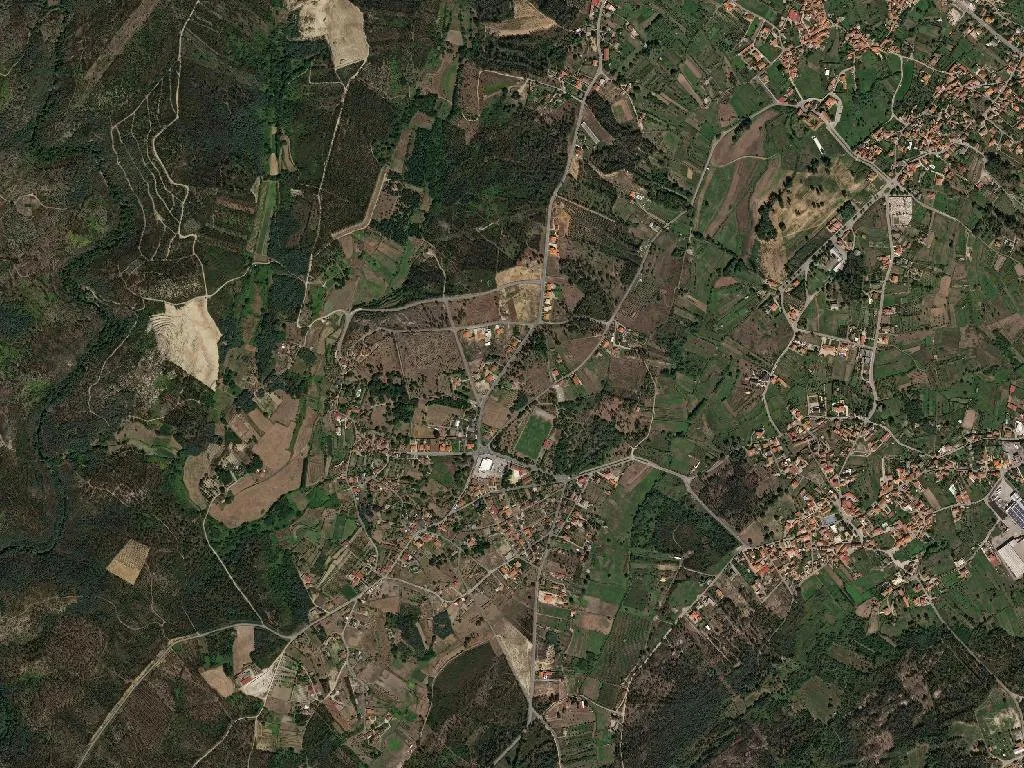
The tarmac narrows just after Tondela, corkscrewing between terraces of Touriga Nacional until granite houses materialise like a half-remembered sentence. At 274 m above sea level, Molelos inhales the Dão valley’s cool nights and granite-filtered water; the exhale is a plume of wood-smoke that unspools vertically in winter air.
Vineyard calendar
This is demarcated Dão country. Old vines share the 1,500-hectare parish with cattle pastures, their roots forcing seams in the crystalline bedrock. Come September, tractors draped in blue and yellow crates crawl uphill at dawn; by lunchtime the cooperative’s marble lagares glisten with purple foam. Locals still debate whether Jaen or Alfrocheiro claims the softer tannin – the answer depends on which grandfather is pouring.
Sunday lunch, without fanfare
Order Borrego Serra da Estrela DOP and you receive slow-roast lamb that grazed above 700 m; the fat tastes of heather and wild thyme. Arouquesa beef, fire-seared then rested, arrives the colour of garnets. Afterwards, spoon-soft Serra da Estrela cheese is coaxed from sheep’s milk and cardoon thistle; its buttery twin, requeijão, is finished with rosemary honey made two hills away.
Granite and faith
A single classified monument anchors the village: the eighteenth-century Igreja Matriz, whose bell forged in 1737 still measures the day. Beside it, manor houses carry weather-worn coats of arms – stone textbooks of minor nobility. Cobbles are uneven; heels are impractical.
Where to stay
There is one registered guesthouse, occupying a former olive-oil mill. Six rooms, thick walls, no televisions. Book early: the nearest alternative is a 20-minute drive across the ridge.
Arrival
Leave the A25 at Tondela, follow the EN230 for 8 km. Parking is free beside the church; coaches terminate in Tondela, where a taxi to Molelos costs roughly €10.