Full article about Granite & Garnet: Mouraz & Vila Nova da Rainha
Stone cellars exhale Dão wine scent while vines climb schist terraces below Caramulo ridges.
Hide article Read full article
Between granite and granite
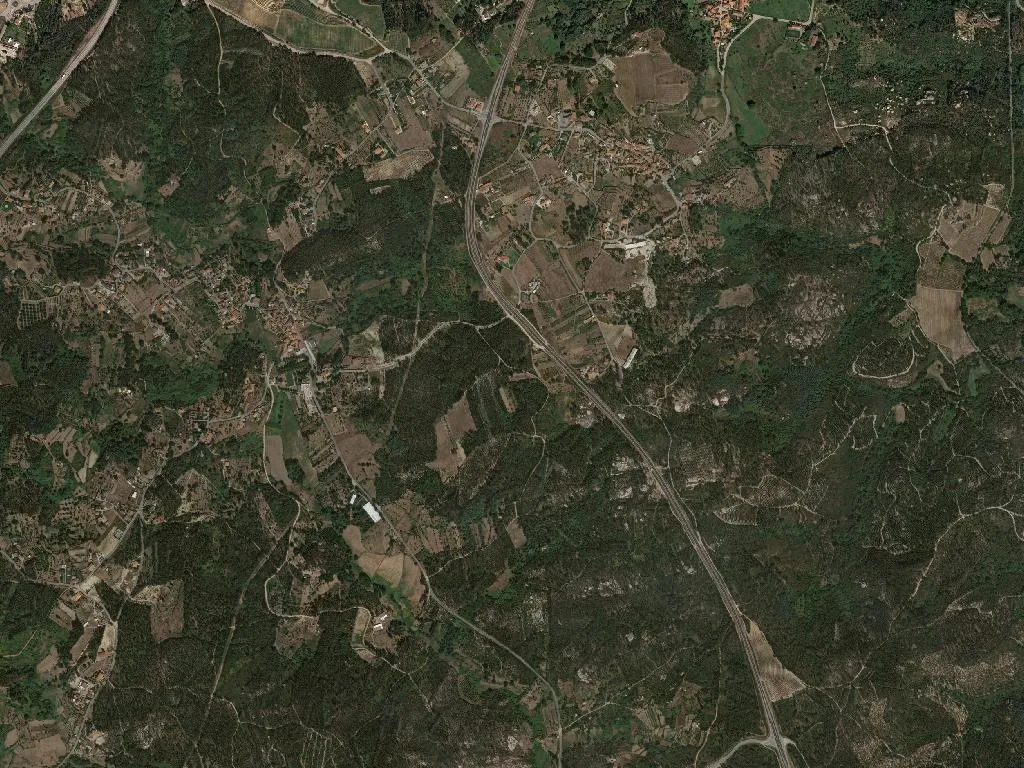
Red wine breathes through the gaps of stone-built cellars, its scent braiding with the dust that lifts from terracotta amphorae stacked at the roadside. In the parish union of Mouraz and Vila Nova da Rainha, vines climb schist terraces like ladders aimed at the sky, lashed in place by walls that have shouldered the Serra do Caramulo’s weather since the Reconquista. At 300 m above sea-level, sunlight ricochets off the Dão’s quartz soils all day; only at five o’clock does the mountain send a coolant breeze that keeps the grapes from stewing on the stem.
Two villages, one crown
History here is a matter of syllables. Vila Nova da Rainha – literally “New Town of the Queen” – honours Queen Isabel’s 13th-century land grant to settlers pushing the frontier south. Mouraz keeps the Arabic echo “mora”, a reminder that irrigation channels and olive presses arrived long before Portuguese became the spoken tongue. Inside Mouraz’s parish church, gilded baroque retables flare against 18th-century azulejos the colour of deep Atlantic water; the panels narrate scripture so familiar that even Sunday-absent villagers can recite the sequence. Walk fifteen minutes east and the late-Gothic portal of Vila Nova’s main church frames Manuine knots and armillary spheres, maritime symbols carved when the Atlantic was still an open question. Half-way between, the chapel of São Sebastião acts as a shaded weigh-station for pickers carrying 20-kilo crates of Touriga Nacional on their shoulders.
The taste of the Dão
Wine is not produced here; it is quarried. The region has been a Demarcated DO since 1908, making it older than Burgundy’s AOC system. Touriga Nacional, Alfrocheiro and Jaen are hand-cut in September when midday still demands a hat but evenings require a jumper. In kitchens, kid goat is simmered for hours in last year’s red until the meat gives up and the sauce resembles velvet; the dish is called chanfana and is eaten with fork-mashed potatoes that absorb the liquor like blotting paper. Locals balance the richness with arroz de carqueja, a bitter-greens pilaf that tastes of broom and iron – allegedly medicinal, definitely an acquired habit.
Clay and patience
Mouraz is nicknamed “land of the pitchers” because its iron-rich clay still turns on foot-powered wheels inside three surviving workshops. The potters – all related, all left-handed according to family lore – work at the speed the clay dictates: too fast and the body cracks, too slow and it sours. Amphorae, or talhas, are built in three separate pieces, then clamped together with oak hoops before firing. The finished vessels hold 500 litres and are still used by neighbours who ferment Dão reds on the skins for six weeks, a Roman practice that predates stainless steel.
Vine-walks and water
A three-hour loop links the villages, following dry-stone walls, cork oaks whose trunks look like cracked armour, and the Rio Mouraz where children learn to swim in tea-coloured pools. In October, sweet-chestnut husks burst on the path with the sound of snapping twigs; kingfishers and grey herons use the watercourse as a slip-road to the Mondego. There are no interpretation boards, no entrance fees, merely the understanding that ownership here includes stewardship – a contract renewed every time a gate is closed or a firebreak cleared.
At dusk, when the last tractor tail-lights disappear round a bend, the perfume of the day shifts from ferment to hearth. In the cellars, wine sleeps beneath a tarp of candlewax scent; outside, olive leaves rattle their small silver coins, exchanging the day’s last currency of shade.