Full article about Sabugosa: Where Dawn Smoke Meets Granite Silence
A granite hamlet above Tondela where 607 souls guard Roman-tiled roofs, 1755 bell-tower and Dão-slop
Hide article Read full article
The Road Unfolds
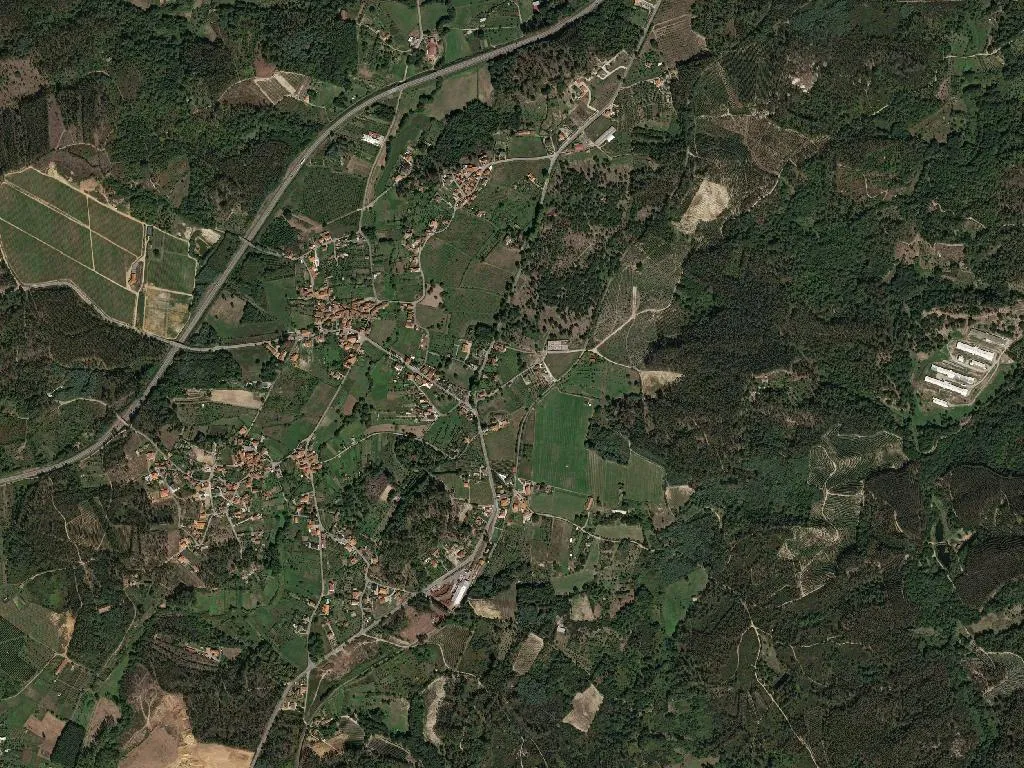
The tarmac narrows just after the last vineyard outside Tondela, then dips and twists for eight kilometres until the valley closes around a single cluster of schist roofs. At 348 m above sea level, Sabugosa keeps time to the breathing of 607 people – two-thirds of them already past retirement age – whose cracked hands remember when these terraces fed whole families. Dawn peels the mist off the old Roman tiles; a wisp of oak-wood smoke drifts from one chimney, then another.
Stone that Speaks
Two buildings in the parish enjoy the Portuguese equivalent of listed status, but they issue no postcards. São Vicente’s bell-tower, raised in 1755, is visible long before you enter the village; Nossa Senhora da Conceição chapel, half-hidden between two dwellings, keeps centuries of baptisms inside its single nave. Both are built of the same grey granite that shoulders the road, their walls lichen-mapped and warm to the touch even in December. With only 65 inhabitants per square kilometre, silence accumulates like dew.
The Taste of the Serra
In kitchens that smell of last night’s fire, chanfana – kid goat braised in red wine and garlic – still spends twelve hours in black clay pots before Sunday lunch. The parish sits inside the demarcated territory for Borrego Serra da Estrela DOP lamb, Carne Arouquesa DOP beef, and the king of Portuguese cheeses, Queijo Serra da Estrela DOP. No labels are required: wheels of cured cheese arrive straight from the shepherd’s hut, their rind imprinted with the weave of the straw mat on which they drained. Spread the same farmer’s requeijão on toast still hot from the wood-fired oven and you understand why the Portuguese use the word “fidalgo” – noble – for anything this effortlessly good.
The Dão wine region laps at the surrounding slopes, yet Sabugosa has surrendered to none of the tasting-room theatrics found nearer Viseu. Cellars are simply holes hacked into the granite, their temperature steady at 13 °C year-round. Inside, glass demijohns hold vinho de pasto – “work-horse wine” – poured at kitchen tables to accompany a boiled dinner rather than collected in points-toting cellars.
Between Generations
Of the 59 children registered here, most will leave once secondary-school coaches stop at eight o’clock each morning. Meanwhile they kick footballs along the same dirt tracks their grandparents trod, draw water from the same granite spout, listen to the same winter stories told around the hearth. António, 82, can list the five village grocers that existed in 1960; today only Dona Rosa’s counter remains, where sugar is still weighed on brass scales and gossip is free.
Sabugosa issues no family-friendly marketing packs, offers no infinity-pool villas. The café opens when Zé wakes and closes when Sporting kick off. Mobile reception flickers; signposts are unnecessary because every lane ends either in a field or at someone’s front door. Visitors arrive with purpose: to trace a grandfather’s birth record, to walk the Dão valley ridge, or simply to calibrate a city pulse against a place where hurry is measured by the speed at which clouds cross the valley.
What Remains
Late afternoon ignites the vineyards and throws long shadows across the terrace walls. Each inhabited house becomes a small act of resistance against demographic gravity. The air carries the smell of freshly turned soil and, rising from stone chimneys, the first wood-smoke of evening. It is a fragrance no perfumer has bottled, but it is what lingers in the clothes – and the memory – of anyone who stays long enough to notice.