Full article about Santiago de Besteiros
Stone-walled terraces, vine-pruned lamb and altitude-scented cheese in Tondela’s hidden fold
Hide article Read full article
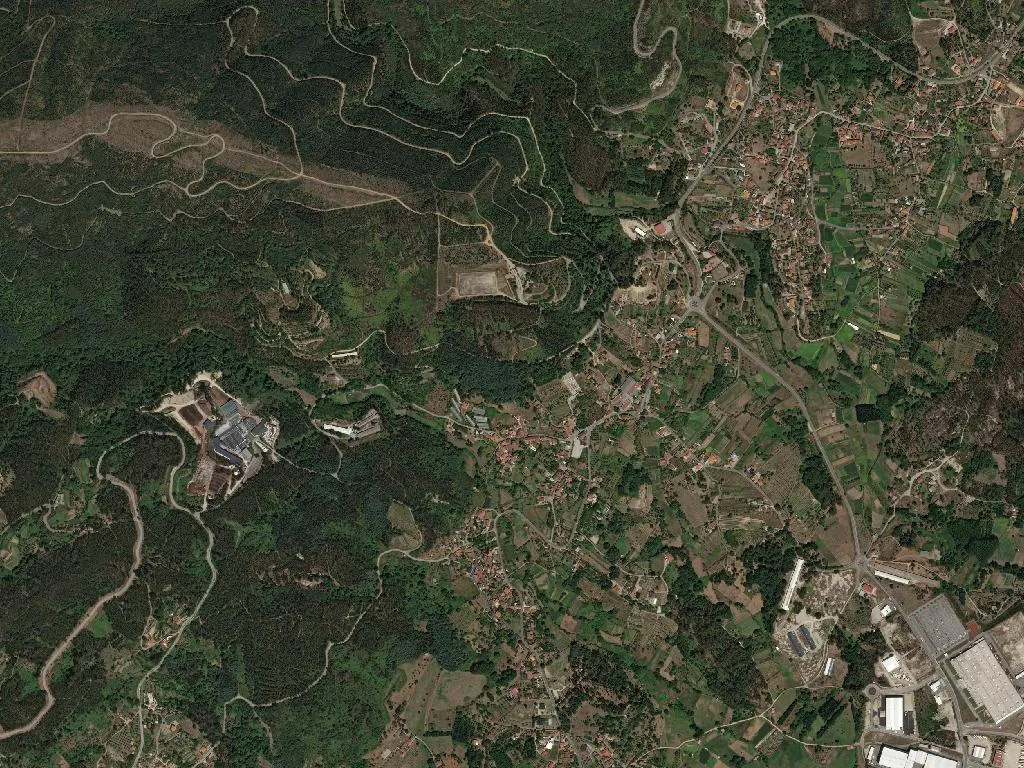
The scent of burning oak drifts uphill, braiding with the petrichor that rises from last night’s rain-soaked vines. At 400 m above sea-level, the Vale de Besteiros unfurls in tidy pleats: olive terraces the colour of sage, Dão vineyards still wearing their autumn knit of brittle leaves, and pasture so short you could play croquet with the sheep. Water hurries along stone-lined levadas, feeding plots that have never known a fallow year.
Eight centuries in the furrows
No castle keeps or Manueline monasteries here. Santiago’s monument is the land itself, parcelled since the thirteenth century into the same narrow strips you see today. Dry-stone walls follow property lines drawn in medieval perchas; their mortar is moss, their surveyors generations of forearms browned by April sun. Even the parish name is a palimpsest: devotion to St James tacked onto Besteiros, the place, in 1836 when the Liberal Wars rewrote municipal maps. History is measured in prunings, not in plaques.
A larder with post-nominal letters
This is one of the few corners of rural Portugal where the livestock outranks the farmers on paper. Borrego Serra da Estrela and Carne Arouquesa both carry DOP status—think Welsh lamb with a Portuguese passport—because the animals graze these exact altitude-scented grasses. Breakfast is dictated by season and by circumference: a wheel of Serra da Estrela DOP, spoonable at room temperature, followed by requeijão still warm from the copper pan, its acidity cut with a stripe of pumpkin jam. The only technique required is patience: lamb roasted over vine-prunings for four hours while the morning’s bread proves beside it.
A landscape on the clock
Every square metre earns its keep. Oliveiras give way to rows of Touriga Nacional; pasture is rotated so precisely you could set your watch by the cattle’s arrival. Irrigation channels, no wider than a drainage ditch in Surrey, braid the hillsides, their curves drawn by gravity rather than CAD. Population density stands at 72 souls per km²—just under a third of them past retirement—so silence is the default setting. The loudest weekday sound is the click of pruning shears echoing off schist.
Time measured in tasks
The parish calendar is stubbornly solar. Winter pruning finishes when the almond buds swell; red grapes are in the lagares before the first October mists; milking starts at 05:45, headlights sweeping the mist like slow-motion lighthouses. Roads are scaled to a Massey Ferguson, not a Mercedes Sprinter, and the lone café fills only on Sunday afternoon for a round of sueca, the Portuguese answer to whist. There is no souvenir shop because nothing is surplus: even the grape skins go to the still that fuels the moonshine known to the council as aguardente and to its producers as “water of life”.
Dusk settles vertically, spotlighting the terraces so that each vine row casts a ruler-straight shadow across the valley. Somewhere below, a chimney starts to breathe; dinner will be cheese, yesterday’s bread, and a glass of Dão that never saw a label. Santiago de Besteiros keeps its promises because it makes so few: tend the soil, feed the hearth, repeat.