Full article about Granite hush of São João do Monte at dawn
Frosted chestnut groves, 1537 granite cross, wood-oven lamb—Tondela’s hidden union
Hide article Read full article
The Cold Granite of Dawn
The granite of the churchyard still holds the chill of the early morning as the bell of São João do Monte’s Parish Church tolls seven. The sound spreads through the undulating valleys, passes over the chestnut groves where frost etches delicate lace patterns on fallen leaves, and fades into the hills where the Serra do Caramulo cuts the horizon. At 702 metres above sea level, in this parish union that barely exceeds 780 inhabitants scattered across 65 square kilometres, silence has substance—broken only by the murmur of the Ribeira de São João, flowing between schist and moss towards the Dão River.
Stone, Carving and Memory
The parish church stands where a medieval chapel once served as a waypoint for pilgrims and shepherds. Rebuilt in 1723, its interior houses a baroque gilded woodcarving altarpiece that captures light from high windows, and 18th-century azulejo panels where saints and angels appear to float against cobalt blue backgrounds. In Mosteirinho—a place name evoking a Benedictine monastery destroyed after Almançor's invasion in 997—the Chapel of São Sebastião maintains its Manueline architecture, discreet but intact. Beside the cemetery, a granite cross from 1537 has withstood wind and rain for four and a half centuries. Scattered throughout the territory, stone and wooden granaries, medieval fair markers, and the bridges of São João do Monte (classified in 1982) and Carvoeira (1986) span streams with the solidity of structures that have witnessed generations pass.
Flames, Lamb and Cornbread
On 24 June, when São João's night arrives, bonfires are lit beside the villages. Smoke rises heavy with the scent of oak firewood, and in the churchyard, São João cake bakes—a sweet of eggs and cinnamon broken while still warm. Since 1998, the Lamb Festival has gathered local farmers in the churchyard to promote Serra da Estrela DOP lamb: lamb roasted in a wood-fired oven with aromatic herbs, served with punched potatoes and red wine from the Demarcated Dão Region. Arouquesa veal chanfana cooks in clay pots over embers, while at the table, creamy and intense Serra da Estrela DOP cheese is served with pumpkin jam or heather honey. In colder months, caldo verde steams in earthenware bowls, with Portuguese kale and chorizo slices, alongside thick slices of cornbread.
Waterways and Chestnuts
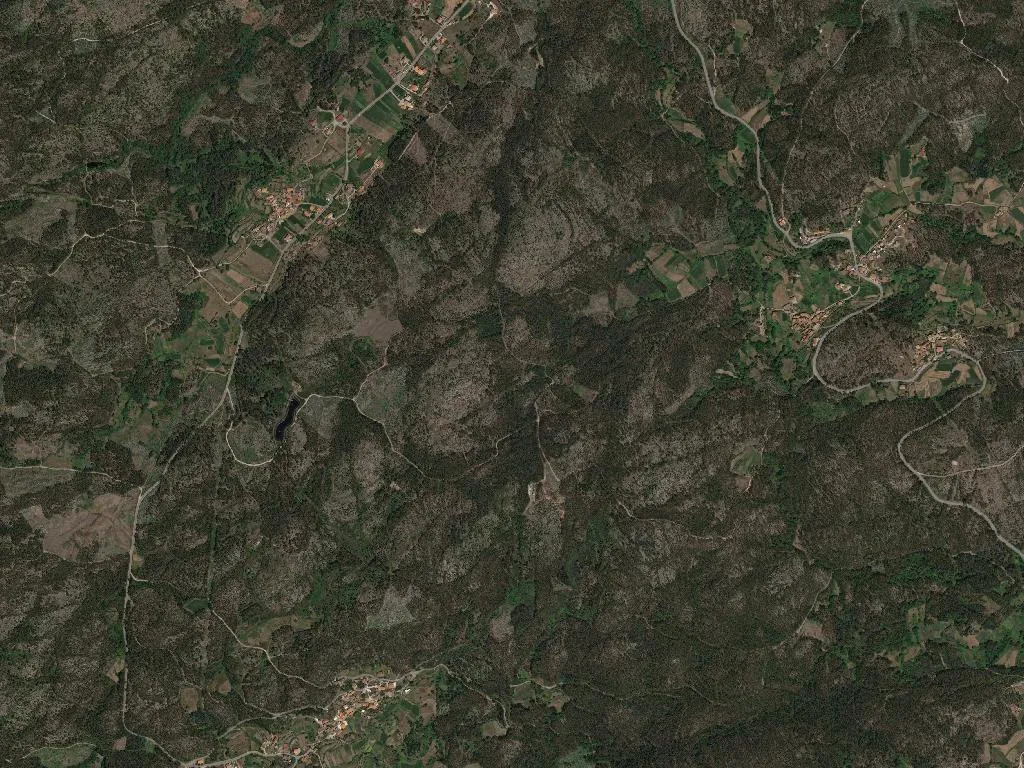
The parish's 6,513 hectares unfold in gentle undulations between 500 and 902 metres altitude. Chestnut groves cover entire slopes, interspersed with oak and maritime pine forests. Granite outcrops emerge among the green, and dark schist veins trace lines across the landscape. The Mills Trail—a six-kilometre signposted footpath—starts at São Sebastião Chapel and descends to the stream, passing the Carril, Redondo and Ribeiro mills, restored by Tondela town council in 2004. The water forms crystal pools so cold they burn the skin even in August. In autumn, the Chestnut Route—launched in 2015—invites visitors to taste roasted chestnuts and new wine while walking beneath golden canopies.
The Council's Highest Point
At Cabeço do Sobreiro, 902 metres high, stands the highest point in Tondela council. The antenna of the former military geodetic station has been converted into a viewpoint, from where the Dão valley unfolds as far as the eye can see—vineyards, schist villages, wood smoke from fireplaces. In January 1932, a snowfall isolated the village for eight days, and residents travelled on homemade skis to Tondela to fetch supplies. They called it the Great Snow, and the elderly still recall it when winter tightens—especially when the wind blows from the northeast and the thermometer drops to minus ten degrees.
As evening falls, the low sun ignites the granite of the bridges over the stream. The water flows, wind sways the chestnut branches, and the bell tolls again—this time for the Angelus. The echo lingers long among the hills.