Full article about Tourigo: Where Granite Keeps the Names of the Stayed
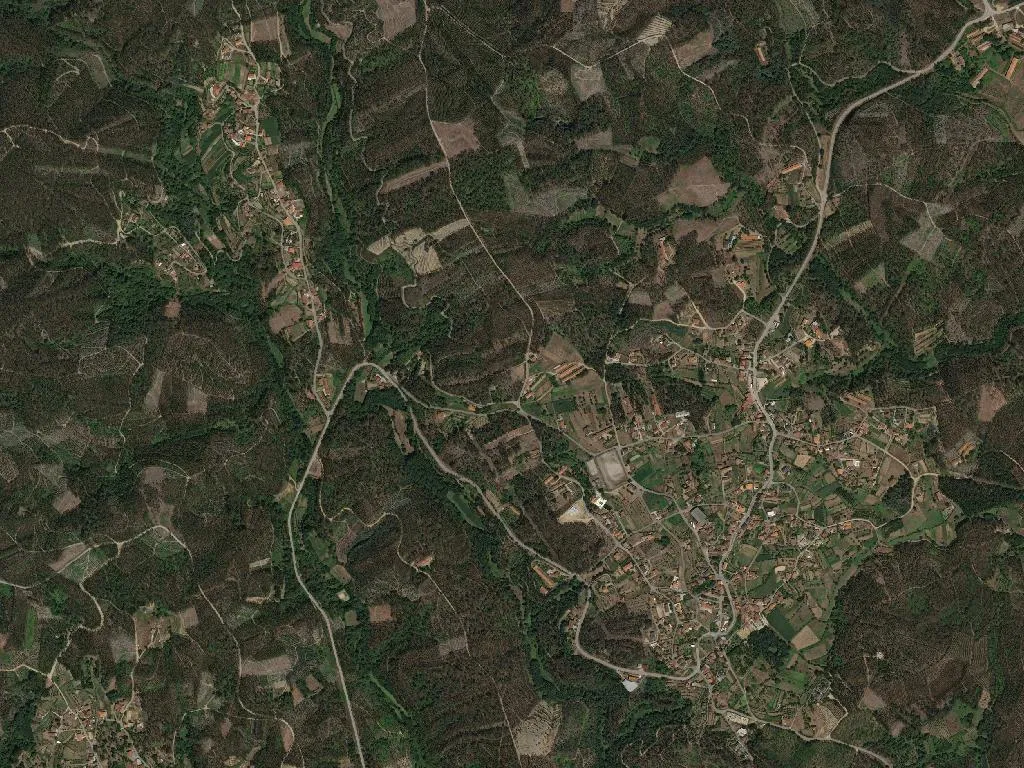
Stone, smoke and schist terraces cling to Tourigo’s 321 m ridge above the Dão.
Hide article Read full article
Smoke rises straight from the chimneys
In Tourigo the plumes climb unhurriedly into a sky the colour of brushed steel. Six hundred souls are spread across 800-odd hectares of schist-led slope, 321 m above the Atlantic inversion, and on a January dawn their communal breath hangs longer than the wood smoke. Gloves come off only for work; pockets are the evening’s hearth.
The weight of time on the scales
Fifty-one children, 211 elders. When the primary school bell rang for the last time in 2009 the desks went to Tondela and the grandchildren began commuting at weekends. Yet the vegetable plots are still buttoned into terraces, lines of kale as exact as ledgers. In Café do Crispim the talk turns on whip-grafting and last night’s Benfica score with equal fervour; calloused fingers score the counter like vine bark.
Granite with a listed postcode
Something here is “classificado”—no one can remember whether it is the 17th-century pelourinho or the granite cross whose shadow gives the only shade at noon. The stone is simply the colour of a wet dove and harder than overdue change. It keeps the village’s vertical memory: who left, who stayed, whose name is still chalked inside the baptistry.
Palate mapped by slope
Dão wine, yes—there are 2.3 ha of Touriga Nacional stepping down the valley—but the mountain breeds the flavour. Arouquesa beef grazes at 700 m on flowering broom; the meat arrives at the table the colour of cherry wood and tastes of smoked hay. Queijo da Serra da Estrela is cut table-side with a farmer’s pocketknife; the curd still steams like fresh concrete. DOP is the bureaucratic word; dinner is the local one.
Tuesday market rhythm
Milking at 05:40, espresso at 07:00. Tuesdays mean Tondela’s open-air market—hand-stitched slippers, bolts of flannel, gossip priced by the kilo. Thursdays the butcher’s van climbs the N230; Fridays the village smells of turnip-root soup thickened with pork blade. Walk the lanes and every second gateway is ajar: a brindled hound asleep on warm schist, someone pruning with secateurs so sharp the cane thinks it’s still attached. Meals take the time they take; conversation too. The road out is only 3.5 m wide—impatience has to pull over and breathe.