Full article about Vilar de Besteiros: Granite Dawn & Lamb Smoke
Sheep bells echo above the Dão while Touriga ripens on 40 ha of sunlit mica-schist.
Hide article Read full article
Granite Morning
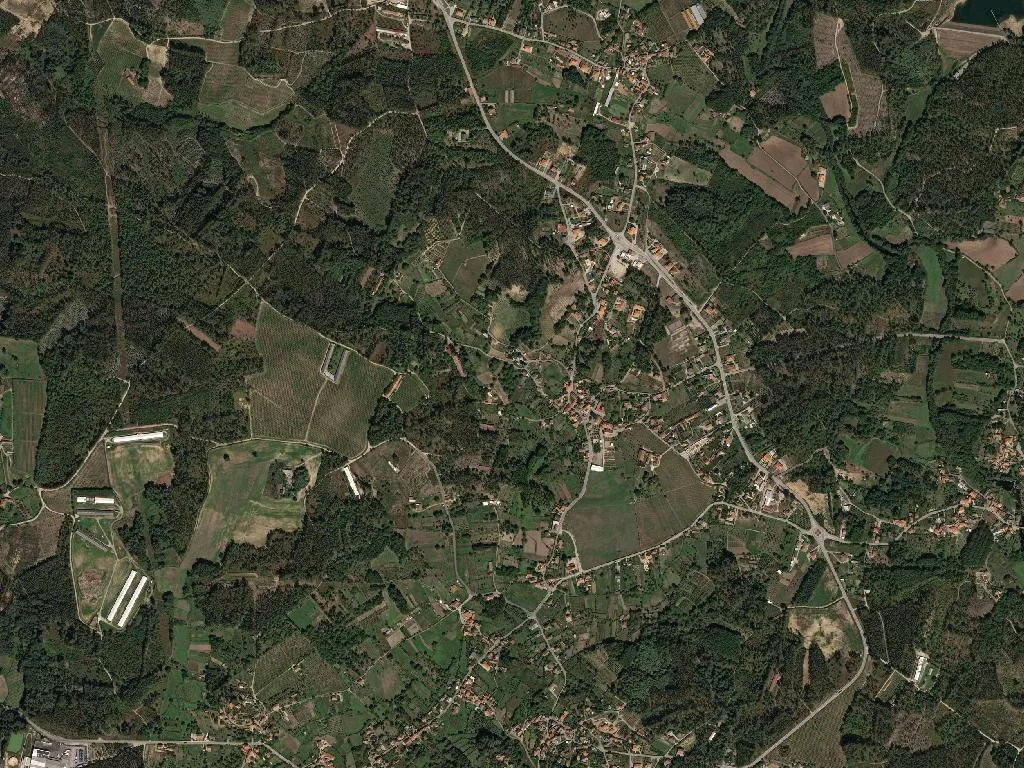
Woodsmoke rises ruler-straight in the cold dawn, announcing habitation before the houses themselves appear. At 337 m on Tondela’s southern flank, Vilar de Besteiros is built from the same granite that once slowed the baker’s oven; heat still lingers in those stones while the first loaves proof under cotton cloths. Vine terraces and sheep pastures cover 10.9 km², the river Dão looping below like a loose belt while flocks dictate the tempo of the year.
Where Vine Meets Lamb
Forty hectares of south- and southwest-facing slopes are stitched with Touriga Nacional and Tinta Roriz, roots working between sheets of mica-schist and quartz-feldspar that season the must with a cool, stony snap. The same pastures fatten 1 500 Serra da Estrela lambs a year, all certified DOP and reared extensively up to 500 m. In the village butchers they hang beside Carne Arouquesa DOP from nearby Quinta da Mata, the crimson beef trucked 12 km from Viseu’s municipal abattoir.
Cheese arrives from Fornos de Algodres – wheels of buttery Serra da Estrela DOP from Caseiro da Serra – while Dona Albertina, third-generation maker on Rua da Igreja, still crafts cloud-light requeijão from raw Bordaleira ewe’s milk.
Stone, Lime and a Dated Wall
The parish church of São Martinho, erected in 1758 over a 14th-century chapel, shelters an exuberant Baroque retable and a nineteenth-century azulejo cycle illustrating the saint’s cloak and beggar. Around Largo da Igreja, houses keep their Estado-Novo colour code – granite below, chalk-blue doors above – an ordinance no one has bothered to repaint. Beside the EM528 a boundary wall carries the date 1897 and the initials JCA: João Carvalhais Araújo, first registered owner of the quinta inside.
Slow Time in a Thinning Village
Two hundred and twenty-three residents are past retirement age; only sixty-nine children still roam the lanes, giving a density of 61 souls per km² and long, echoing gaps between doors. Conversation stretches unhurried across the counter of Mercearia Silva, trading groceries since 1953. There is no café – the nearest espresso is 2 km away in Besteiros – yet the communal oven is fired monthly so Dona Odete can teach wild-yeast bread the way her mother did. Two granite houses take guests: Casa da Eira, a converted granary restored in 2018, and Quintal da Avó, an 1850 cottage whose open hearth still bakes breakfast loaves.