Full article about Pendilhe
At 803 m in the Serra da Gralheira, wood-fired ovens and Rococo cherubs share altitude
Hide article Read full article
Granite, smoke and kid goat
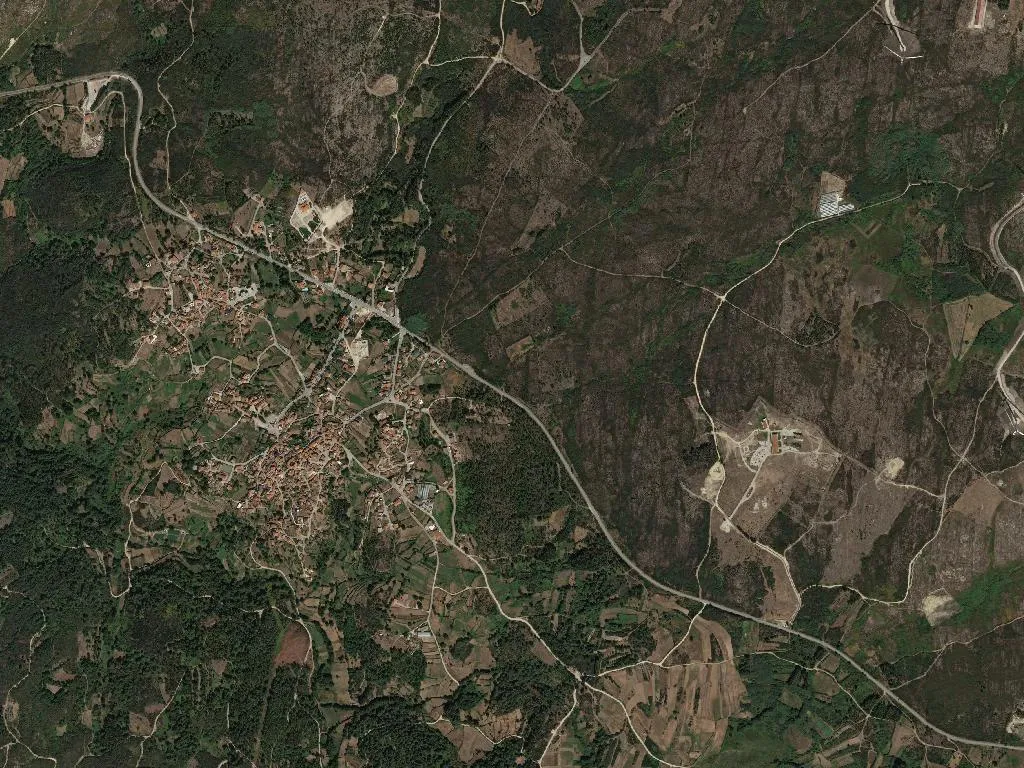
Granite chimneys exhale June-blue smoke in vertical columns. Out back, a wood-fired oven has been roaring since seven — exactly how long a Pendilhe kid needs to bronze. Nothing on the meat but salt, garlic and a thread of home-pressed olive oil. Below, the Paiva valley unrolls like an unironed green rug; the breeze lifts gorse pollen that makes strangers sneeze. At 803 m the village clings to the spine of the Serra da Gralheira as if it were a rush-hour strap on the Lisbon metro.
Carved stone, flaking gold
The parish church sits dead-centre, whitewash glaring against the surrounding grey. Inside, gilded altarpieces flash their Rococo curves so convincingly that visitors whisper, “Surely this was shipped in from Porto?” National-monument status means conservators turn up unannounced, torches in hand, counting cherubs. Smaller shrines — São Sebastião, Espírito Santo — are scattered round the village like parish noticeboards: always where you need them, never in the way.
Fire you can see from the next ridge
For São João at the end of June, Pendilhe builds a 15-metre pyre. Men stack logs for weeks, teepees that look like lumberjack cabins. When the procession snakes back from the church and the concertina strikes up, the “cantarinhas” — local women who sing as if every song were fado — trade verses with the men. Mid-winter is quieter: grilled sardines and turnip broth served in clay bowls, violas deliberately slightly out of tune and nobody caring.
Cooking at altitude
The kid enters the oven at ten, emerges at noon with skin that crackles like a badly rosined violin. It is served with Dão or Douro white — vines struggle here the way beach resorts struggle in Viseu — and potatoes that sponge the juices. Chanfana, goat stewed in red wine and enough garlic to sprout a moustache, shares the smokehouse with rice blood pudding and salpicão sausages that dangle like laundry. Finish with “bride’s cakes”: fritters the village grandmothers can still shape blindfolded.
A trail that hovers
The Misarela footpath begins at the top of the lane, passes a waterfall that behaves like a bead curtain, then climbs to a balcony over the whole Gralheira range. In autumn chestnut husks carpet the ground, spiking anyone silly enough to wear flip-flops. The Geira de Viriato, an Iron-Age drove road older than the Romans, smells of carqueja and gorse, a back-of-cabinet aftershave. Half-way up, a stone snow-well — once the village fridge, now an Instagram set — still stores winter ice in its granite belly.
Dusk returns smoke to the sky. The church bell counts six, as it has since 1732. Pendilhe does not move; it simply breathes, knowing the slope will outlast every promise made in Lisbon.