Full article about Cowbells & Caretos: Vila Cova à Coelheira’s Iron-Age Carniva
Masked clatter, granite echoes and 16th-century baroque in a 743-m Serra da Nave bowl.
Hide article Read full article
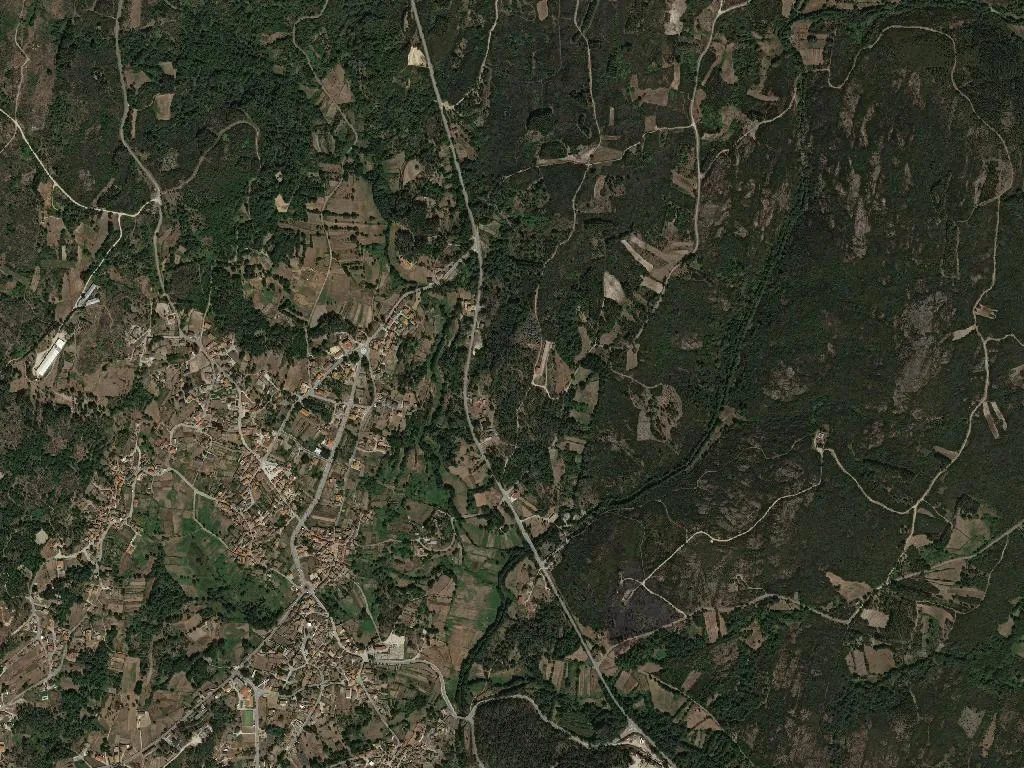
The rattle of cowbells ricochets off granite doorways before you ever see a mask. Round the last bend before the church square in Vila Cova à Coelheira, the metallic clatter multiplies, announcing caretos – hooded figures in painted wood – who march the Rua da Judiaria as though the calendar had never left the Iron Age. At 743 m on the southern lip of the Serra da Nave, the air is sharp even in March; breath clouds and wool collars rise together.
Between hillforts and knights
Lusitanian and Celtiberian settlers left their circular ramparts on the ridges. When Portugal was still a concept, the valley became the “honour” of Soeiro Viegas, squire to the boy-king Afonso Henriques and son of Egas Moniz, before passing to the Knights Hospitaller of Malta. Manuel I granted a royal charter in 1514, yet the municipality was extinguished in 1836, folding the parish first into Fráguas and finally into Vila Nova de Paiva. The name itself is stratigraphy: Vila, from Roman villa overlaid on a castro; Cova, a bowl between summits; Coelheira, once the river’s name and still shorthand for the rabbits that thrive among the gorse.
The 16th-century parish church, later enlarged, shelters gilded baroque altarpieces that catch the oblique light of slit windows. Beside it, the small chapel of S. Sebastião served as a rest stop for processions. In the churchyard a calhandra-shaped stone, once used for stretching linen, recalls the Jewish community that lived here until the 20th century; the parish council has recently opened a one-room Jewish Memory Centre in an 18th-century house on the same street. Two hundred metres downstream, the three-arched Ponte do Rio Covo – dated 1602 and stubbornly mis-labelled “Roman” – carries the old royal road from Viseu towards Porto.
The cauldron and the smokehouse
On the first Sunday of January the parish fires communal copper pots for Dia do Cozido. Couves (collard greens), black-pork chouriço and local potatoes bob in a broth that steams for hours while neighbours argue over the correct ratio of wine to water. Gralheira IGP kid – either pot-roasted with bay or blistered in a wood-fired oven – shares table space with Arouquesa DOP beef, served as a thick-cut bitoque or stewed with swede. On raw mornings, sopa de nabada (white beans, greens and streaky bacon) warms fingers before stomachs. Desserts are egg-heavy: walnut biscuits and a sponge so airy it collapses at the first spoon. The meal ends with a thimble of medronho firewater, distilled in the Nave hills and clear enough to read a watch through.
Schist trails and chestnut elders
The Rio Covo footpath (PR4) drops eight kilometres from Carvalha to Teixelo, brushing rolled-stone river beaches and basins of jade-dark water under alvarinho oaks. Dusk often brings wild boar scuffling down for a drink. Within the parish’s 32 km², cork-oak forest is parcelled by schist walls into terraces of centenarian olives and chestnut groves. One 3.2-hectare souto has been declared of municipal interest – the only such grove in the council – and its trunks are wider than two arm-spans.
Gestures that linger
On Easter Sunday the Compasso carries the high altar from house to house to bless fields and doorways. On 15 August the Romaria de Nossa Senhora da Assunção packs the square with a sung mass, a procession and an accordion-driven bailarico that lasts until the dew forms. Between these poles the year is measured by the chestnut harvest, October magustos (roast-and-cider parties) and a monthly market that still sells hand-plaited rush mats and black clay pottery fired in nearby Talasnal.
What stays with you is not the cowbell or the bell-tower but the Covo itself – a low, constant conversation between water and the 1602 masonry. Stand on the bridge at the close of day when copper light grazes the granite façades and smoke from curing sausages begins to rise, slowly, from the chimneys.