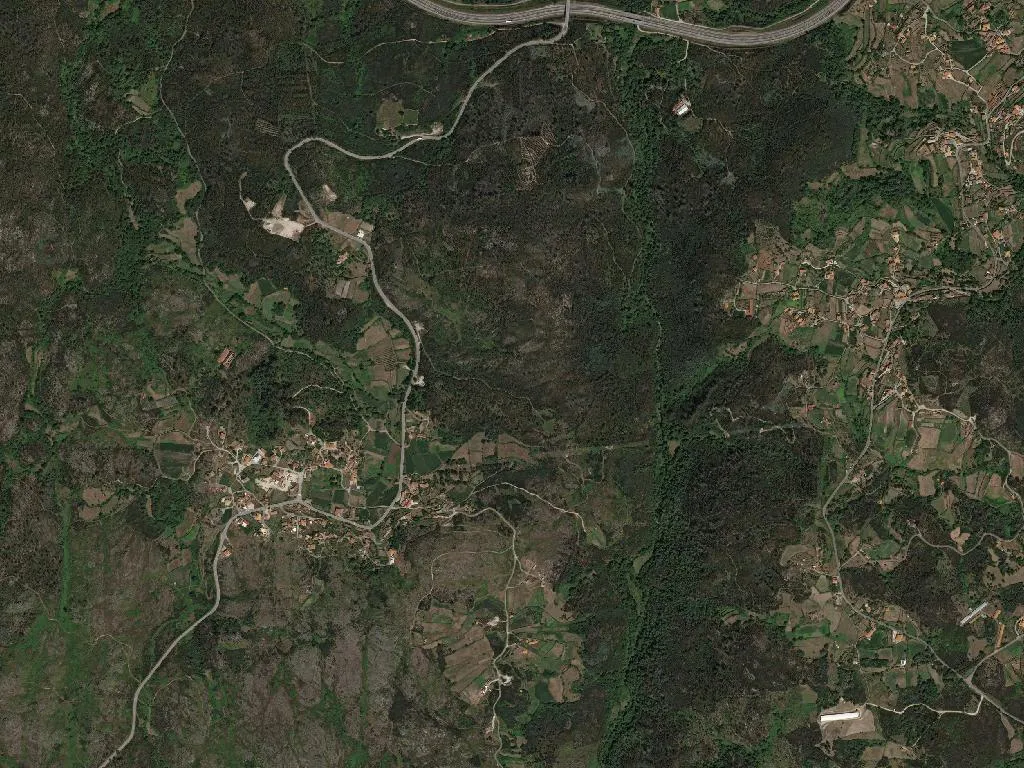
Full article about União das freguesias de Cambra e Carvalhal de Vermilhas
Espresso steam meets spring water where Vouga’s gorge divides two hamlets
Hide article Read full article
The bell of São Sebastião’s chapel strikes eight and the note rolls down the terraced slope like a slow-moving stone. In Cambra e Carvalhal de Vermilhas, 639 m above the Vouga valley, the echo is still vibrating when the irrigation tyre screeches, a spade scrapes concrete, and the morning air carries the faint bitterness of acorns that Bísara pigs have been crunching since dawn.
Two hamlets, one ridge
The civil parish was created in 2013, yet the two settlements have been finishing each other’s sentences for centuries. Three kilometres of parish road run between them: first the bend above Zé Mário’s byre, then the dip where the Vouga narrows and backwashes over basalt. Cambra keeps the café where Júlio pours espresso that scalds the saucer and the talk is milk-price futures. Carvalhal keeps the spring where women still fill five-litre bottles on Saturdays, even though mains water reached the houses years ago.
Inside Cambra’s church the chestnut ceiling creaks under the priest’s weight; the sacristy chairs are polished by the forearms of three hundred years of worshippers. In Carvalhal, António whitewashes the chapel of São Sebastião every July before the festa, and the courtyard oak drops enough November leaves to carpet a children’s game of hide-and-seek during Mass.
Calendar days
January belongs to São Sebastião. Half of Vouzela climbs the hill for the novenas; Cambra’s women bake orange-and-local-cinnamon cakes in borrowed sardine tins. Torch-bearers warm their hands over pine pitch, the smoke mixing with the scent of clove-spiked wine sold by the football club.
September, though, is the bigger draw. Our Lady of Health draws both hamlets halfway along the lane; pilgrims leave Cambra at dawn with blistered feet and meet Carvalhal’s delegation for corn-bread sandwiches stuffed with village chorizo. The brass band plays marches older than the road itself; grandfathers who can no longer walk ride in tractor trailers, blankets across their knees.
Tastes that keep altitude
At O Brasão, Zé’s wife starts the chanfana the previous night: Arouquesa beef from a neighbour’s herd that spent the summer on gorse and heather, clay pot from Paradela, Dão wine, and the crucial sweet-paprika her grandfather freighted down from Trás-os-Montes. The sarrabulho rice is tinted with blood collected at Thursday’s abattoir when Jaime delivers his piglets.
In cellars under family houses, December-killed hams hang over oak smoke for three months; when the first slice is taken the fat smells faintly of the chestnuts the pigs fattened on.
Walking the river loop
The signed trail starts at the crossroads where Ventura painted way-marks after the council sent him on a rural-tourism course. Eight kilometres drop to the Vouga, passing Zé Mário’s apiary. Visit in May and he will sell you dark heather honey that tastes of wet bark—€5 a kilo, bring your own jar.
The river bends so sharply the current scours a natural swimming beach known only to parishioners. In August, when the morning milk run is done, teenagers cycle down for plunge-pool afternoons. Above them, fieldstone tables wait for D. Albertina’s goat’s-milk cheese—tang of granite and mountain thyme.
Evening fog climbs out of the gorge, swallowing the oaks. At seven the Angelus drifts across the ridge; Arouquesa cattle lift their heads, village dogs bark in synchrony, and somebody closes a warped sash window like an old acquaintance saying good-night.