Full article about União das freguesias de Fataunços e Figueiredo das Donas
Follow the 8-km mill trail past granite windmills, cholera chapel and cinnamon cakes
Hide article Read full article
The Sound Before the Image
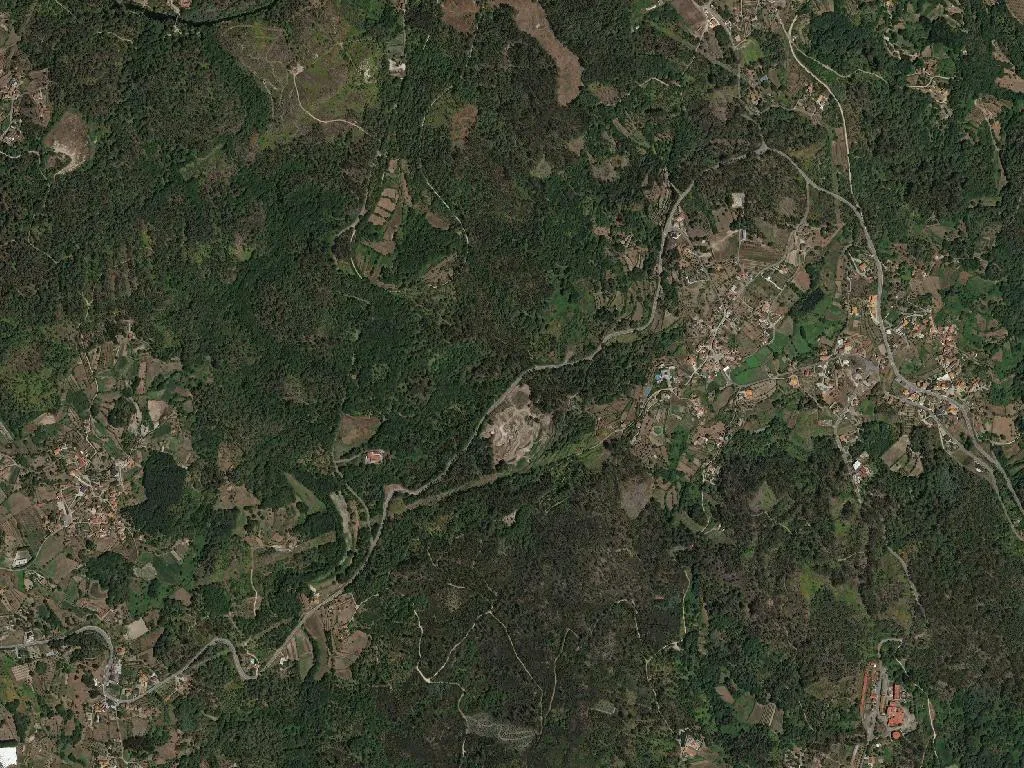
The sound arrives before the image: water striking wooden blades, rhythmic, like fingers tapping the café table to mark time. In the valley of the Fataunços River, five windmills are spread across eight kilometres — some still with their granite millstones intact, others reduced to walls covered in moss and ivy. The Pego mill, restored in the 19th century, keeps its wheel turning when the water runs strong from the Serra. Here, between Fataunços and Figueiredo das Donas, the landscape reveals itself in layers: Roman, medieval, baroque, rural — all present simultaneously, without pretence or performance.
Two Villages, One Memory
The 2013 administrative merger officially united what geography had brought together centuries earlier. Fataunços, mentioned in 1220 as "Fatauncios" — possibly derived from vulgar Latin for "flood spring" — and Figueiredo das Donas, recorded in 1258 as "Figaredo" before being donated to the nuns of Vouzela's Santa Maria monastery, still maintain two parish council headquarters. It's the only civil parish in the municipality with two public service offices, an administrative detail that mirrors this territory's dual identity across 1,266 hectares.
The 18th-century Fataunços wayside cross, classified as a National Monument, stands in granite beside the road. A few kilometres away, the 17th-century Chapel of São Sebastião in Figueiredo das Donas — a Property of Public Interest — holds a less solemn history: it served as an improvised hospital during the 1855 cholera pandemic. Its whitewashed walls witnessed fever and prayer, and still today, on 20 January, the São Sebastião pilgrimage fills the square with open-air mass and the sweet aroma of bolo de São Sebastião, a fermented cake with cinnamon and aniseed distributed at the chapel door.
On the Trail of Waters and Shells
The Mills Trail is a crossing between times. It begins at dawn, when mist still covers the valley and blackbirds start singing in the oak woods. It passes along stone water channels, narrow bridges, and the Pego da Moura, a natural pool of crystalline water where, according to local legend, a Moorish woman bathed at night — and some swear they still hear her songs on full moon nights. The Roman-medieval bridge over the Fataunços River retains an original ashlar arch, silent witness to centuries of passage.
Four kilometres of this parish belong to the Central Coastal Way of Santiago. Yellow scallop shells painted on schist walls guide pilgrims to the interpretation post where credentials are stamped. The Serra do Fojo, with its 560-metre summit, dominates the landscape: cork oaks, heather, pastures where Arouquesa cattle graze freely. From the Fojo viewpoint, the Vouga valley unfolds below, carved by terraces of vineyard in the demarcated Dão region.
Chanfana, Ham and Memory at the Table
Vouzela-style chanfana cannot be rushed. Kid or goat stewed in a clay pot with red wine, bay leaves and paprika, slow-cooked until the meat falls from the bone. At O Fojo restaurant, it's served with Dão wine — the Touriga Nacional variety dominates the slopes — and warm cornbread. At Fataunços monthly market, on the first Saturday of each month, local producers bring black pork ham, smoked bacon, cured sheep's cheese and heather honey. On the first Sunday of October, Figueiredo das Donas fills up for the annual cattle fair, with Arouquesa breed auctions and the intense smell of trodden earth and fresh manure.
This land's memory keeps precise names: Father Joaquim Augusto da Silva, who in 1824 founded the municipality's first night school for adults; Dr António Pereira Figueiredo, rural doctor and MP; Maria da Conceição Figueiredo, Vouzela's first woman parish council president between 1976 and 1979. In 1932, during the construction of the national road, a Roman pottery nucleus marked "SAGIVS" was unearthed, now displayed at the Viseu Museum.
What Remains
By late afternoon, when slanted light enters through the windows of Fataunços Mother Church and illuminates the 18th-century azulejo panels, dense silence settles. Outside, the bell tolls six, and the echo spreads through the valley until it fades among the cork oaks. It's this sound — metallic, deep, repeated — that remains in memory: not as symbol, but as physical presence, vibrating in the mountain's cold air.