Full article about Agadão: bell, fog, river and 471 souls
Hear the hidden Agadão river, taste Marinhoa beef, join Pentecost sardines under chestnuts
Hide article Read full article
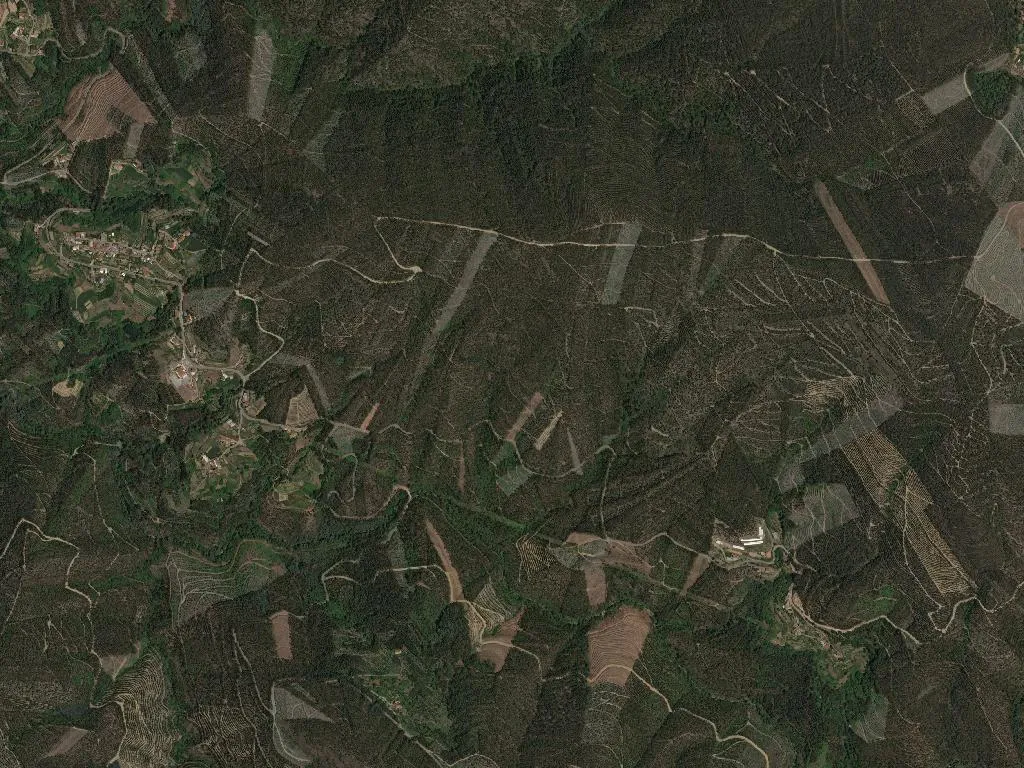
At half-past seven the church bell of Agadão strikes, its bronze note muffled by fog that slips down from Viso overnight and lingers like a held breath. Below the bell tower you can hear the river of the same name before you see it; the Agadão is audible year-round yet visible only from June to September when the undergrowth thins and the water glints between boulders. The parish sits 322 m above sea level on the seam between the Caramulo massif and the Bairrada plain, occupying 39 km²—room enough for just 471 souls, fewer per square kilometre than when the last census of 1981 counted 598.
Water and belief
The place-name first surfaces in 1258 as “Ágada” in King Afonso III’s royal inquest. The river rises on Viso at 560 m, then tumbles 35 km south-west to join the Águeda at 42 m. The last stone bridge, built in 1897, still carries foot traffic across to the football pitch at Areosa.
Agadão keeps two romarias. The Feast of Souls, held in Areosa on Pentecost Sunday, doubles the population for the day: 300 people, plates of sardines, and a single brass band under the chestnuts. The Miracle of Urgueira follows on 15 August—High Mass at 11 a.m., a procession of Nossa Senhora da Graça to the 1903 wayside cross, then salt-cod and potatoes in the parish hall. The band from Águeda has made the uphill journey every year since 1962, the year they bought their first second-hand clarinet.
Bairrada on the table
Carne Marinhoa DOP, the auburn-coated beef of north-western Portugal, arrives in Agadão from the 28 head of cattle that graze year-round on the Cabeço da Mula estate. The municipal abattoir 12 km away in Águeda processes two animals a month; the butchered joints travel back to the village grocery run by Dona Rosa, in business since 1974.
Sweet ovos moles from Aveiro appear at Christmas in pine boxes lined with rice paper, yet the parish dessert is still “head cake”, a tall dome of sponge baked in a copper turban mould. Sister Doroteia, nun and pastry tutor, handed the recipe to the local Santa Casa women in 1958; they still bake it for feast days.
In the cooperative cellar, founded 1955, fourteen growers still deliver grapes. The 2023 harvest—80 t of Baga, 20 t of Touriga Nacional—filled 650 barriques of red. Traditional-method espumante rests 18 months sur lie before disgorgement into green 75 cl bottles.
Footsteps of pilgrims and day-walkers
The Central Portuguese Way of St James slips into Agadão at kilometre-marker 28 on the old N1 and exits 4.2 km later below Viso. Potable water is available at the Lameira spring (40.5312, –8.4111) and from a tap inside the chapel of Santo António in Urgueira; the key hangs at No 42 with Sr Américo.
There is no albergue; instead walkers overnight at the Casa do Caminho, a registered guest-house (RNAL 102060/AL) with three rooms and breakfast built around cornbread from Oliveira bakery in neighbouring Belazaima.
The parish council’s own PR4 loop—“Agadão–Viso–Cabeço da Mula”—measures 9.3 km with 350 m of ascent and takes three-and-a-half hours. The signboard at the roundabout is precise: 1 h 45 min to Viso, the same back through the Margaraça forest.
When the sun drops behind Caramulo at 19.27 on the summer solstice, the bell tolls again. Locals call it the cadela mass—bell-ringed prayers for every parishioner who has died since Father António Silva vowed in 1932 that no Agadão death would pass unannounced.