Full article about Águeda’s Umbrella Sky rains colour on granite streets
July’s 3,000 canopies turn riverfront into a kaleidoscope above 12th-century stones.
Hide article Read full article
Águeda, where the sky drips colour and the river keeps the beat
The river speaks first. Even before you see it, you hear water scissoring over granite, a hush that works its way between cafés and chemists as though the town were built on a subwoofer. Then you reach Luís de Camões Street and the acoustic gives way to optics: 3,000 umbrellas floating three metres overhead, their canopies stitched together into a kinetic ceiling that turns July sunlight into shifting pools of scarlet, turquoise, acid yellow. The Umbrella Sky Project—originally a 2012 one-off to cool pedestrians—has become Águeda’s July-to-September weather modification system. Locals claim the temperature drops three degrees beneath it; Instagram claims 200 million tags and counting. Either way, walking underneath feels like trespassing inside a colour-field chapel that will be dismantled before autumn.
Below the baroque skin
Look up too long and you’ll miss the 12th-century charter stone in the parish church’s shadow. Afonso Henriques granted the foral in 1135, but the building that matters is the 18th-century Igreja Matriz, its façade plain as a Puritan sermon until you step inside. Gold leaf erupts across the high altar in spirals of vine, cherub and cloud; candlelight converts the wood into liquid amber. One altar right, a side chapel houses the tomb of a 14th-century benefactor whose stone face has been smoothed by centuries of parishioners touching his cheeks for luck. The air carries beeswax and centuries-old incense, a scent that can’t be bottled because it depends on human breath circulating it.
Across the square, the 17th-century Convent of St Anthony now hosts municipal archives; its cloisters are open on request and worth the trouble. Ask the caretaker to show you the Franciscan graffiti—ship sketches and tally marks carved by novices who would never see the Atlantic twenty kilometres away.
Pilgrim traffic
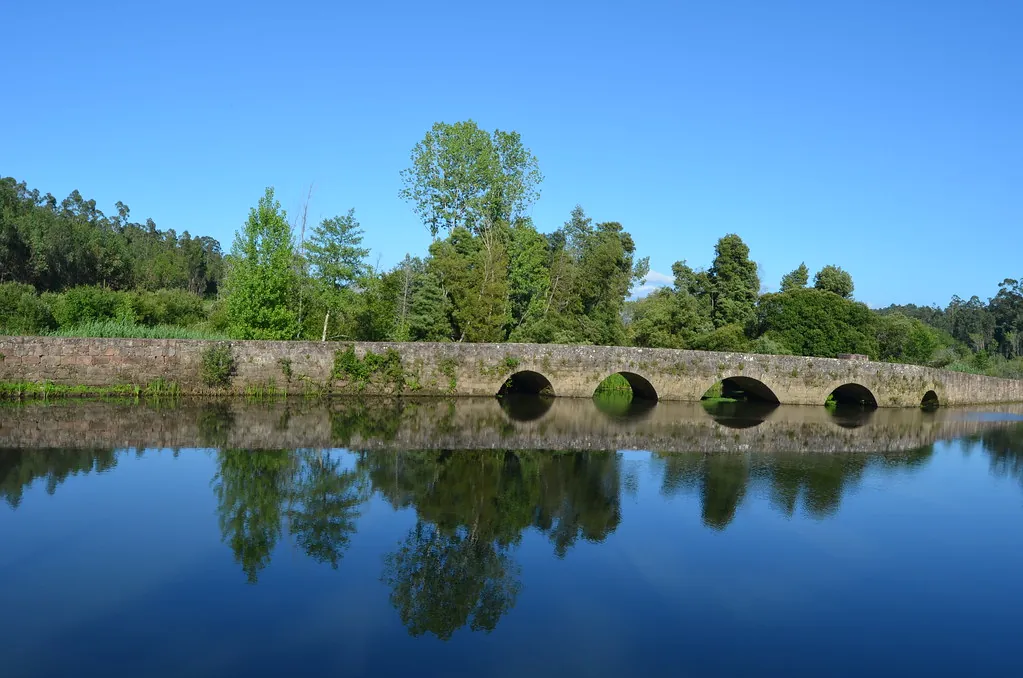
The Águeda bridge, a four-arch granite span rebuilt in 1838, is compulsory stamping territory for anyone on the Central Portuguese Camino. Dawn is the moment: rucksacks bob through river-mist like low-slung constellations, walking poles clicking the same rhythm as the water below. Once over, the waymark arrows send walkers between rows of Loureiro vines that feed the Bairrada cellars. If you’re not hiking, borrow a bike from the booth beside the bridge and follow the Ecopista do Vouga for 14 km of disused railway: eucalyptus shade, kingfisher flashes, and the smell of hot pine needles soundtracked by your own pulse.
What the river puts on the plate
The Águeda river is too shallow for serious navigation, but its eels tolerate no insult to their reputation. From February to May they run silver-bellied up from the Atlantic; by the time they reach the weir below the bridge they’re fat enough for caldeirada—an eel stew thickened with coriander, tomato and enough olive oil to leave a sunrise-coloured rim on the bowl. Winter brings lamprey rice, the fish caught on full-moon nights when its sucker mouth turns local bridges into fishing platforms.
Inland, the land rises towards the Caramulo mountains and the diet turns porcine. Leitão assado arrives bronzed and brittle-skinned on a metal tray, the rib-cavity opened like a book so the lemon-pepper stuffing perfumes the dining room. Pair it with a glass of Bairrada brut—palate-scouring mousse that makes the next bite audible. The DOP label to ask for is Carne Marinhoa: cream-coloured cattle that graze the marshy flood meadows, their meat tasting faintly of clover and river mint.
Festivals that swap the hierarchy
February’s Entrudo das Comadres predates Lent by two weeks. Tradition insists that every woman in town commandeers the street outside her house at 21:00 sharp, armed with a copper pot and a repertoire of satirical verses aimed at husbands, councillors and the parish priest. Men are allowed to watch only if they bring flowers and accept whatever rhyme is hurled at them. The event ends at midnight with a communal stew of pork and chickpeas so thick the spoon stands upright; the recipe is printed on the town-hall website, but locals swear it never tastes the same unless stirred by 300 laughing women.
May brings the Romaria das Almas Santas da Areosa: a candle-lit procession that starts at the river and climbs to the 16th-century chapel on the hill, each pilgrim carrying a paper boat with a single carnation. September’s Romaria do Milagre de Urgueira is smaller, centred on a 14th-century shrine where crutches hang from the ceiling as ex-votos; the cured are expected to donate a bottle of espumante, so the party afterwards is lubricated by gratitude rather than admission tickets.
When the umbrellas come down
Outside festival season Águeda reverts to a low-rise, slow-motion version of itself. Check into one of the 19 licensed lodgings—Casa do Terreiro is a 19th-century merchant’s house with original azulejo panels, while the new Namorados do Vouga cabins hover on stilts above the water. Spend an afternoon on the Requeixo river beach where the water is tannin-brown but clean enough for Blue Flag status; the sand is imported annually because the current steals it overnight. Rent a kayak and paddle upstream until the only sound is dragonfly wings and the pop of carp breaking surface.
Evening is for the Ecopista again: cyclists return with headlights carving tunnels through eucalyptus scent, and the moon lays a silver path over the same water that greeted you at dawn. Somewhere beneath the now-invisible umbrellas, the river keeps its metronomic contract with the valley, indifferent to how many phones are raised to capture the sky.