Full article about Chestnut crackle & jeropiga in São Martinho’s graveyard
Aguada de Baixo’s riverine soul glows amid chestnut smoke, Gothic saints and Marinhoa cattle
Hide article Read full article
The snap of chestnuts before the scent
The chestnuts detonate first — a staccato crackle that ricochets off the church walls — then the perfume arrives: singed shells, oak smoke and jeropiga, the newly-fermented wine that stains heavy glass a bruised purple. It is 11 November in Aguada de Baixo and the feast of São Martinho has turned the parish graveyard into an open-air tavern. Hands blackened with ash pass paper cones of hot chestnuts across the lime-washed stones while children chase each other between the cypress trunks. Somewhere above the Cértima valley, the temperature nudges 20 °C: the proverbial “Verão de S. Martinho”, the last gasp of summer before Atlantic rains arrive.
Why the place is literally “Lower Aguada”
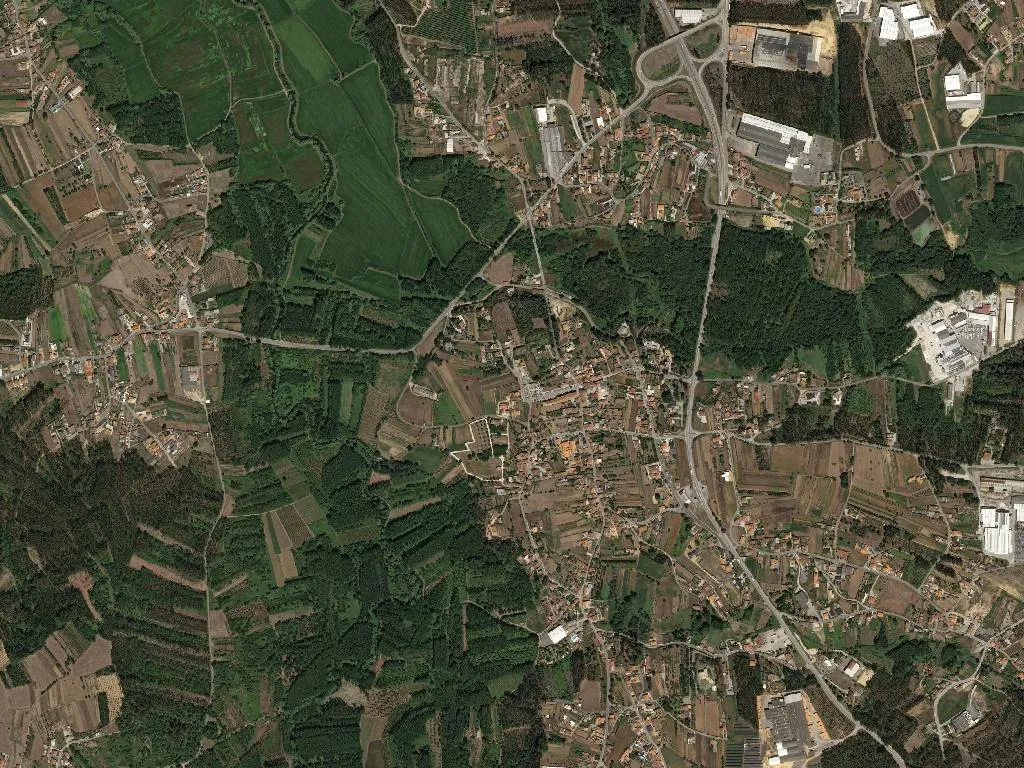
Water wrote the name. Tenth-century charters already mention “in ripa de Agada” and “circa riuulo Agata”, chronicling the rivulets that braid this low-lying plain. The Cértima River describes a lazy S-curve through the parish, creating water-meadows where caramel-coloured Marinhoa cattle graze among willow and poplar. “Baixo” was added when the municipality discovered an upstream twin — Aguada de Cima — and cartographers demanded differentiation. In 2025, after a twelve-year administrative marriage with neighbouring Barrô, Aguada de Baixo regains its solitary borders. Not a nostalgic reversal, but formal acknowledgement that identity here has always been riverine, not bureaucratic.
Stone, carving and bubbles
Inside the parish church a late-Gothic Saint Martin, polychrome oak still vivid after five centuries, tilts his sword above a beggar’s bare shoulder. Outside, the 17th-century cruzeiro rises in four-square limestone, its Ionic capitals rinsed by winter rain and summer dust alike. Fifty metres away the tiny Capela do Espírito Santo contains a gilded rocaille retable that catches candlelight and scatters it like shaken foil. Pilgrims on the Central Portuguese route to Santiago stop to drink at the Romanesque-fonted spring beside the south door before pushing on to Landiosa.
Across the lane, Caves Primavera keeps its 1890 cooperative charter framed above the tasting counter. One of Bairrada’s first producers to bottle-ferment espumante, the winery still riddles by hand; in the subterranean galleries the smell of brioche-yeast drifts through brick vaults where 30,000 bottles sleep in pupitres.
What you eat, what you pour
Order leitão: suckling pig basted with garlic-and-lard paste, skin blistered over oak until it shatters like caramel. Follow with chanfana — goat stewed in red wine until the meat slides off the bone in liquorice-dark shreds — and a side of chips cut so thin they blister in the fryer. The beef is Carne Marinhoa DOP, from the same tawny animals you passed grazing on the flood plain; the custardy dessert arrives as ovos moles, Aveiro’s conventual sweet, slipped into translucent communion wafers that dissolve on the tongue.
Wash everything down with Bairrada: white, red or, preferably, espumante. The blend of sand and schist, the rain-shadow of the Caramulo range and the Atlantic’s moderating hand give the wines a nervy salinity you will not find in neighbouring Dão. On the feast day itself, drink jeropiga — must fortified with bagaço grape spirit — straight from the vat.
Pilgrimages between the valleys
On Easter Sunday the Romaria das Almas leaves the hamlet of Areosa at dawn, processing along farm tracks between wayside shrines and springs where the priest pauses to bless both the living and the dead buried beneath the eucalyptus. In May, the parish hall organises a candle-lit vigil for Nossa Senhora da Urgueira; the river mist smudges the flames as the procession crosses the iron bridge. During October’s agricultural fair, the main street becomes a livestock runway: Marinhoa bulls, Berbigão sheep and a judging ring that smells of damp tweed and linseed.
Walk, pedal, taste
Way-marked trails thread the Grou and Mouro valleys, shadowing medieval footpaths between trellised vines and sessile-oak woods. From the Alto da Póvoa lookout the view unrolls — a patchwork of maize strips, trellised vines and the distant blue spine of the Caramulo. Rent a bike in Águeda and follow the ecovia south-east to Sangalhos, freewheeling past drying maize cobs that hang from barn eaves like brass wind chimes. On the Cértima itself, a Canadian canoe is the best vantage: herons lift from the reeds, kingfishers stitch orange flashes across the water and the limestone cruzeiro shrinks to a chess piece against the vineyards.
Stay for sunset. The cruzeiro’s east face catches the last light, stretching its shadow across the dust like a sundial. Somewhere a bell tolls for vespers; inside the pastry shop a woman closes her cardboard box of ovos moles and the village inhales, ready for another year of gentle, water-bound time.