Full article about Borralha: Clay-scented dawn over Bairrada vines
Between Aveiro and Coimbra, a compact parish breathes wine-earth, fireworks and ageing voices.
Hide article Read full article
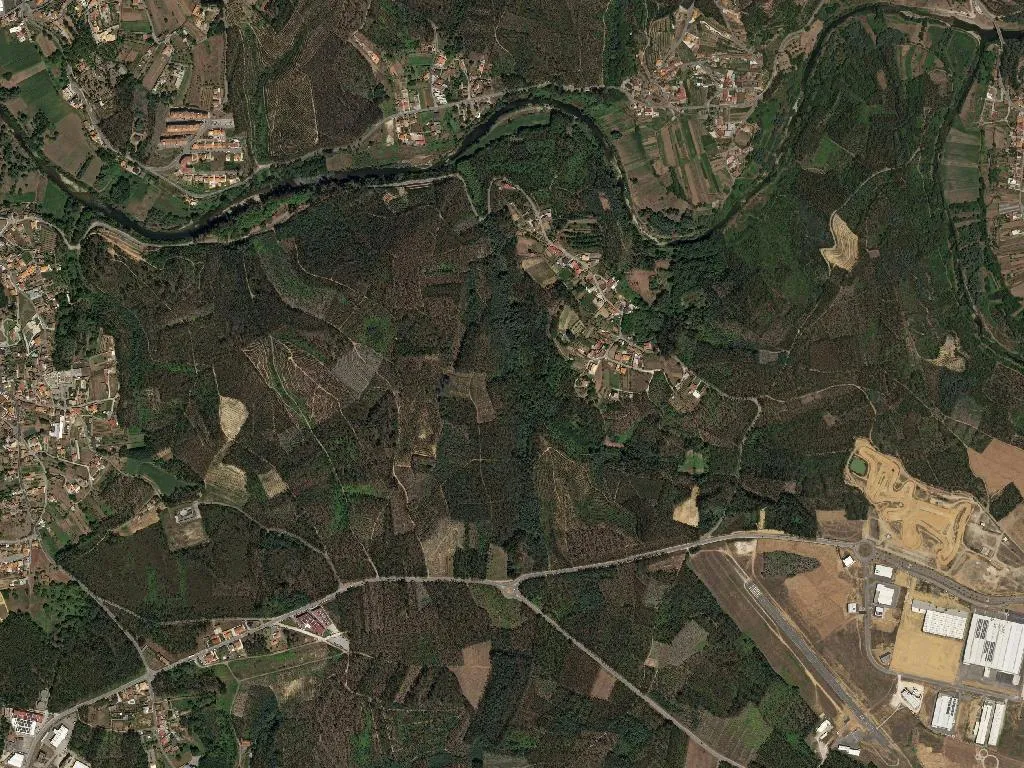
The air arrives thick with the smell of turned clay. It drifts up from the Vouga flood-plain, slips between single-storey houses and settles on the vines that sag over rusted wire in every back garden. Borralha sits only sixty metres above the Atlantic, yet those centimetres are enough for dawn to skate slowly across eight square kilometres of almost-level farmland, brushing the terracotta ridges before it reaches the doorsteps. You are in the Bairrada wine country, in the municipality of Águeda, halfway between the lagoon city of Aveiro and the university bustle of Coimbra. The soil here is ochre when dry, burnt umber after rain, and it stains everything—shoes, bicycle tyres, the hems of white linen trousers—with the memory of its colour.
A parish of almost seven thousand, pressed together
With 6 852 inhabitants recorded in 2021, Borralha is dense by rural Portuguese standards: roughly 380 people per square kilometre. It is neither a sleepy hamlet nor a market town pretending to be urbane, but something tighter: a mesh of interlocking families where the same faces appear behind the coffee machine at 8 a.m. and again on the church steps at 6 p.m. Demography tilts towards the past—878 children under fifteen, 1 494 residents over sixty-five—so the rhythm is set by the retired: slower paces on the calçada, longer conversations on stone benches, the patience of people who have already waited out decades of Atlantic weather.
Two processions, two kinds of fire
The year pivots on two festivals that refuse to shrink. The Romaria das Almas Santas da Areosa, honouring souls in purgatory, dates back at least to the early 1900s when a small chapel stood among the pines. Rockets still burst above the rooftops, their gunpowder mixing with the smell of chestnuts roasting in paper boats, and for one afternoon the population doubles—grandchildren returning from Porto, London, Lyon; aunts ferrying trays of rabanadas from car boots.
Eight days after the Nativity of Mary, on 8 September, the Romaria do Milagre de Urgueira commemorates a vow made in 1808 as French troops trudged towards Lisbon. Villagers promised to carry the Virgin’s statue to the riverbank if she spared them; she did, and they still do. On both dates the Filarmónica de Borralha rehearses at dawn, brass reverberating off whitewash, and anyone passing through encounters a place in a state of collective overflow—candles, processions, the high metallic tang of foguetes that hang in the air long after the last spark lands.
Clay on the plate, clay in the glass
That same clay which sticks to your soles gives Bairrada reds their iron spine and its whites a bright, almost marine acidity. Borralha’s growers work small holdings—two or three rows of Baga here, a pocket of Maria-Gomes there—selling grapes to the big houses or quietly bottling under their own name. Order a glass in the single bar on Rua Dr. Lima and you may be poured something from Quinta das Bágeiras, its Baga vinified in open stone lagares, then aged in 2 500-litre oak vats until it tastes of sour cherry and rain on hot slate.
Food is governed by protected designations. Carne Marinhoa DOP, from the butter-coloured Marinhoa cattle that graze south of the IC2, appears as steak, as mince bolstered by parsley and garlic, or as the slow-cooked ragù that fills Sunday’s cannelloni. Ovos Moles de Aveiro IGP—those delicate, seashell-shaped sweets of egg yolk and sugar—travel the 18 km from the lagoon without ceremony; you buy them at Pastelaria Silva, open since 1982, where they sit behind glass like gold bars you are allowed to eat.
Stone listed, shells underfoot
Two buildings interrupt the domestic scale. The Manueline portal of the sixteenth-century Capela de São Sebastião, classified in 1982, frames a nave no wider than a tractor’s wheelbase. Further west, the eighteenth-century Capela de Nossa Senhora da Conceição de Urgueira guards gilded carving rescued from the 1755 earthquake and installed here as penance. Between them runs another kind of monument: the Central Portuguese Way of Santiago. Pilgrims enter from Albergaria-a-Velha, cross the parish between the Igreja Matriz and the Jardim da República, and leave towards Águeda. The path is arrow-straight, the terrain mercifully flat; an hour’s walk takes you past vegetable plots, past the click of irrigation sprinklers, past the drift of barbecue smoke from a weekend churrasco.
One night, one roof
Accommodation is scarce and deliberate. Casa da Eira, a converted corn-threshing yard, offers four rooms from €45, its walls the original basalt and its towels embroidered by the owner’s mother. There is no reception desk, no key card, no breakfast buffet—just coffee from a moka pot and grapes you can pick from the pergola. The alternative is to keep walking; most Santiago travellers do, timing their stride to reach Águeda or Mealhada by dusk.
The clay that travels with you
Late afternoon, when the Bairrada light turns liquid amber and humidity rises again from the furrows, you will notice the mud. It is denser than ordinary soil, adhesive as wet cement, and it refuses to be flicked away. You scrape, you wipe, you tap shoe against kerb, but a rim of ochre remains in every tread. Days later, back in London or Edinburgh, you will find it—under a fingernail, in the weave of a sock—and for a moment the smell of gunpowder and roasted chestnuts, the sound of a brass band warming up against whitewash, the taste of a Baga that has never seen a new-oak barrique, will return. It is not metaphor; it is simply Borralha announcing that it has come with you, whether you had planned it or not.