Full article about Castanheira do Vouga
August pilgrimages, 23 hamlet souls, Marinhoa beef—life ticks to bell, bark and hoof in Castanheira
Hide article Read full article
A Village that Keeps its Own Time
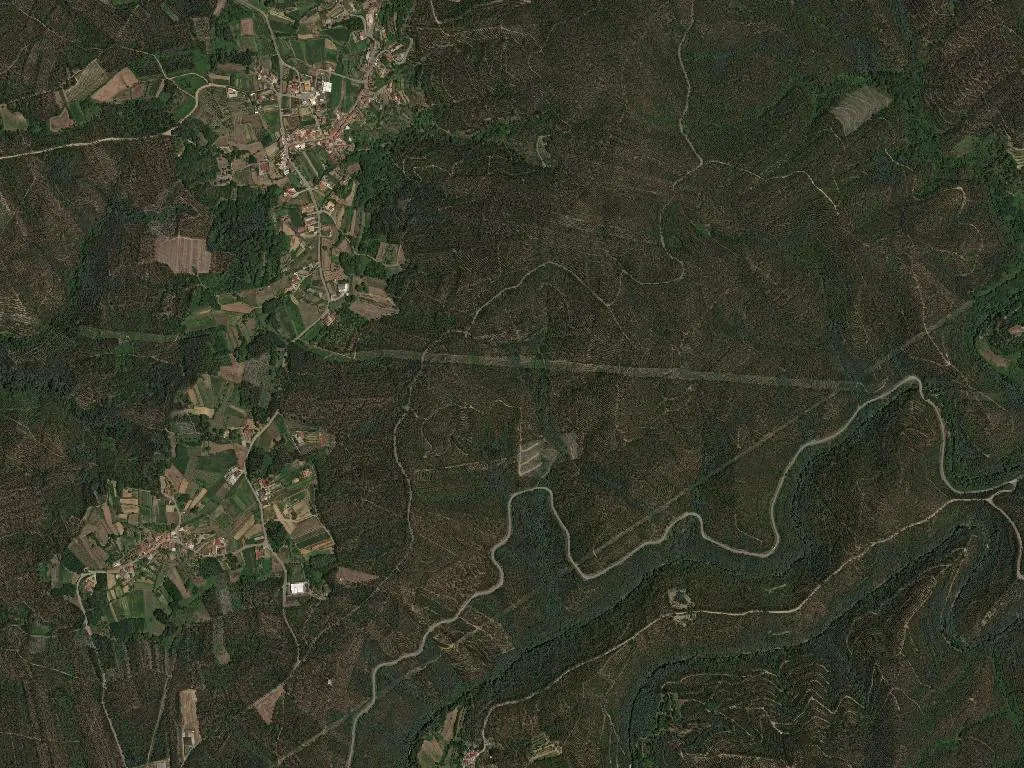
The N234-2 uncoils eastwards from Águeda, shedding the last petrol stations and roundabouts until tarmac thins to a single-track ribbon. At kilometre-marker 38 the road gives up trying to straighten the hills; pine and eucalyptus close in, and Castanheira do Vouga appears—216 m above sea level, 472 souls, one church bell and a scatter of red-tiled roofs that look as if they have slid gently down the slope and decided to stay. Distance here is measured by the echo of Senhor Arménio’s dog: every afternoon at 17:30 sharp it rehearses the same three barks, a canine vesper that drifts across the valley like a public-service announcement that evening is on its way.
Pilgrims in their Own Parish
The religious calendar still writes the only timetable that matters. On the first Sunday of August the Romaria das Almas Santas da Areosa assembles exactly 120 people outside the mother church; they climb 3.5 km of schist path to the tiny chapel where the air smells of hot wax and eucalyptus oil. Fifteen days later the Miracle of Urgueira pulls the remaining 23 residents of that hamlet—plus the Lisbon cousins who have borrowed cars and driven up the A1—into a 1713 hermitage dedicated to Nossa Senhora da Boa Viagem. The procession advances at the pace of Dona Rosa, 87, who has shouldered the litter since she was 12. Father António, the parish’s only priest, waits unhurried; “a pilgrimage has memory, not a schedule,” he says. Since 2012 the Central Portuguese Way of St James has threaded through the village, its yellow scallop way-marks guiding a trickle of foreign boots. They stop to refill bottles at the 1897 granite fountain paid for by Brazil-returned emigrants; no one arrives expecting UNESCO sites—only the unforced cadence of a place that refuses to hurry.
Beef that Never Saw a Menu
Castanheira’s flavour is bovine and monastic. Twenty-eight Marinhoa cattle—native, chestnut-coloured and DOP-protected—graze eight hectares behind Casal. There is no restaurant, but every Friday Tia Albertina lifts the latch if you knock. Her wood-oven roasts a shoulder for four hours with garden garlic and bay, the potatoes planted by a grandson who still believes in school holidays. Dessert arrives courtesy of Sister Doroteia, back from Arouca convent in 1953 with the recipe for ovos moles—egg-yolk threads folded into syrup, set in crisp communion wafers. Twelve village women still make them at home, selling dozens for €3.50 after Mass from sky-blue paper bought at the stationer’s in Águeda.
Mid-Slope Country
The landscape makes no bid for spectacle. Instead it offers the Vale do Bestança, a stream diverted in 1963 when Castanheira’s small dam was built; water threads between royal ferns and silvery alders while kingfishers ricochet overhead. Domingos, 71, has marked 37 cork oaks with red Xs; each July he strips 200 kg of bark that will become bottle stoppers in Albergaria-a-Velha. The air carries November earth, pine resin from the Sobrido wood (bought by the council in 1942 for the old sum of 80 contos) and the sweet smoke of oak logs escaping from 128 working chimneys. The church bell—cast in 1567, re-hung after the 1755 earthquake—still strikes noon and seven o’clock, dividing the day as it did for the present priest’s grandfather. Outside, the road continues, but few drivers pass; Castanheira has already reached where it was going.