Full article about Fermentelos: Where River Ghosts Meet Bread Ovens
Bairrada’s “Capital do Leitão” hides Roman echoes, 17 ovens & haunted 14th-century bridge
Hide article Read full article
The river arrives before the bridge
The Águeda speaks long before you see it. A low, constant hush rises between the stone houses on Rua da Ponte, drawing you down to a three-arched slab-bridge first thrown across the water in the fourteenth century and rebuilt after floods in 1865. Under its unequal arches flow both the river and the residue of everyone who ever crossed: Roman mule trains, Napoleonic foragers, twentieth-century pilgrims ticking off another stage of the Portuguese Camino. Locals insist that when the tide is high you can still hear a lute beneath the span – the ghost of a minstrel who jumped five centuries ago when his love was refused. No one has proved it; no one has disproved it either.
Village of bread and wine
Fermentelos takes its name from the Latin Fermentellus, “little leaven”. The etymology is accurate: the parish grew up around communal bread ovens and stone wine presses, and still keeps seventeen wood-fired ovens in weekly use – the highest concentration in Portugal. On feast days they pump out rye loaves and steaming corn-broa that are carried straight to the fairground tables. Fermentation continues in the Bairrada cellars: bottle-aged espumante, summer-drunk red the locals call “cerveja de verão”, and bagaceira brandy mellowed in oak.
The settlement expanded under the protection of the Couto de Águeda, a privilege granted by Afonso Henriques in 1140. French troops under Masséna torched part of it in 1810; the single-naved Igreja Matriz, rebuilt after the 1758 earthquake, survived and still displays a gilded baroque altarpiece and eighteenth-century tiles illustrating parish miracles. Archaeology fans head to nearby Areosa, where mosaics and Roman kilns have been classified as Public Interest Monuments since 1967.
Roast pig, river eels and miracle-working saints
Fermentelos styles itself the “Capital do Leitão” of Bairrada. During festival weekends the village puts away roughly 1.5 tonnes of suckling pig – reputedly the highest per-capita consumption in the country. The trick is oak-wood embers, a skewer that turns every thirty seconds, and skin that cracks like toffee while the meat stays spoon-tender. River eels stewed with tomato and bay, goat chanfana braised in red wine, and thick, peppery sarrabulho porridge provide savoury counterpoints. Look for DOP Carne Marinhoa beef – autochthonous, fourteen-day-aged – simply grilled in the tascas and served with boiled potatoes and house-made piri-piri.
Faith ferments too. On the last Sunday of August the Romaria das Almas Santas da Areosa sends a flotilla of flower-draped boats down the Águeda to an open-air riverside mass. The “Miracle of Urgueira” is marked on 15 August: in 1754 the Virgin is said to have appeared to a shepherd; the Bishop of Aveiro ratified it the following year. Pilgrims still leave hand-painted terracotta water-jugs as ex-votos, and after the procession blessed sponge-cake is handed round. The Monday after Epiphany is given over to the “Missa do Vendaval”, a medieval field-blessing against Atlantic storms, followed by free bowls of sarrabulho soup.
Between marsh and vineyard
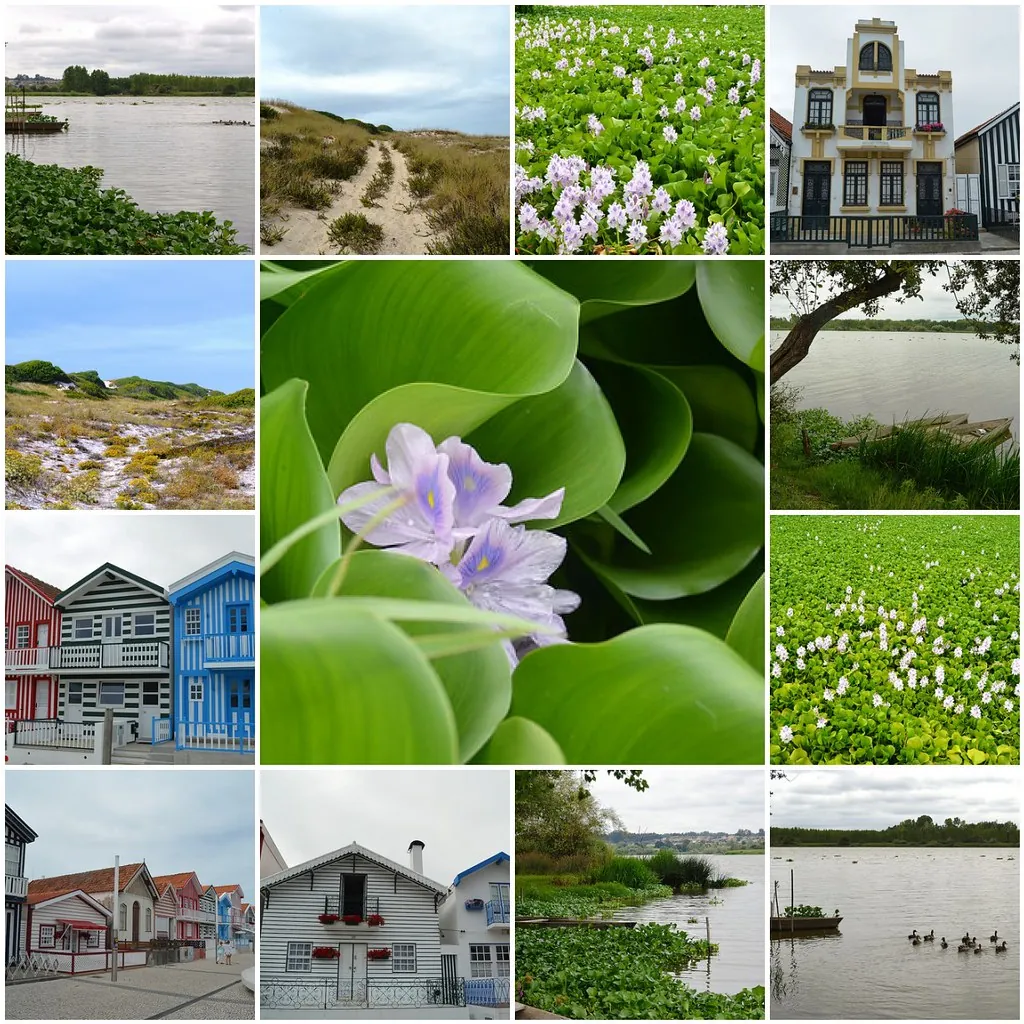
Twelve hectares of reed-bed and yellow iris make up the Paul de Fermentelos, the only known nesting site in the entire Vouga basin for the elusive water rail. PR2, an eight-kilometre circular trail, crosses the medieval bridge, skirts the restored Pego water-mill (brought back to life in 2004) and climbs to the Castelo viewpoint, where schist terraces stitched with vines fall away toward the river. In March the terraces flare scarlet as poppies open against the dark green Bairrada vines.
Way-marked arrows of the Central Portuguese Camino lead hikers through the parish; most pause at the 1887 granite fountain to refill bottles before deciding whether to stay the night in one of three new guesthouses or push on with a box of Aveiro ovos moles bought in the village pastry shop.
At dusk the low sun sets the vines alight and the church bell tolls the angelus. The smell of oak smoke drifts from the communal ovens. It isn’t nostalgia – it is tonight’s dinner proving that Fermentelos is still doing what it has always done best: turning flour, water and time into something worth stopping for.