Full article about Cold granite, Bairrada wine: Préstimo e Macieira de Alcoba
13th-century charters, frost-warm cellars, Way of St James ridge trails
Hide article Read full article
The Cold Stone of Macieira de Alcoba
The granite of the Church of Macieira de Alcoba retains the chill of dawn even after the sun has warmed the steps. Seventeenth-century stone has absorbed four centuries of processions: feet climbing to the churchyard, fingers brushing the Baroque cross before entering. Beside the portal, a slab from 1898 still receives the loaves handed out after funerals, its surface polished by the same gesture repeated across great-grandmothers, mothers, daughters.
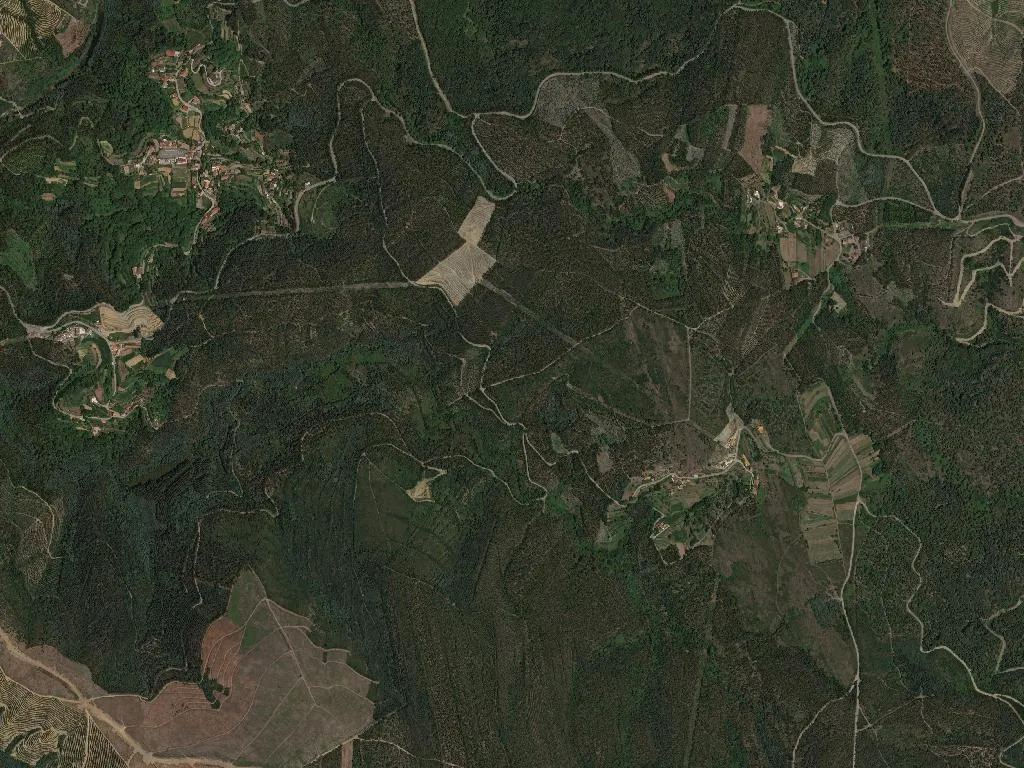
Administratively, Préstimo and Macieira de Alcoba have been a single parish since 2013, but the settlements trace separate charters: Macieira was granted a royal charter by King Dinis in 1293, while Préstimo appears in Manuel I’s 1514 foral. The name Alcoba itself—from the Arabic al-qubba, “vaulted chamber”—maps the topography exactly: the parish curls into the Caramulo foothills between 200 m and 500 m, a domed ridge overlooking the Vouga valley.
Where the mountain meets the wine
Vineyards stripe the lower slopes, interrupted by chestnut groves and oak scrub. This is the demarcated Bairrada region, and the light, sparkling wines made here will stand alongside anything poured in Lisbon’s wine bars. In family cellars the scent of fermenting must mingles with damp earth and the vanilla of old barrels. Terraces are cut so discreetly into the hillside that the incline seems natural; in October the leaves turn copper and gold before the harvest.
The Central Portuguese Way of St James crosses the parish on rural paths that climb to Urgueira, the highest and most isolated settlement in Águeda council. At 500 m the wind combs the grasses and the view unrolls successive ridges until the horizon blurs. Silence is broken only by a distant chapel bell or the warning bark of a mountain dog.
Meat, bread and memory
In the village cafés, Carne Marinhoa DOP arrives faintly smoked over oak. Black-pork chouriço and farinheira burst as you bite. Cornbread, split while still hot, steams up spectacles. Locals pour Bairrada red into small glasses, never to the rim—“wine needs to breathe,” they say. Dessert is Ovos Moles—delicate, shell-shaped wafers from Aveiro—or pastéis de Santa Clara whose pastry is folded so thin you can see the light through it.
Pilgrimages that climb the ridge
The Romaria das Almas Santas da Areosa and the Romaria do “Milagre de Urgueira” draw the faithful to the hilltops. Slow processions wind up dirt tracks, banners snapping, hymns echoing between valleys. After mass the celebrations spill into open-air tables where terrines of roast goat and jugs of wine are shared, reinforcing bonds that distance and an ageing population (240 elderly to 63 under-25s) render ever more precious.
Préstimo keeps its medieval street plan and single-storey granite cottages whose doors are painted the traditional indigo or forest green. In Macieira de Alcoba the church roof—untidy terracotta that never quite survives January storms—shelters a gilded Baroque altar cleaned every Easter Sunday with water drawn from the font. On the summit of Outeira, the late-19th-century chapel of Nossa Senhora is where villagers lie on their backs in August to count shooting stars against a sky so dark it might have been painted with India ink.
By late afternoon shadows lengthen and oak-wood smoke drifts from chimneys. In the cellars someone draws the first glass of new wine straight from the barrel. Beneath the chestnuts, split husks carpet the ground. On the seven-sided cross, the low sun carves reliefs that daylight never shows.