Full article about Beech-scented Recardães e Espinhel
Cornbread crackles in communal ovens while silent hawthorn boats drift the Águeda
Hide article Read full article
Where the river murmurs between watermills and hawthorns
The scent of burning beech arrives before anything else. It drifts over the slate roofs of Recardães at breakfast time, sweet and resinous, leaking from chimneys and from the communal oven where cornbread is still baked as it was in the 19th century. Tear the loaf open and the crust crackles like thin ice; the crumb is the colour of egg yolk, the taste faintly smoky from the wood ash that powders the hearth. You don’t need a road map to know you have crossed into the parish union of Recardães e Espinhel—just follow your nose.
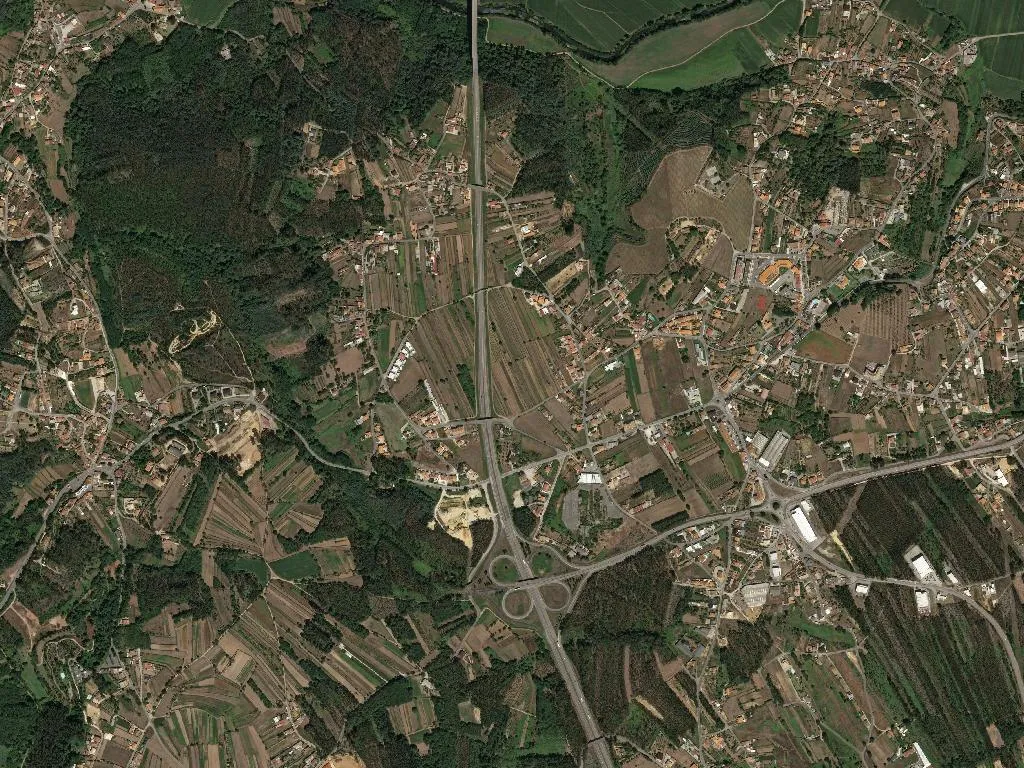
Altitude: 81 m. Area: 22.5 km². Population: 5,755, of whom 1,504 are older than 65 and only 650 have yet to turn 14. The arithmetic tells you everything about the tempo here: mornings lengthen, afternoons drowse, and the 289 inhabitants per square kilometre are enough to keep the cafés ticking without ever disturbing the quiet.
Plague, battle and a promise that refused to die
Layer upon layer, the past overlaps like the gilded carving in Espinhel’s baroque chancel. The name Recardães shrinks back to Ricardanes, a medieval Latin tag for one Rui Cardães, a petty knight who held these fields for Afonso Henriques, Portugal’s first king. Espinhel is blunter: it simply means “hawthorn thicket”, the scrub that once clothed the south-facing slope above the Águeda river. In 1117 that slope became the cockpit of the battle of Espinhel, a skirmish between Christian levies and an Almoravid raiding party out of Coimbra—an incident later embroidered into one of the region’s most stubborn traditions.
In 1617 the plague struck the hamlet of Urgueira. Survivors vowed that if the contagion lifted they would hold an annual pilgrimage. It lifted. Four centuries on, the Romaria do Milagre de Urgueira still closes the first Monday of July: a river-bank procession, a volley of fireworks, and a flotilla of flower-decorated boats that glide downstream in silence sharp enough to hear oars creak. Even in 2020, when the rest of the country hibernated, a masked priest and six boatmen kept the covenant alive.
Carved stone, trodden stone
The mother church of Recardães, begun in the 1530s, wears its Manueline bones beneath later powderings of gilt. Inside, a 16th-century Renaissance retable—classified as a public-interest monument since 1977—catches the 9.30 a.m. winter light in such a way that the Evangelists seem to raise their eyes in shared conspiracy. Step outside and the granite crucifix of 1601 looms like a sentinel whose features have been erased by rain and centuries.
In Espinhel the 15th-century pillory stands where the town hall once registered births, deaths and the price of oxen; Dom Afonso III granted the village its royal charter in 1255. A five-minute walk north, the single-lane stone bridge over the Águeda—rebuilt after the flood of 1987—still carries the Central Portuguese Way of St James; scallop shells dangle from rucksacks as walkers press north toward Santiago.
Upstream, Quinta da Romeira, an 18th-century manor with its own chapel, surveys the valley from behind a double row of plane trees. Higher still, the restored water-mill at Outeiro, reopened by the local heritage society in 2018, turns again; you hear the grindstone before you see it, a hollow rhythmic rasp among the willows.
Roast piglet, lamprey and Bairrada bubbles
This is Bairrada wine country, and the dining room follows the vineyard calendar. Roasted suckling pig arrives with a skin so brittle it shatters like caramel, the meat beneath still milky. Wednesday’s open-air market in Espinhel sets up a makeshift counter where slices are sold straight from the tray, wrapped in grease-proof paper and handed over with a glass of rough red.
The river, meanwhile, dictates subtler flavours. Lampreys—jawless, prehistoric—run in February and March; their flesh, stewed with rice and coloured with the pig’s blood, tastes faintly of iodine and smoke. Eel caldeirada demands three hours of gentle simmering until the bones dissolve into the broth. Chanfana, goat slow-cooked in a black clay pot with red wine, juniper and bay, is eaten with cornmeal mush the colour of wet sand.
Convent sweets have migrated inland from the coast: trouxas de ovos (syrupy egg-yolk spirals), pastas de Santa Clara (almond and cinnamon pastries), and the famous ovos moles—delicate seashells of Aveiro IGP provenance. Meat counters display Carne Marinhoa DOP, beef from the tawny Marinhoa cattle that graze between the Vouga and the Águeda. To drink, Bairrada’s method-classic sparkling wines, built on the baga grape; Quinta do Valdoeiro opens by appointment for cellar-door tastings that end with a walk among the vines.
Watermills, herons and wind on the ridge
The 8 km Rota das Azenhas strings together five derelict watermills, moss-lined channels and stone weirs along the valley floor. Cork oaks and holm oaks throw dappled shade; kingfishers ricochet across the pools. At the Passadiço da Areosa a grey heron stands motionless among the reeds, and if you borrow binoculars from Bar O Pescador you can pick out the dipper that dives without warning, a black bullet against the current.
Finish at Cabeço do Vento, a natural balcony above Águeda town. The cork canopy parts and the entire valley unfurls—river, railway, red-tiled roofs and the distant shimmer of the Pateira lagoon—like a 19th-century panorama painted on porcelain.
The fountain that rinses the dust from the road
Recardães’ 1785 fountain carries a Latin invitation: Lava corpus et animam—wash body and soul before you enter. The water still spouts from a stone spout worn thumb-smooth. On a late-May evening, after the Romaria das Almas Santas da Areosa—an open-air mass followed by a cake auction that turns into a shouting match of escalating bids—you can follow the brass-band rehearsal drifting from the parish hall and press your palms under the jet. The soul may stay as it is, but the dust of the road rinses away. Sometimes that is enough.