Full article about Vouga’s Voice: Trofa, Segadães & Lamas do Vouga
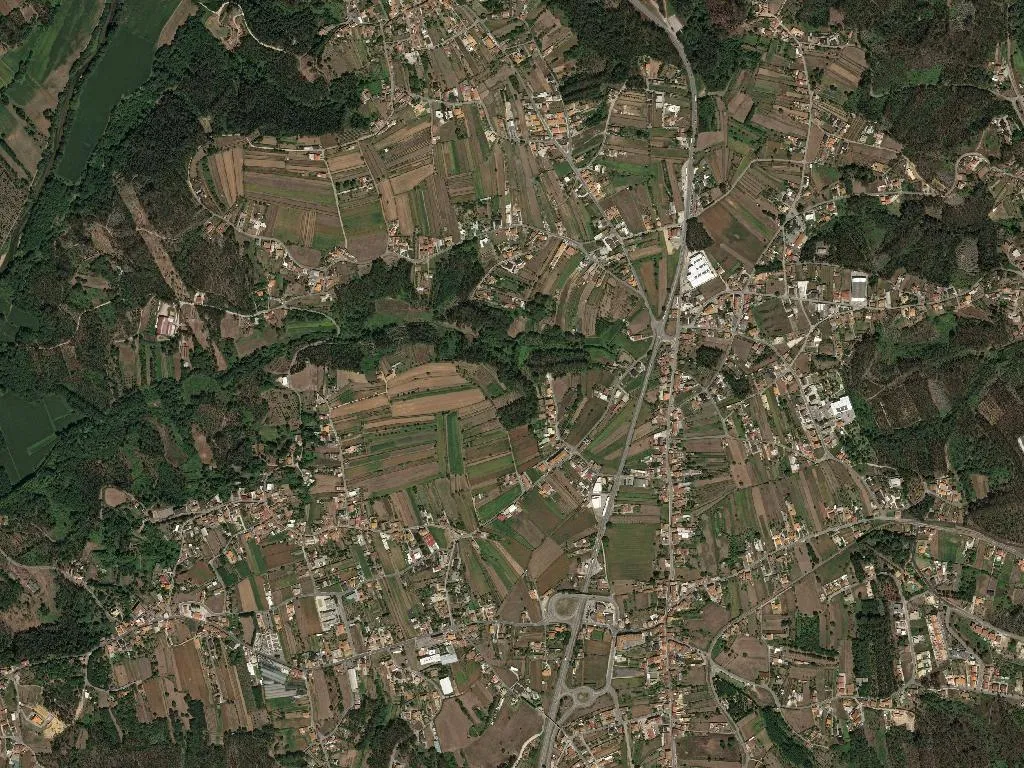
Sleepy river parishes where medieval bridges echo with dawn mass and all-night pimba.
Hide article Read full article
The River That Won’t Shut Up
The Vouga is audible before it’s visible. Motorists racing north from Aveiro or south from Porto register it first as static in the background—white noise that drowns out the A25 and slips through half-open windows. Then the road dips, the granite parapets of the Ponte do Marnel appear, and the river announces itself properly: a brown-green slide of water that has been working overtime since the thirteenth century.
Pull onto the old EN1, climb the slimy treads of the bridge and you’re across in three minutes. Traffic now uses the 1960s concrete sibling 100 m downstream, so the medieval arch is foot-only. Original voussoirs still carry the span; a discreet 2018 plaque reminds you the council rescued it from slow decay. On the far bank a sign promises an “Archaeological Station” on the scrub-topped hillock ahead. Excavations stopped in 2019 when the money dried up, so you’ll have to conjure the third-century BC ramparts, Roman bathhouse and stretch of royal road yourself. Bring water—there is no café, no shade, no illusion of Pompeii.
What Passes for Civilisation
Segadães, the parish hub, keeps the lights on with the bare minimum: Galp petrol pumps, a mini-market that doubles as post office, a pharmacy and a bakery whose metal shutter rises at 07:00 and drops at 19:00 sharp (Sunday afternoon, forget it). Inside the locked church of S. Pedro a Marian shrine is slowly dissolving under roof leaks; nonetheless, mass is non-negotiable at 11:00 every Sunday. Arrive ten minutes early to claim the front pew—it's the only dry real estate left.
Festivals that Refuse to End
Two annual romarias anchor the social calendar. Almas Santas (late May) and Urgueira (first Sunday in August) both begin with open-air dawn mass at 06:00 and close after 02:00 the following morning with sardines (€3), Bairrada wine by the plastic tumbler (€2) and pimba blasting from a canvas marquee. If you need a bed, Café Central will let you brush your teeth in its lavatory, but the nearest pilgrims’ hostel is 18 km away in Albergaria-a-Velha.
Way-marked but Still Thirsty
The Central Portuguese Caminho slips along the EM 556; yellow arrows are stencilled on electricity poles. Eight kilometres of tarmac and dirt later you reach the first coffee in Gafanha da Boa Hora—carry water because there isn’t a fountain en route.
Where to Eat Properly
O Moliceiro in Trofa fires up the leitão oven only at weekends; book ahead (234 123 456). A €28 platter feeds three and comes with hand-cut chips and a salad that is mostly iceberg and redemption. In Lamas do Vouga, Restaurante O Vouga writes its winter chanfana menu on a blackboard, closes Monday and Tuesday, and regards vegetarianism as a clerical error. Ask the day before and they’ll scramble eggs; the house fizz is Quinta do Encontro at €14 a bottle.
Mud, Track and Pilfered Posts
The PR4 “Rota do Vouga” starts beside the Marnel bridge, follows a dirt levee for 10 km to Lamas and loops back along an irrigation channel. Wooden way-markers give distances—except where locals have repurposed them as garden fence posts—so download the GPX from Águeda town hall before you set out. Clay soil after rain grips soles like wet cement; proper boots, not white-soled Stan Smiths, are advised.
Getting In, Getting Out
AVIC runs four daily buses to Águeda (line 511; 20 min; €2.05). The luggage bay takes two bikes if you butter up the driver. Drivers themselves may leave a car anywhere; the concept of metered parking hasn’t arrived.
Epilogue at Dusk
When the sun drops behind the eucalyptus the river’s pitch lowers but the conversation never ceases. The Vouga keeps talking—an unadorned reminder that water travels, stone stays, and everything else is merely passing trade.