Full article about Candosa: where shale hills cradle stone and silence
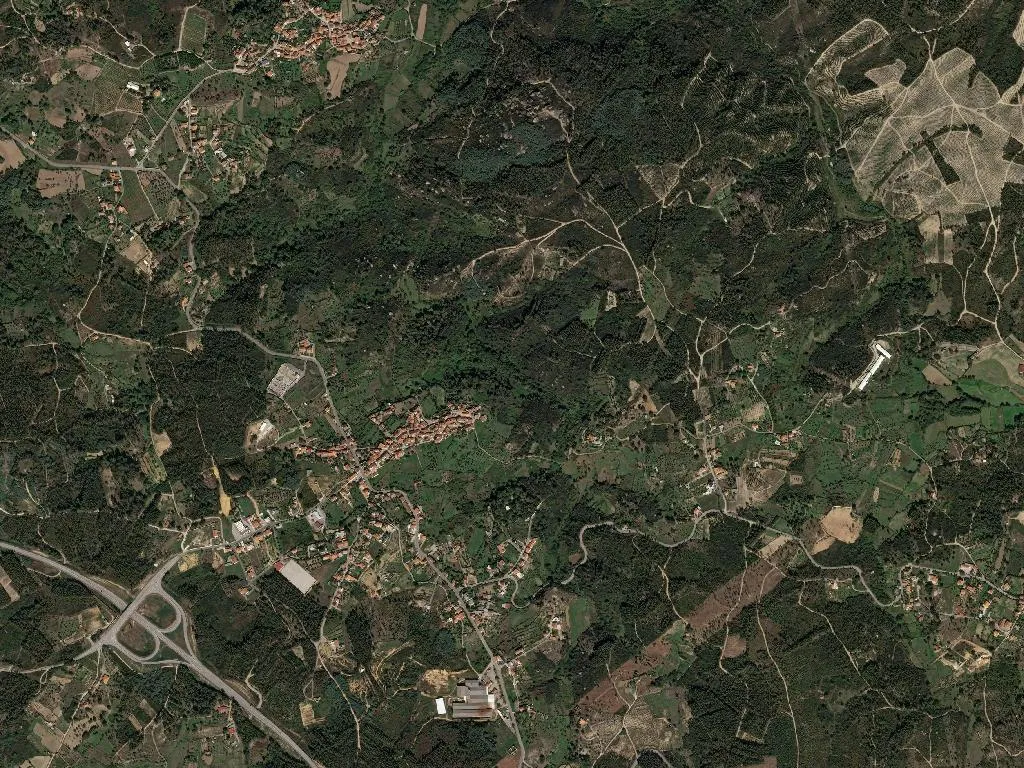
Candosa village, Tábua, Coimbra: shale amphitheatre, 1755-quake church, chipped 1944 cross, tight-knit water rota.
Hide article Read full article
Stone, water and what won’t stay buried
At three o’clock the church bell slices the air like a blunt razor – not an echo, but memory being torn. In Candosa sound travels in jerks, vaults the dry-stone walls and dies on its knees among the eucalyptus. Locals say the valley demands it: the village sits in a natural amphitheatre of shale and when the wind funnels down it brings the smell of wood-smoke and the slam of doors no one remembers opening.
São Martinho is no Romanesque relic; it is a collage of mismatched centuries – nave rebuilt after the 1755 earthquake, bell-tower added in 1932, a door that has groaned in the same hinges since living memory began. The blue-and-white tiles don’t gleam; they are dulled by dust and the fingerprints of generations of bored children. The sacristan, Sr Antunes, unlocks the parish archive only when conversation appeals to him. He lifts out the ledgers like peeling an onion, reading baptisms in a tumble of names: “António do Celeiro, born here; this one shipped to France and never wrote back.” In the churchyard the stone cross bears a chip on its left arm – a German lorry bumper in 1944, the village’s single brush with the war. The 1892 bridge still takes the weight of a Massey Ferguson, but no driver risks two at once; the deck shivers, the stream below laughs, knowing everything collapses into it eventually.
The ones who came back
In the Eighties the retornados brought Paris wages and suburban nerves. They built new granite houses but fitted double-glazed windows and aluminium shutters – the glass-in-the-tiles fad lasted exactly three winters before frost cracked it and damp moved in, a standing joke at the café. The population fell, yet Candosa is not empty; it is simply quiet. Irrigation turns still rotate by verbal agreement: every household knows which morning belongs to which terrace; miss your slot and the eldest sister’s tongue flays you – “water waits for no one, neither will I.” The name “Candosia” survives only in the throats of emigrants’ grandchildren who have never written it down, rolling it round their mouths like a butterscotch.
Lamb, corn-bread and Dão red
Tasca da Ladeira opens when Laurinda feels like it – look for the wicker chair outside: facing the road means lunch, against the wall means forget it. Lamb goes into the wood oven at six, straight after Sunday mass; arrive late and you get peas with a poached egg. Wine arrives in a chipped jug whose rim carries the tooth-marks of the late Sr Joaquim, who always bit his crockery when he drank. The potato cornbread comes from next-door’s wood-fired oven – dense enough to double as ballast, soft enough to send you dozing in the afternoon sun. When the cheese runs out, it runs out; no menu, no apologies. Every October the gila jam is stirred with backyard walnuts; jars line the balcony sealed with foil caps and serve as thank-you currency for favours done.
Mill-paths, mist and blackbirds
The Caminho dos Moinhos begins just past the boarded-up primary school. A sun-bleached sign is legible only if you already know what it says. Eight kilometres of loose shale and wild-boar ruts – take a stick and a chorizo sandwich because there is no espresso van. Mist rises from the stream like cigarette smoke and coils through the thyme; blackbirds stay silent, stabbing the path then skittering off. When the almond blossom arrives the romaria becomes a sprint for the lowest branches to make posies later sold for two euros in the square. At the Cruzeiro viewpoint a crushed beer can is cemented into the paving: proof that someone has already watched the sunset. Cold wind rasps your cheeks, burnt eucalyptus lingers in the nostrils, and far below the stream keeps its low growl, certain tomorrow will be the same as today.