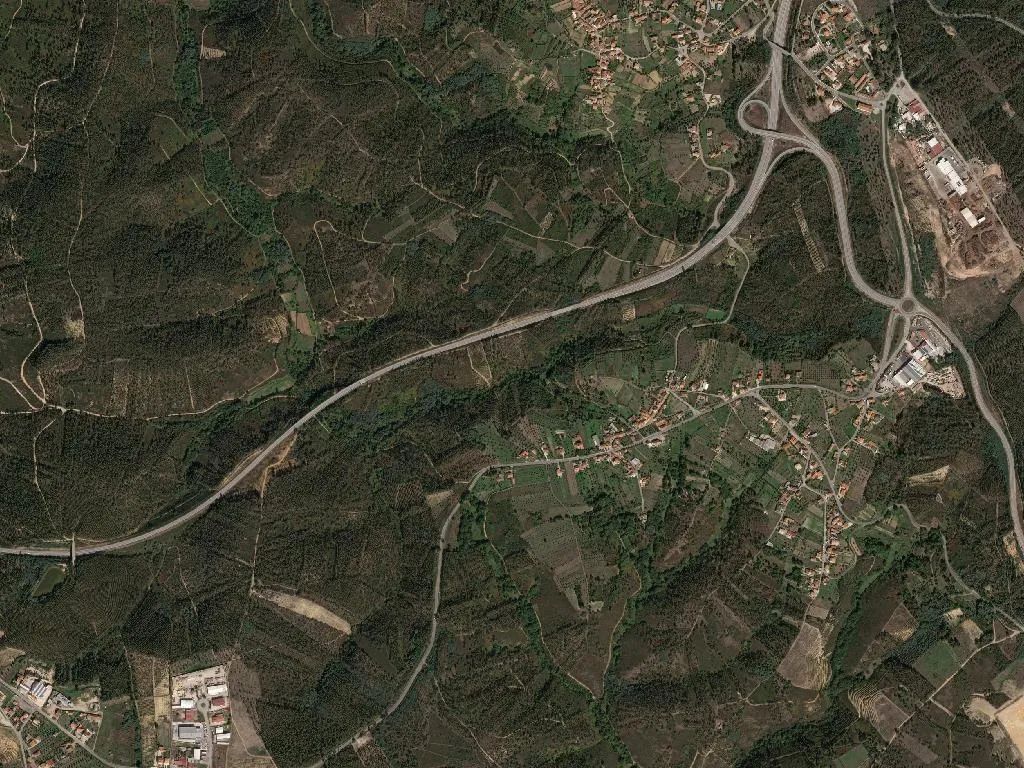
Full article about Carapinha: Woodsmoke & Sheep Cheese at 239 m
Visit Carapinha, Tábua, for wood-fired lamb, 60-day mountain cheese, DOP apples and silence above the Mondego
Hide article Read full article
Woodsmoke at 239 metres
The first thing you notice is the scent: a slow ribbon of woodsmoke drifting uphill from a farmhouse kitchen, threading through chestnut canopies that throw late-afternoon shadows across the lane. Below, the Mondego valley unrolls like a pale ribbon; above, the chapel bell of Nossa Senhora da Conceição—cast in 1892, still rung by hand—cuts the hush with a single metallic note. At this height the air is weighted with habit rather than hours: January pruning, October’s haul of Riscadinha apples, the daily rhythm of milk tipped into schist cheese vats.
Why it’s called Carapinha
The parish takes its name from the carapinheiros, the sawyers who once worked the water-powered mill on Ribeiro stream. When the blades fell silent in the 1970s the population had already slipped below four hundred; today only 366 souls remain year-round, and winter whittles that to under two hundred. There are no waymarked trails, no panoramic boardwalks—just a dirt track climbing to Alto da Pedreira where, on a clear afternoon, you can trace the river from Pego da Rainha to Penacova without a single turbine or tour bus in sight.
What you can still buy at the gate
The lamb that roasts in the wood-fired oven was grazing these terraces a week earlier—Bordaleira sheep, the same breed whose milk becomes the firm, hay-scented cheese aged 60 days at Quinta do Fonteiro. Knock at the dairy door on Monday or Friday, 9-12, and you’ll pay €3.50 a kilo straight from the vaulting room. Arrive before ten and Dona Idalina will be on the step with requeijão still warm, wrapped in grease-proof paper; her thirty pots are normally gone by mid-morning. At the roadside stall where the lane meets the EN17, Sr Aníbal sells Riscadinha de Tábua apples—DOP-protected since 2004—for €1.20 a kilo while they last.
The only paths that matter
The most trodden route drops 3 km to Pego da Cidade through vineyards João Lourenço planted with Tinta Roriz in 1998. Sunday mass is at 11; on 15 August the chapel spills its congregation into an open-air arraial where bifanas sizzle for €2 and Dão red is poured from clay jugs. Wander into the cemetery and you’ll find the 1887 stone of José Carapinheiro, last of the sawyers, who died the year Eisenhower was re-elected. Evening light lingers on the Ribeiro terraces where foundation walls of the old mill still stand; once the bread smell has faded, the communal oven—rebuilt in 2018—fires again on the first Saturday of each month for anyone who brings dough. Walk away and the silence follows, light as wood-ash, certain as the next pruning season.