Full article about Mouronho: Where Sheep Trails Echo Beneath Granite Eaves
Granite lanes tilt toward São Pedro chapel above the hushed Ribeira da Moura in Mouronho, Tábua.
Hide article Read full article
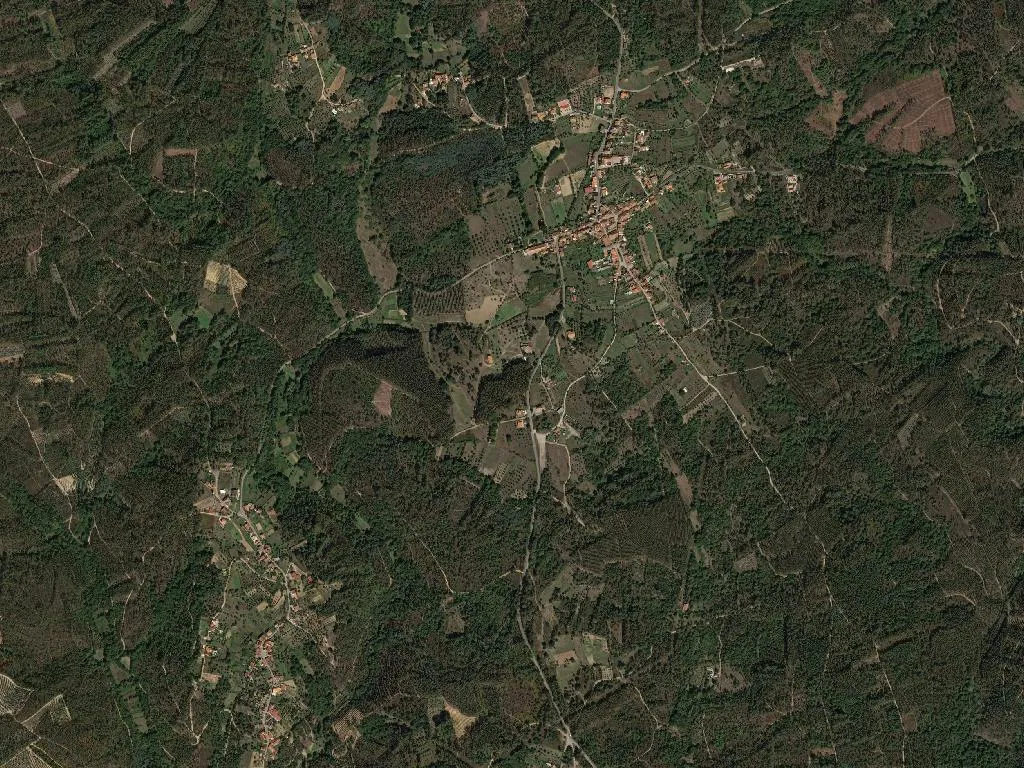
The water arrives before the view. The Ribeira da Moura slips between olive terraces, a low hush against schist, and you only notice it once you are already halfway up the slope. Mouronho perches above, where the ground begins its slow climb toward the Serra do Açor—261 m on the ordinance map, nothing dramatic, yet the air is suddenly cooler and the light tilts differently over the dark-slate roofs. Granite houses the colour of weathered linen line alleyways that seem to have germinated from the soil itself, unpremeditated, unhurried.
Three inspectors and a leaking roof
The parish church of São Pedro commands the summit. Walk up to it and you have read the village plan: a single ogival door, one nave, a square apse, and then the payoff—an apron of granite overlooking the Moura valley and the stairstep plots that descend toward the Alva.
In 1712, 1715 and 1717 successive ecclesiastical inspectors climbed the same cobbles and found an identical litany: infiltration staining the walls, lime crumbling from the vault, poverty written into every stone. Three separate repair orders, three records of decay. The building was patched, reroofed, but its DNA never altered—granite shoulders, schist hat, and a bell that still divides the day into quarters.
A wall with no walls
The name derives from the Latin murus—a wall—yet no masonry survives to justify it. The settlement coalesced around the tiny chapel of São Pedro and for centuries functioned as a waypoint on the transhumance trails that shuttled sheep between the lowlands of the Mondego and the high summer pastures of the Estrela. Today you may still meet flocks on the municipal road: Bordaleira ewes drifting downhill in May, Serrana goats heading up in October, their bells exchanging places like seasonal currency.
The rain pilgrimage
Mouronho has no blow-out patronal festival. Instead it pools resources with neighbouring Avó and other parishes for a collective romaria to the same São Pedro chapel, a rite that began as a weather negotiation. When drought persisted, entire communities walked the slope before first light, intoning litanies in lieu of precipitation. Elderly residents recall fathers returning at dusk with bloodied feet and a whispered assurance: “This year it will rain.” The practice survives now as anecdote rather than observance, yet when the spring rains stall the topic still surfaces over espresso at Café O Mourão.
What lands on the plate
The menu is whatever the mountain sheds. In the restaurants of Tábua, 8 km away, you will find Chanfana of Serra da Estrela DOP lamb, its sauce as dark as the clay pot it is baked in. The grocery-mercearia Moura (07:00-19:00, closed Mondays) stocks the same mountain’s buttery DOP cheese; fresh requeijão appears on Wednesdays and Fridays. Beira Alta IGP apples drop straight from orchards that girdle the village—ask Sr António at the bifana counter if he has any left. Bread is dense maize or rye, best dragged through the gravy and washed down with Dão red sold at the Intermarché in Tábua for €3.50.
Arrival and parking
From Coimbra: A1 to Condeixa, then N17 to Tábua, finally the M517 to Mouronho—45 minutes. Park on the square in front of the church (15 spaces) or in Rua da Escola (7 spaces). Bus: Rede Expressos Coimbra–Tábua–Mouronho, three times daily, stops outside Café O Mourão.
Unsigned paths
No way-marked trails exist, yet the medieval lattice of footpaths still stitches pinewoods to olive groves. From the church square, follow the beaten-earth lane downhill to the stream—twenty minutes to the single-arch stone bridge where children cannon-ball in July. Continue upstream past three ruined mills; the middle one still owns its iron wheel. The full loop back to the village is 4 km, an hour and a half, and you will not pass a single café—carry water.
Seven-hundred-and-fifty-five people, one continuously running soundtrack. When you descend at dusk the water’s murmur reaches you again, the same frequency that accompanied the first imagined wall, and every day since.