Full article about União das freguesias de Pinheiro de Coja e Meda de Mouros
In Tábua’s joint parish, river-cradled terraces guard wild-cardoon cheese, lamb scented with quartz
Hide article Read full article
A Shale Path Up from the River
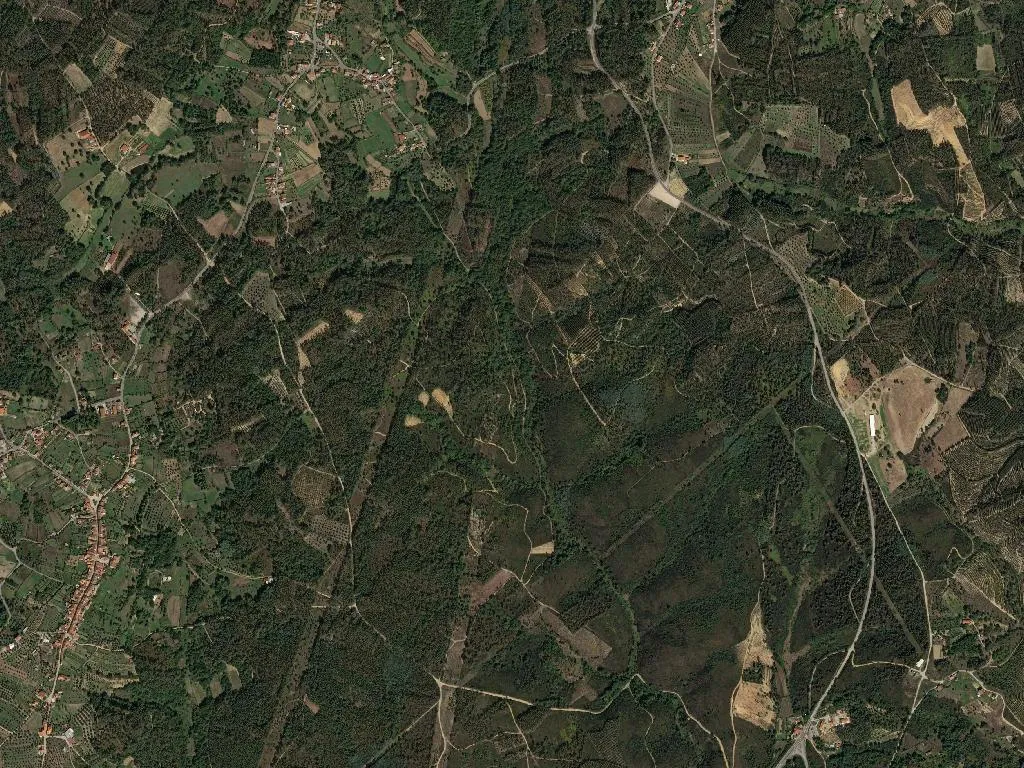
The lane climbs between slate walls softened by moss that maps the stone in velvety green. Woodsmoke drifts downhill, and beyond the next bend the terraces drop away—rows of vines stitched into quartzite. This is the joint parish of Pinheiro de Coja and Meda de Mouros, 20-odd kilometres southeast of Coimbra, where silence feels deliberate rather than deserted, the acoustic of a place that has chosen to move at its own cadence.
Cheese, Lamb and a Loaf Still Warm
There is no DOP seal on the sheep’s-milk cheeses aged in local shale cellars; that status is reserved for the Serra da Estrela dairies an hour east. Yet the method is indistinguishable: raw Bordaleira ewe’s milk, copper vat, wild-cardoon rennet, curds broken to walnut size, then cloth-bound and parked on rye shelves until a natural rind blooms. The same pastures fatten the spring lamb served at Easter, its flavour carrying the resinous herbs that grow between outcrops of gleaming quartz.
On Saturdays the wood-fired communal oven in Pinheiro de Coja is lit. Maria do Céu—grand-daughter of the original baker—starts kneading at five, tipping yeasted rye-and-corn dough into wooden troughs rebuilt from sugar-crate staves. By ten the first loaves are cooling on wire racks while villagers swap prescriptions and olive-harvest dates. The apple on the sideboard is Beira Alta IGP, a survivor of the 1990s graphite-borer blight that forced most small orchards under the plough.
Living Between Two Rivers
Average altitude is only 248 m, yet the topography feels Alpine. The Alva, a Mondego tributary, curls round the southern edge; its 1978 flood took out the stone bridge and half the water-mills, replaced now by a single-span concrete deck carrying the EN17. Way-marked footpaths such as the CM1103 still follow the old royal road: look for granite pillars carved “1784” among the heather.
Across 1,972 ha there are 213 dwellings; five are signed up as rural lets—Casa do Forno, Quinta do Vale, Casa da Eira. Walls are 80 cm thick, windows trimmed in indigo, roofs capped with half-round terracotta. Fibre arrived in 2019, but drop below the ridge and your phone still hunts for signal.
At seven the fog lifts off the river and Café O Cardoso raises its shutters. Delta machine coffee, toast made from yesterday’s broa, butter stamped with a sheaf motif. The room functions as parish noticeboard: who needs help bringing in the olives, whose funeral is Thursday, whose blood pressure isn’t improving. The village grocery closed in 2020; for milk or paracetamol you drive 15 minutes west to Tábua along the EM559, headlights brushing abandoned threshing floors.
Dusk comes fast behind Cabeço do Roxo. On the winter solstice the sun lingers for exactly seventeen minutes, gilding the schist until it glows like wrought copper. Woodsmoke rises vertical—oak for heat, eucalyptus for kindling—then unravels against a sky rinsed clean of cloud. After dark you hear only the dogs of Bogalhas and, far off, an HGV changing gears for the climb towards the Serra da Estrela.