Full article about Póvoa de Midões: smoke, slate and shears at dusk
In Tábua’s hidden village, vine rows, cracked talha wine and cow-negotiated cheese survive
Hide article Read full article
Woodsmoke at Dusk
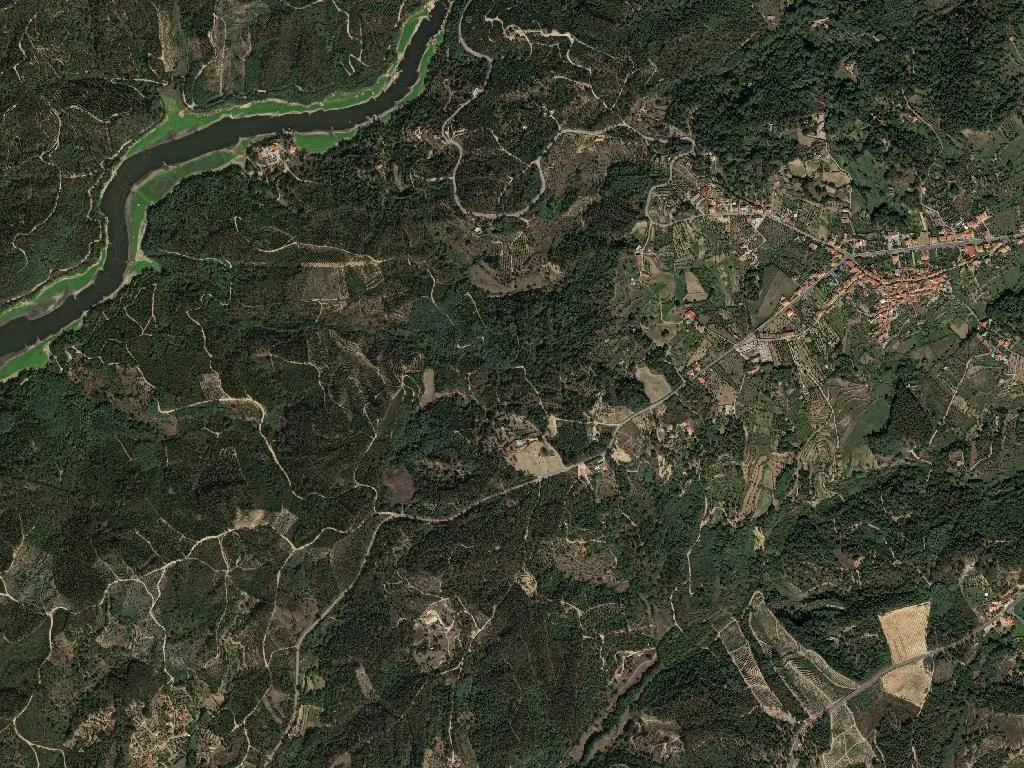
The hill-wind skews every plume of smoke that rises from Póvoa de Midões at tea-time, as though the valley itself were trying to keep its own breath private. Five hundred neighbours, one road in, and a scatter of slate roofs held together by the smell of wet pine and the first olive oil of the year still warm from the cooperative press. António—eighty-seven, no helper—works his rows of vines in a tweed cap stitched by his wife in 1963. His shears click like a metronome against the granite sky.
Where the Dão Meets the Schist
Inside Alice’s grocery you can buy three things: tinned sardines in tomato, wire-wool, and the local news. She already knows who has bronchitis before the doctor does. Next door, Zé unlocks the café at 6 a.m. to empty yesterday’s ashtrays; by seven-thirty the same four septuagenarians slam down knaves and queens in a game of sueca, fortified by two fingers of bagaceira before breakfast. Forty-six pupils attend the primary school; Years 1 and 2 share a classroom because the demographic maths is unarguable. Their teacher commutes from Tábua with a packet of Maria biscuits for the child whose father’s benefit still hasn’t arrived.
Wine here is geology in a glass. Mr Domingos decants his red into five-litre mineral-water bottles, the sort hikers discard at motorway services. It tastes of the slate it grows in—pencil-lead, classroom dust—and comes from vines his mother planted: Touriga Nacional, Tinta Roriz and a single Alfrocheiro vine whose berries children steal just before the harvest. The clay talha in the cellar has carried a hairline fracture since the Carnation Revolution; Domingos insists the crack lets the vintage breathe.
Cheese is a negotiation. Dona Amélia milks at five, fingers numb, yield dependent on the cow’s temper, the cat’s appetite and whether her city son appears for the weekend. When the curd behaves, rounds are presented on grandmother’s rose-patterned plate and sliced with a black-handled knife that has never seen Fairy Liquid. Spring lamb is Jorge’s department, roasted in the communal bread oven dated 1923; crackling is scented with rosemary that forces its way through the dry-stone wall built back when wages were paid in réis.
Silence with Weight
The Romanesque bridge—simply “the old bridge”—arches over the Mondego where August teenagers bomb into water the colour of bottle glass. Mid-span, the stone has been polished by decades of girls sitting sideways, discussing boys who left for Coimbra and never came back. Every terrace wall remembers the Estado Novo: hidden flagons of wine, links of alheira sausage buried like contraband treasure.
Night noise is selective: no street-lights on the lane to Poço do Inferno, only the moon when it remembers to clock on, and the single beam of Zé Carlos’s tractor returning from the grapes at half-past ten. Sr Domingos’ dog barks at three a.m. with Swiss precision. Occasionally the GNR van coasts through, diesel and starched uniforms drifting in through open windows.
Sunday changes the air. At half-eight the church bells summon the children’s mass; doorways fill with dressing-gown coats and steam from coffee mugs. Conversations hover—lack of rain, the dairy price, the granddaughter in France who didn’t call. River mist lifts like a tired animal; the cemetery gate squeals, pushed by a wind that has nowhere else to go. For a full minute no one speaks, and the village inhales.