Full article about Atouguia da Baleia: whalebones, salt wind and tarred huts
Atouguia da Baleia, Peniche: timber fish-huts, whale-named streets, 16th-century gold-leaf altars and Atlantic-sculpted forts in one salty parish
Hide article Read full article
Atouguia da Baleia: where salt still gnaws the timber
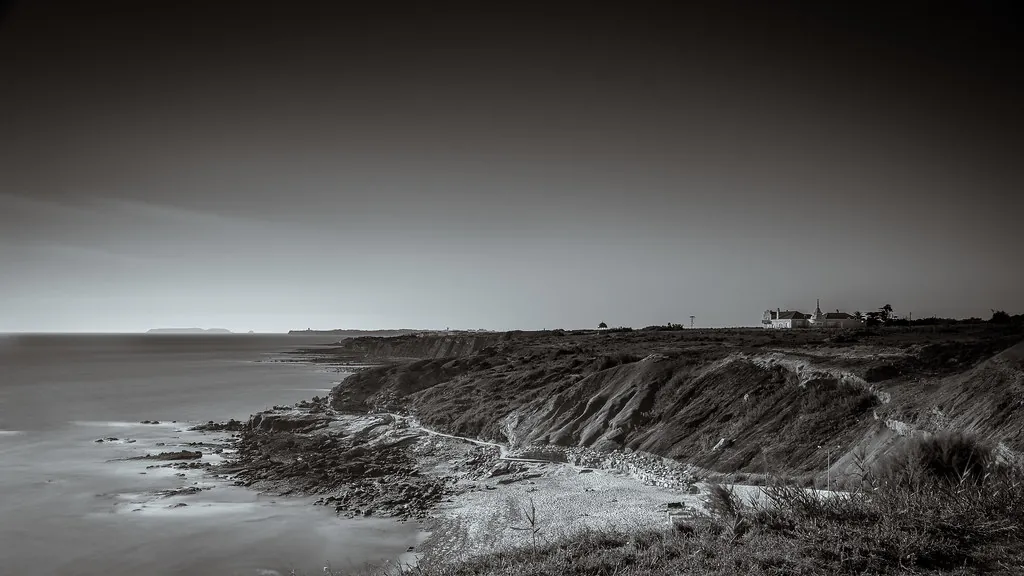
The wind gets here before everything else. Before you see the Atlantic, before the windmills sketch their black silhouettes on a pearl-grey sky, a blade of iodine-laden air snaps across your face and dries your lips to parchment. In the Gamboa fish-huts—tar-blackened timber frames patched with reed thatch that the weather shreds and the fishermen re-weave overnight—the smell is of wet hemp rope and pine tar. This is the western rim of the parish, barely 60 m above sea level, where 47 sq km of land balance between ocean spray and the wheat fields of Portugal’s interior.
A street named after a sperm whale
No other settlement in the country has a Rua da Baleia. The name is not poetic licence. In 1914 a 16-metre sperm whale stranded on Gamboa beach; villagers hauled the carcass inland and flensed it in full view of neighbours who queued for oil, teeth and blade-bone. The butchery took days and the memory stuck so firmly that when the place broke away from Serra d’El-Rei in 1953 it adopted the whale as civic badge. “Atouguia” itself is older, from the Arabic al-turgi, “pasture ground”, a reminder that before Atlantic cod and wetsuits this coastline fed sheep. The Knights of Christ stamped their cross here in the 1400s; Liberal reformers parked the parish inside Peniche council boundaries in 1836. Sea or soil? The argument has never been settled.
Stone, lime and a wooden cap
Inside the 16th-century parish church candle-light flares across a gilded Manueline altarpiece so saturated with gold leaf it seems to generate its own dusk. Three minutes away, a granite 18th-century wayside cross throws a razor-thin shadow onto uneven cobbles. Closer to the cliff edge, the baroque façade of Nossa Senhora da Boa Viagem—Our Lady of Safe Return—has been sand-blasted by Atlantic storms until the stone corners feel like beach glass. The 17th-century Fort of Consolação, built to eyeball pirates and the odd English privateer, now surveys camper vans and kite-surfers. On Cabeço do Penedo, scraps of Roman roof-tile and a crescent of Islamic irrigation channel poke through gorse like geological afterthoughts.
What stops visitors in their tracks is the working windmill above the village. Restored down to the last creaking cog, it is one of the few on this coast that still swivels its wooden cap into the wind. When the four canvas sails whip round the granite tower the sound is half growl, half heartbeat, a noise the locals call “o ranger do mundo”—the world creaking.
Low tide: horses, spoonbills and two kilometres of sand
The Sizandro estuary is a shape-shifter. At low water the sea retreats more than two kilometres, exposing sandbanks where semi-feral horses graze as if the ocean were merely a passing nuisance. A five-kilometre footpath hugs the estuary, signed with silhouettes of black-winged stilts and pied avocets. Cyclists can pick up the pine-scented lane that slices through the Leiria forest plantation and delivers you, 8 km later, to the wide arc of Praia da Consolação. The circular Mills Trail—seven kilometres of sand track and cobble—passes the windmill, the Gamboa huts and finishes on Cabeço do Penedo; from the top the Berlengas archipelago floats on the horizon like a rumour of exile. Atouguia sits inside the UNESCO-designated West Geopark and within the buffer zone of the Berlengas Nature Reserve; yellow arrows of the Coastal Camino to Santiago stripe village walls every spring, scallop shells rattling on rucksacks.
Fish stew, dark bread and a dune-flavoured liqueur
Gamboa caldeirada arrives in a black clay pot: sea bass and grouper in tomato, onion and a fistful of coriander whose steam rises in green spirals. Atouguia bread soup is humbler—dense rye soaked in garlic-coriander broth, crowned with a poached egg that bursts into sunset yellow. Sizandro eels, marinated in vinegar and bay, scrub the palate for the sweets: “Heart of Atouguia” egg-yolk cakes or Bolinhos de Amor, doughnut spheres dusted with cinnamon that crack like meringue. Wash it down with a pale white wine grown in wind-sieved sand, then a thimbleful of erva-príncipe liqueur distilled from an endemic dune plant—green, sharp, half-way between chartreuse and cough medicine. Pêra Rocha and Alcobaça apples, both protected origin products, fill the stalls on the first Tuesday of each month when the parish council closes the main street for the monthly fair.
Crafts the Atlantic taught
Maria da Conceição “Lili” Silva knotted fishing nets for nine decades and, until her death in 2022, ran evening classes in the old primary school so younger hands could learn the arte-xávega knot. Parish priest Joaquim Lourenço spent forty years recording fishermen’s lore—storm litanies, whale laments, recipes for shark stew—publishing them in pamphlets now stacked in the council archive. Every May the image of Nossa Senhora da Boa Viagem is carried down to Gamboa and ferried to Peniche in a flotilla of painted boats; on 29 June the water fills again for São Pedro’s Círio, decks dressed with dahlias and paper flags. At Christmas the village still stages Cantigas ao Desafio—two singers trading rhymed insults until one is left speechless; silence between verses is part of the score.
Atouguia da Baleia has 9,117 inhabitants, 2,300 of them over sixty-five. It carries the freight of memory without the need to advertise the fact. After dark, when the wind drops and the Atlantic subsides to a bass whisper, you can stand on Rua da Baleia and hear the windmill’s wooden cap rotating in the dark—an unmistakable signature that says, simply, you are here.