Full article about Peniche: Atlantic Salt, Prison Stone & Fishermen’s Dawn
Peniche dishes iodine air, 40-m cliffs, a 16C sea-fort-turned-political-prison and world surfing barrels—plan your sensory escape now.
Hide article Read full article
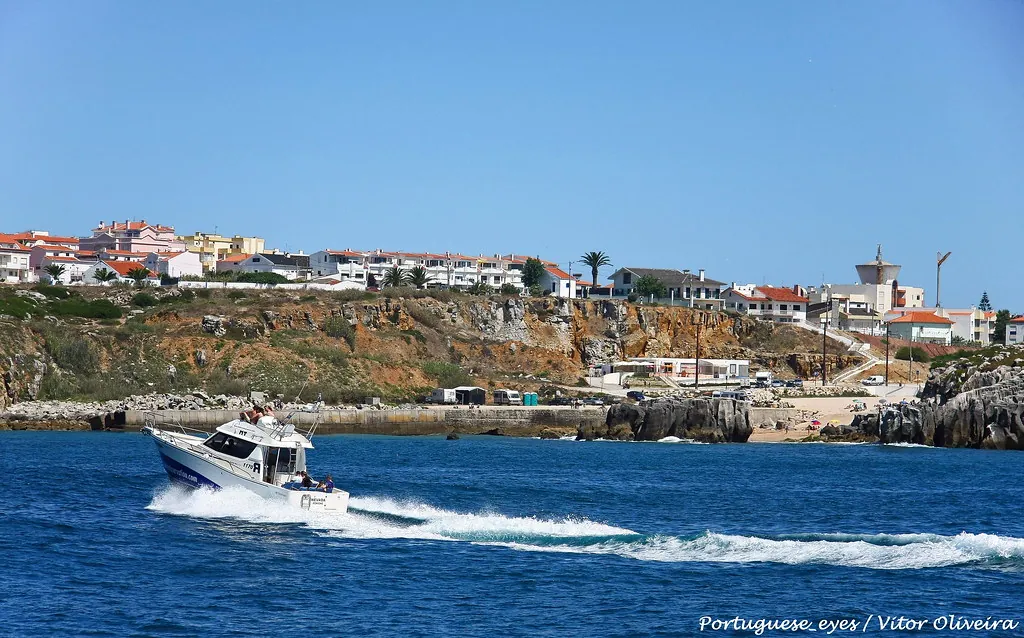
The first thing that hits you is the smell—low-tide iodine, sun-baked kelp, fish scales drying on pier-side trays. Before you clock the fortress walls or the lighthouse on the cliff, Peniche slips in through the nostrils. Then the soundtrack: diesel engines of returning trawlers, halyards clinking against masts, gulls shrieking over discarded sardine heads. The wind never drops. It arrives from the north-west, freighted with salt that settles on skin and seasons lips even three streets back from the spray. This is a fist of limestone jutting into the Atlantic, ringed by cliffs that drop forty metres straight into white foam. The light here is proprietary—ricocheting off whitewashed terraces, glancing off the azulejo-trimmed windows, until mid-afternoon everything quivers in an almost violent brightness.
Stone That Holds, Stone That Frees
Peniche Fortress scars the skyline like a geological afterthought. Raised in the sixteenth century to see off Barbary corsairs, its star-shaped geometry—angular bastions, dry moat, metre-thick stonework—later became the stage for twentieth-century resistance. Mário Soares was imprisoned here in 1969; communist leader Álvaro Cunhal escaped in 1960 via a ladder of knotted sheets, a jailbreak still taught in Portuguese schools. Walk the magazine corridors today and the air remains clammy even in August, a chill that forces you to imagine months of forced silence broken only by Atlantic gales. National-monument status protects the structure, yet locals still treat it as the town’s moral ballast: impossible to ignore, harder still to forget.
A stone’s throw away, the parish church displays a portal of early Manueline lace—stone ropes, armillary spheres half-eroded by brine—while inside the nave smells of beeswax and 400-year-old cedar. Follow Rua da Aurora to Cabo Carvoeiro lighthouse, operating continuously since 1790; its rotating beam still shepherds fishermen home and, at dusk, provides Instagram gold as the horizon dissolves copper into cloud.
Salt on Skin, Sardines on Coals
Peniche’s cuisine is not listed—it is overheard, inhaled, cracked between molars. Listen for the hiss of sardines hitting charcoal in summer, fatty smoke drifting across the harbour. Catch the scent of caldeirada, the fishermen’s layered stew—potato, onion, tomato and the morning’s catch—simmering in clay pots outside backyard kitchens. Feel the knuckled texture of gooseneck barnacles prised from wave-beaten basalt, served raw so the Atlantic brine bursts inside your mouth. Orange-lobster shells stain arroz de marisco a sunset hue; fried eel shatters like glass; lobster soup wards off a northerly night. End with conventual sweets: encharcadas—egg-yolk threads drowned in syrup—and cinnamon-dusted bolinhos de amor, their sweetness the foil to every preceding grain of salt. Look for two protected names on market stalls: DOP Pêra Rocha pears, granular and juice-heavy, and Alcobaça IGP apples, sharp enough to make a sailor wince.
Twenty Beaches and an Archipelago at the Edge of the Map
The Peniche peninsula folds and refolds into more than twenty beaches—some powder-fine, others shingled—and each answers to a different wind. When a north-easterly blows, Praia da Consolação shelters; when Atlantic groundswell stacks up over the Supertubos sandbar, it spits out the cylinder that earned the break its nickname, “European Pipeline”. Every October temporary grandstands sprout on the dune as the World Surf League rolls in; local hero Tiago “Saca” Pires, the first Portuguese qualifier for the championship tour, still paddles out before dawn.
Yet the real astonishment lies ten kilometres offshore: the Berlengas archipelago, a drowned volcano designated a strict nature reserve. Boats leave Peniche harbour at nine; within twenty minutes you can be eye-to-eye with a fin whale, second largest animal on earth, breaching inside the five-mile limit. On Berlenga Grande, sleep in the converted seventeenth-century fort or camp under a sky so dark the Milky Way casts shadows. Back on the mainland, the Seven Valleys walking trail threads the cliff tops, threading sea caves accessible only by rib. Inside, refracted emerald light paints cathedral-sized vaults where monk seals once pupped.
Crossroads on the Cliff
Peniche sits on the Coastal Route of the Camino de Santiago; hikers arrive wind-lashed and salt-crusted to stare at the same horizon that once terrified medieval pilgrims. The town is anchor point of the West Geopark, and every footpath is a lesson in tectonics—compressed Jurassic strata tilt seaward like volumes on a shelf. With 13,000 inhabitants squeezed onto a thumbnail of land, urban density rivals Porto’s, yet tractors still winch boats onto the beach at sunset and fishermen mend nets spread over garden walls. On the first Monday of August the harbour road clogs for the Procession of Nossa Senhora da Boa Viagem: the Madonna of Safe Voyages carried shoulder-high between lanes of candle-lit boats, incense competing with ozone. Three weeks later Carnaval—documented here since 1912—unleashes brass bands and cross-dressing matrons, proof that Peniche celebrates the sacred and the profane with equal gusto.
Evening, Cabo Carvoeiro viewpoint. The wind drops for a heartbeat. Sun sinks behind the Berlengas, islands now black stencils against a burning sky. Salt crusts your jumper; barnacle liquor lingers under fingernails. And long after you leave, that low heartbeat stays in the inner ear—the Atlantic breathing against the stone fist that is Peniche.