Full article about Ajuda: Lisbon’s Wind-Kissed Ridge of Palaces & Pilgrims
Above Belém, Ajuda’s palace gardens catch Atlantic gusts and centuries-old pilgrim paths.
Hide article Read full article
The Hill that Faces the Tide
At 123 metres above sea-level, the wind off the Taguar first hits Belém’s monuments, then slams into the garden wall of the Palácio Nacional da Ajuda. You feel it on the esplanade outside the botanical garden: a salt-laced blast that rattles the jacarandas and reminds you Lisbon still looks seaward, not inland. Ajuda occupies the highest ridge west of the Baixa; it was never the city’s engine room, rather its green room – the place where the court decamped after the 1755 earthquake, where ladies-in-waiting once strolled gravel alleys between camellias, and where the limestone still carries the soot of empire.
Sixteen scars of stone
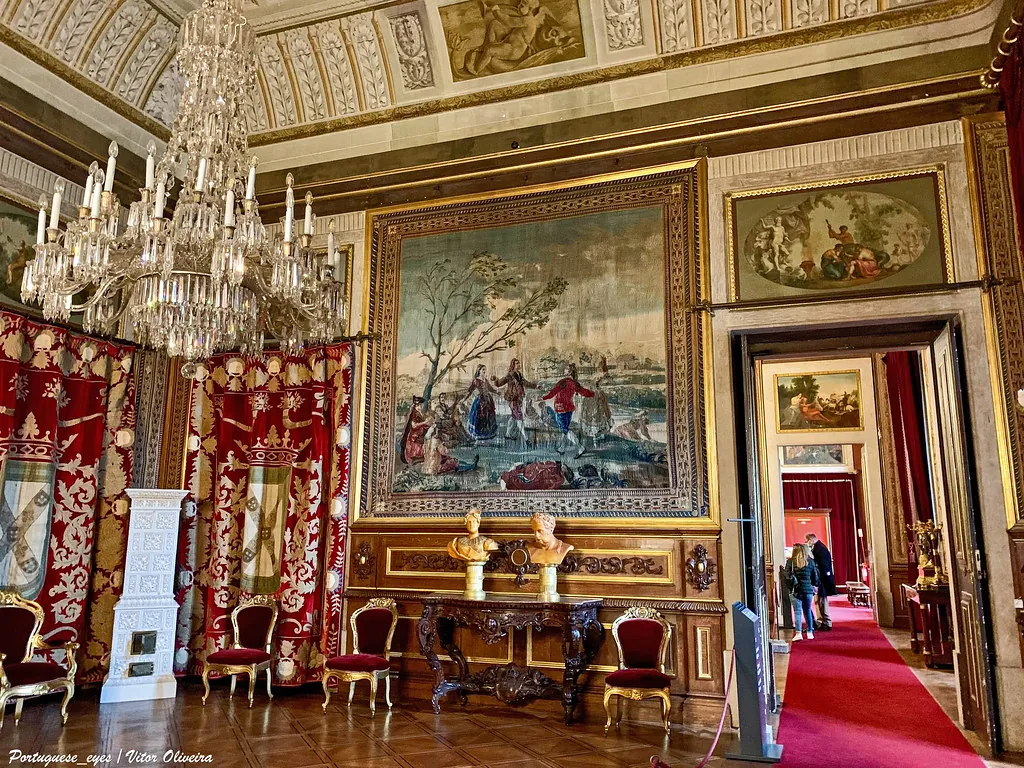
Few square kilometres in Portugal pack such a dense constellation of monuments. Sixteen classified buildings – six of them National Monuments – sit inside 288 hectares. The Jerónimos monastery and Belém tower draw the tour buses, but Ajuda’s real curriculum vitae is scattered in between: nine “Properties of Public Interest” that jump from Manueline rib vaults to Neoclassical powder magazines, from a 17th-century pipe-factory to a decommissioned gunpowder storeroom now used for contemporary-art pop-ups. The Palácio Nacional da Ajuda itself – begun in 1802, still technically unfinished – rises like a bleached ocean liner run aground. One façade is dressed, the other raw stone; ambition halted mid-sentence.
Demography in slow motion
Census 2021 logged 14 306 residents, giving a density of just under 5 000 per km². The twist: pensioners outnumber children two-to-one. Walk Rua dos Bem Lembrados at 11 a.m. and you’ll meet men in pressed trousers reading A Bola on the granite benches, motionless except to track the slow arc of a caravel-shaped cloud. This is not abandonment; it is custom made audible – the tick of a neighbourhood that has already seen everything once.
Four ways to Santiago, one starting whistle
Lisbon’s outbound pilgrim spiderweb converges here. The Coastal, Interior, Torres and Fátima variants of the Camino all cross Ajuda before they peel away north. The last taste many walkers have of the capital is a wedge of DOP Azeitão sheep’s-milk cheese bought at Mercearia da Ajuda on pedestrianised Rua da Junqueira, or the sour-cherry nip of a ginja drunk standing up at Café São José by the garden gate. The parish sits inside the Lisboa wine region – unfairly dismissed as light and acidic until you realise that Atlantic snap is exactly what you want with the estuary breeze.
Pantry of the estuary
Ajuda’s 183 guest rooms give visitors a purchasing base for the entire country. Within a ten-minute radius you can source Alentejo ham, Rocha pears, Ribatejo olive oil and Aveiro’s ovos moles – none of it grown here, all of it funnelled through the capital’s wholesale docks. The neighbourhood has always been a hinge: between palace and quay, between court protocol and the smell of sardines grilling under the 25 de Abril bridge.
Honey-coloured light on limestone
Come five o’clock the sun lies almost flat against the palace façade. The stone turns the colour of burnt honey, and the Tuscan columns throw shadows long enough to read the hour like a giant sundial. Down the slope, the Taguar glints, indifferent. The same wind that worried the queens’ shawls two centuries earlier picks up salt and estuary mud and delivers it to the terrace – the first and last signature of Ajuda, older than any Manuine rope-carving, fresher than tomorrow’s tide.