Full article about Ramalde: Porto’s granite lungs amid the rush
Visigoth-named lanes, hidden quintas and dew-drenched oaks survive between hospital towers.
Hide article Read full article
Ramalde: where Porto still exhales between granite walls and tarmac
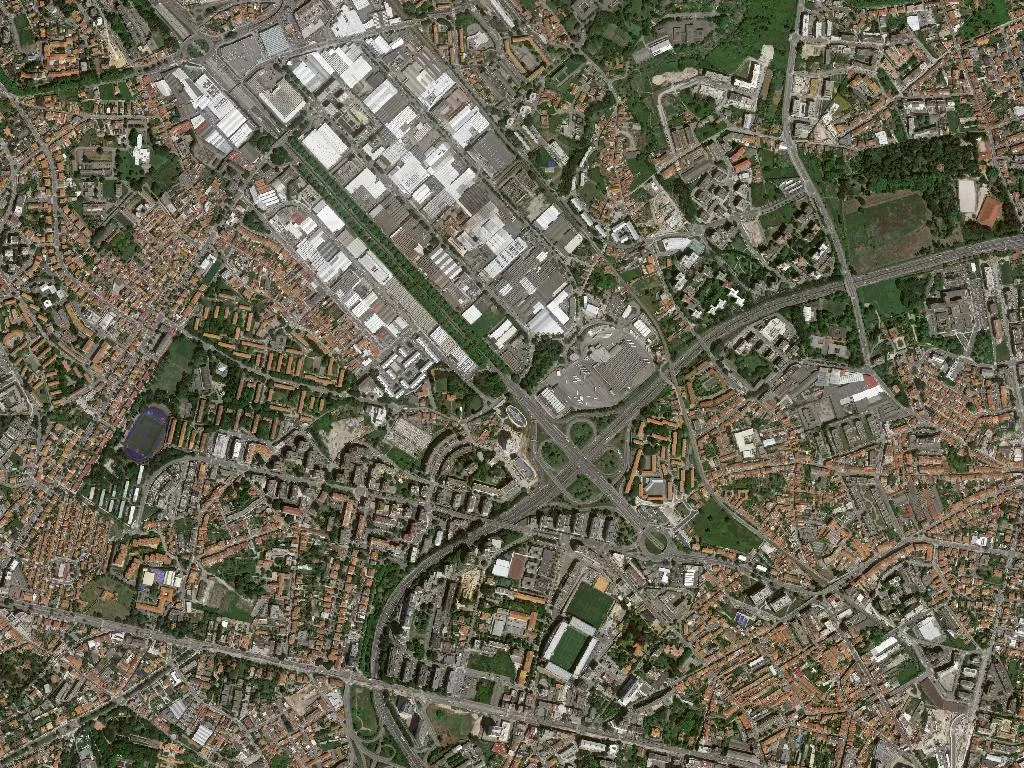
The first sound is the staccato of commuter shoes on poured concrete—hands clamped around paper cups of milky coffee, eyes on a WhatsApp screen. Then you duck down a side lane where a lichen-flecked wall shoulders the pavement away from the street and the tempo changes. Air arrives cool and leaf-green, a note that belongs to no arterial road. It is the scent of soil that still survives beneath the foundations, the memory of a place that was farmland before it ever dreamed of becoming a city. Ramalde occupies that exact borderline: 38,847 people squeezed into less than six square kilometres, yet fragments of its agrarian past refuse to be bulldozed away.
A Visigoth echo in the name
Say “Ramalde” aloud and you are half-speaking Visigoth. Linguists trace the word to the Germanic rama—a branch, something verdant—and the suffix -alde, a calling-card of the tribes who galloped across the Iberian north-west in the sixth century. The settlement was officially elevated to a parish in 1836, during the Liberal reforms, but for centuries it remained an scatter of smallholdings worked by tenant farmers. The rupture came in the 1950s, when the municipal map was overwritten by the new Hospital de São João and a lattice of high-speed roads. Orchards became cul-de-sacs; loose-stone walls were swapped for curtain-walled flats. Still, pockets held out.
Manor houses wedged between tower blocks
Quinta do Covelo and Quinta de Ramalde are two such hold-outs—small country estates whose granite hides have turned gun-metal grey after centuries of Atlantic rain. Walk the public park that now envelopes Quinta do Covelo and you stand under oaks and London planes so dense that the whine of the VCI orbital is reduced to a faint insect buzz. Dawn is the best time: dew diamonds the grass, blackbirds out-shout the buses. Equally terse is the eighteenth-century Igreja Matriz, rebuilt on medieval footings; inside, light slips through the slit windows at such an oblique angle that the stone itself seems to blush. A few streets away, the thirteenth-century Capela de São Bartolomeu keeps its annual appointment with the neighbourhood’s patron-saint procession, a brass band threading between parked Citroëns and recycling bins.
Sardine smoke and basil kisses on São João
Ramalde’s calendar is Portuense, not suburban. On the shortest night of the year São João detonates: hammers tap strangers’ heads, sardines blacken over vinegar-soaked grills, and the sky is punctuation-marked with fireworks. Late August belongs to São Bartolomeu—smaller, more parochial, but no less resonant, with the same filarmónica playing waltzes that your grandparents swayed to. The cycle closes in September with Nossa Senhora da Saúde, when the parish council closes off Rua de Pedro Hispano for a weekend fair of chorizo-filled bread and fizzy vinho verde. Concrete may have arrived, but the social grammar of the village—procession, bandstand, paper lantern—still functions.
Three Santiago routes cross at the traffic lights
Here is the detail that startles first-time visitors: Ramalde is a triple junction of the Camino de Santiago. The Central Portuguese, Coastal and Northern routes all converge on these streets, turning an otherwise ordinary zebra crossing into a waypoint first noted in twelfth-century codices. Backpackers with scallop shells consult their phones beside mothers pushing prams; the slow, metronomic gait of the pilgrim rubs against the brisk click-clack of office heels. That visual dissonance is perhaps the most honest portrait of Ramalde: a place people pass through that is also, stubbornly, a place people stay.
Where the city stalls, the park begins
The terrain is gentle—seventy metres above sea level—so do not expect belvedere drama. What you get instead is direct access to the 83-hectare Parque da Cidade, Portugal’s largest urban park, designed by Sidónio Pardal and opened in 1993. Within five minutes you can trade apartment corridors for sea-wind and limpid lakes that mirror Atlantic cloud. The small streams once braided across Ramalde—Sarmento, Águas Férreas—were culverted long ago, yet their ghost persists in winter moisture that rises through the tarmac and sweetens the air with fern.
Bedrooms at city-centre prices, minus the markup
With 176 registered lodgings—Airbnb flats, family-run guesthouses, even a deconsecrated convent reborn as a hostel—Ramalde has become the pragmatic traveller’s base camp. A fifteen-minute metro ride delivers you to Aliados, yet a double room costs roughly half the going rate in the Unesco-listed centre. Density tops 6,600 inhabitants per square kilometre, so a café counter, a late-night chemist or a custard-tart fix is never more than a corner away. There are no miradouro selfies; there is everyday life, priced for locals rather than tourists.
Evening. The low sun ignites the glass of the high-rises and the dominant sound is not traffic but the small domestic repertoire of Portuguese dusk: a balcony door sliding open, the chime of a teaspoon against porcelain, two neighbours leaning out to discuss tomorrow’s football. Multiply those micro-gestures across 582 hectares and you understand why Ramalde matters: it is not the backdrop to Porto—it is the fabric of which the city is actually made.