Full article about Cabril: granite hamlet where silence tastes of thyme
Walk empty rye lanes, sleep in a threshing-floor cottage, eat IGP kid under mulberry shade
Hide article Read full article
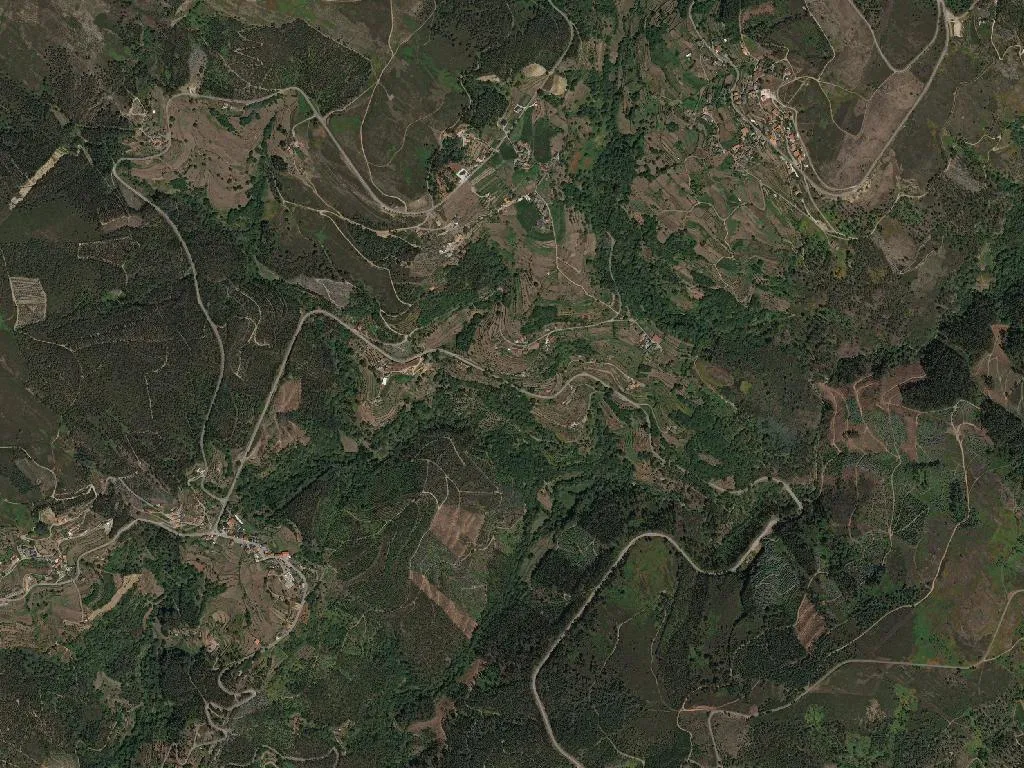
At 413 m the granite houses store the last of the sun, releasing it slowly as the afternoon fades. Cabril spills down a spur of the Serra do Arada in southern Castro Daire, 22 km² of meadow and scrub where the loudest sound is a collie’s half-hearted bark or the groan of a wooden gate. Three-hundred-and-thirty-five residents are registered; 150 are over sixty-five. Only twenty-three children still kick up the red dust between plots of rye.
Breathing-room
Population density is fifteen per square kilometre, which means you can walk for an hour and meet no one except the post-lunch tractor driver raising two fingers from the steering wheel. Six old threshing floors have been turned into self-catering houses: metre-thick stone walls, timber salvaged from the primary school, cotton hammocks strung under the mulberry. They are the only formal beds available; the nearest hotel is 20 km away in Viseu.
Cabril sits just inside the Dão demarcation, yet vines are an after-thought. Instead, the folds are given over to wild broom, rye pasture and the water-meadows that fatten the kids and calves awarded IGP status—Cabrito da Gralheira and Vitela de Lafões—animals that graze unrestrained and taste unmistakably of this thyme-scented upland.
Footprints in the wrong direction
The Torres variant of the Caminho de Santiago cuts through the village, a lesser-trodden detour favoured by walkers who have already ticked off the coastal routes. It swaps way-marked boardwalks for granite sett lanes that dwindle into hoof-churned earth. Pilgrims top up bottles at the 1903 fountain, trade greetings with septuagenarians in plastic slippers, then climb towards the 700 m contour. Guidebooks grade 35 % of the stage “difficult”; the reward is a silence you can almost lean against.
The unlisted inventory
Only one building enjoys official protection: the eighteenth-century parish church rebuilt over a medieval chapel. No tickets, no audio guides, no coach bay. The real archive is the unwritten one—dry-stone walls that have divided families since the 1800s, a granite wayside cross rubbed smooth by palms, a stone granary still stacked with last year’s maize, and the ruined olive press at Quinta do Pinheiro where iron gears have rusted since Kennedy was in the White House.
Meat is the local currency. On feast days wood smoke drifts from the communal bread oven, relit in 2019 by the parish council. Roast kid is lowered on a wire tray; chunks of veal and potato stew bubble in black pots; smoke-cured sausages hang like burgundy bangles inside larders scented with bay. There is no tasting menu, no wine flight—just what the garden produced and the smokehouse saved.
Twilight stretches oak shadows across the paddocks. A single chimney issues a vertical pencil of smoke. Cabril offers no spectacle, only the gravitational pull of a place that counts time by cracks in the render and has no intention of hurrying the story.