Full article about Mezio & Moura Morta: barnacle villages on Serra de Montemuro
Stone hamlets, pine-scented air and goat reared on needles above Castro Daire
Hide article Read full article
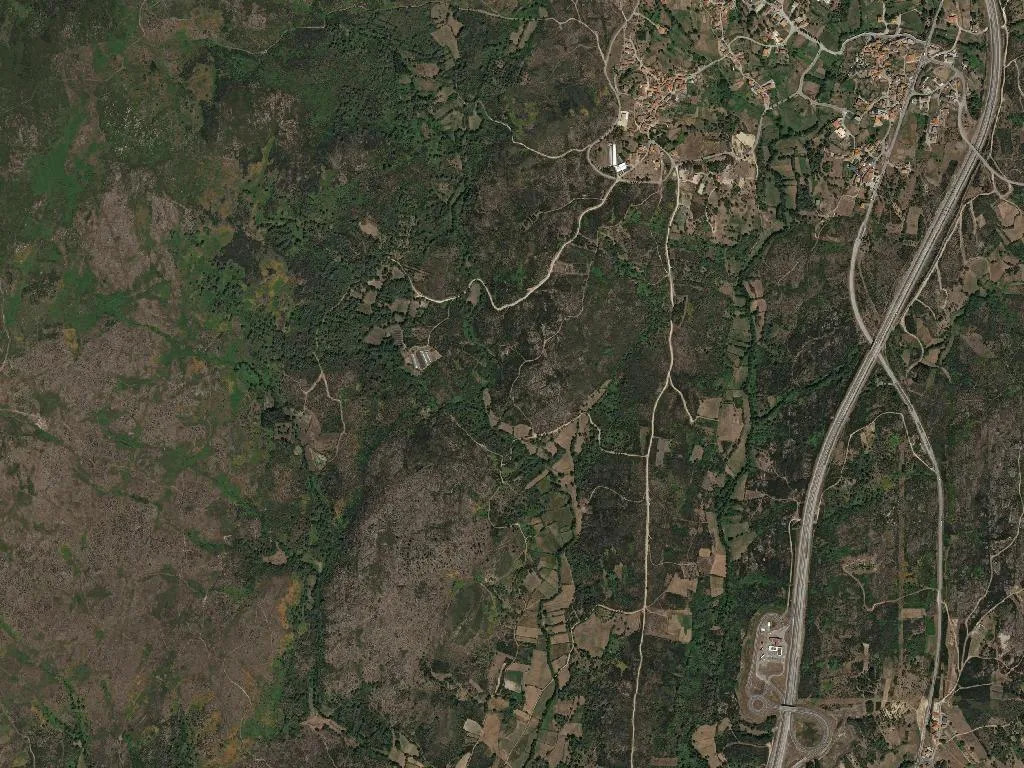
The tarmac unravels into schist beneath the tyres, each switchback gaining 885 m until the air thins and smells of scorched pine and freshly-turned potato drills. Mezio and Moura Morta are not “on top” of anything; they cling to the southern face of the Serra de Montemuro like barnacles, their hamlets scattered down the scarps as if rolled there by a careless giant.
All 532 residents still fit into Crispim’s café on a Friday night. Density here is measured in acquaintance: José da Cova can name a driver by the cough of his engine; Amélia da Lixa recognises the neighbour’s cat as easily as a cousin’s voice.
Stone, Height and Pilgrims
The Caminho de Torres has crossed these ridges since medieval times, but no one calls it that. It is simply “the upper track”, used for taking donkeys loaded with firewood down to Castro Daire’s market or for pilgrims who knock at dusk asking for water. When the fog drops, it is still possible to take the right-hand fork and end up in Moura Morta when you meant to reach Mezio.
Granite is not a feature; it is what remained after everything else vanished. Houses were built with what the mountain surrendered: finger-splitting stone, one-tonne slabs, winter-cracking schist. The smokehouse is not a décor prop; it is where António do Souto hangs the pig he slaughtered on St Martin’s Day, beside the alheiras his wife cased while he sipped bagaço.
Flavours that Rise
The kid goat does not “graze in meadows”; it is tethered to Joaquim’s cioiro, fed on pine needles and yesterday’s crust. Its flavour comes from what it never tasted: pellets, vaccines, hurry. Lafões veal really is local, reared in wooden byres where cattle shelter when snow closes the pass.
In the smokehouses, ham cures to the calendar of insects: pigs killed in January are ready when the first cicadas sing. No recipe is written; anyone who needs instructions for salting meat learned at a grandmother’s hip before they could read.
Dão wine arrives in five-litre flagons from Zé’s lorry out of Águeda. In Dona Lúcia’s cellar the new wine still fizzes when the clay pot is broached – and the glass is a glass, not a tasting goblet.
Living on the Vertical
The restored cottages are the same ones where Manel’s grandfather was born; now they have central heating, but the cat-flap is retained. There are no hotels because hospitality is understood as leaving the house as you would your own: wood stacked, cake in the oven.
The lane into Mezio has a pinch-point where two cars cannot pass; here you learn hill-start reverse with a ravine on the right while waving “bom dia” to the shepherd bringing his flock down. Night silence is absolute; you can hear the kitchen clock next door.
When the sun drops behind the Marco de Mira, shadows climb the valleys like rising water. One by one the hearths are lit, smoke rising straight because no wind dares turn the corner of the mountain. Mezio and Moura Morta are not a destination; they are a place – the thing that remains when everyone who has left still misses the smell of wet earth.