Full article about Monteiras: Where Granite Breathes & Chouriço Smokes
Monteiras, Castro Daire—granite heights, rosemary-fragrant kids, smoky chouriço and silent shepherd trails above the Bestança.
Hide article Read full article
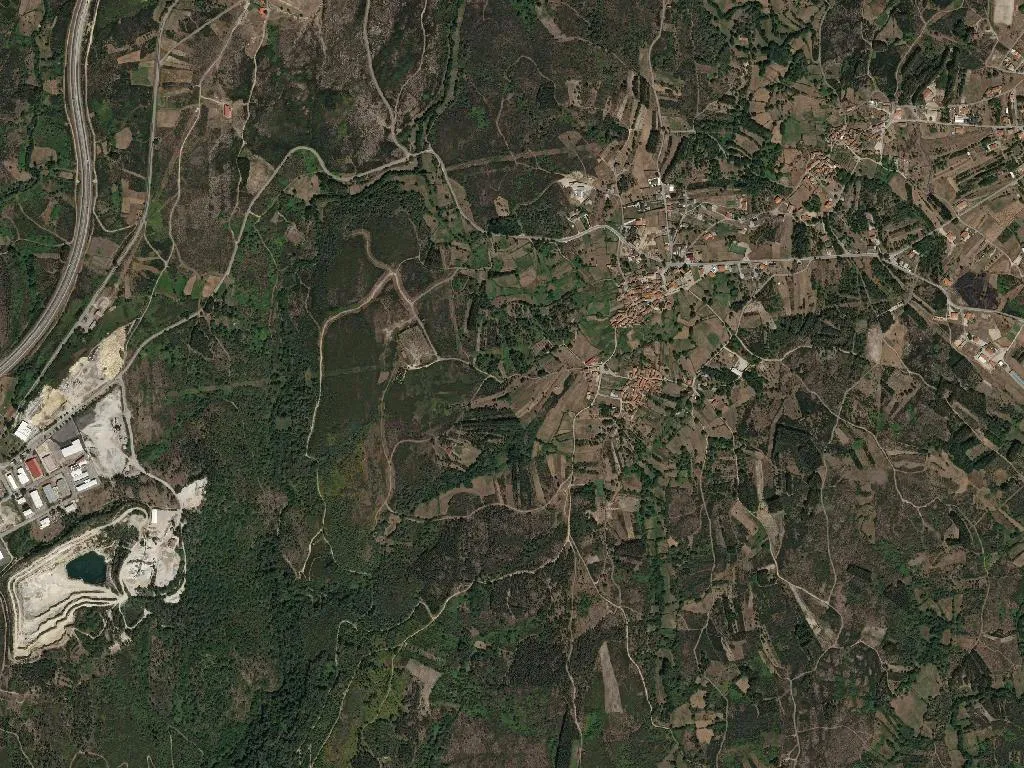
Granite arrives without warning—raw and sun-warm under your palm even when the air is already nipping at your fingers. Sometimes it hulks like a russet wolf sunbathing, sometimes it is simply the mountain’s ribcage laid bare. Wind races up the Bestança gorge, rattles the guesthouse door and slips through the gap, smelling of scorched pine resin and wet goat. The village sits at 880 m, but the climb past the church with a pack on your back makes it feel twice that, heart cart-wheeling in your chest.
High Country, Shepherds’ Rule
Administratively it is Beira-Dão, yet the wine is drunk in the maker’s kitchen, poured into a pharmacy tumbler alongside lupin beans and talk of milk prices. What matters here is pasture: heather, gorse, bearberry—plants the old men still list in Latin. April kids are suckled on their mothers’ milk and smell of rosemary until shearing day. In chimneys, chouriço smokes for three weeks; when the knife finally slices it, the blade is still warm from the bread oven that has just produced wheaten loaves of Cabanas flour. The scent is impossible to catalogue: it clings to hair, to clothes, to memory itself.
On the Torres Stretch
The waymark is a daub of yellow paint flaking off a stone. The path between Monteiras and Vila Moinhos climbs three kilometres through loose grit, then drops as steeply, knees providing the commentary. Pilgrims collect no stamps here—only an apple pressed on them by Dona Amélia and a cup drawn from the Fonte da Pipa spring. There are no shops, no ATMs, only the hush that remains after the flock has moved on.
Of the 404 inhabitants, 38 are in the care home and four attend the primary school, which opens only when a teacher can be found. On Sunday afternoons Cláudio’s bar fills for the match: a bottle of local white, a board of smoked sausages, Benfica at full volume. The dark schist houses are not abandoned; their chimneys re-ignite only when the chestnut harvesters return.
Where the Range Closes In
There is no selfie-ready viewpoint—only the Carrasca sheepfold where the sky feels like a cast-iron lid. When the fog slides in, Sr. Joaquim’s dog barks at the same emptiness his grandparents feared. The sole accommodation is “Casa da Cica”: two bedrooms, flannel sheets, and a cat called Minhoca who decides whether you may enter.
You leave with the burn of the stream that runs beneath the road, the barn-door groan no one has silenced for years, the taste of burnt-strawberry medronho that coats your tongue after the final bend. Monteiras does not register on most maps; it registers in your bones.