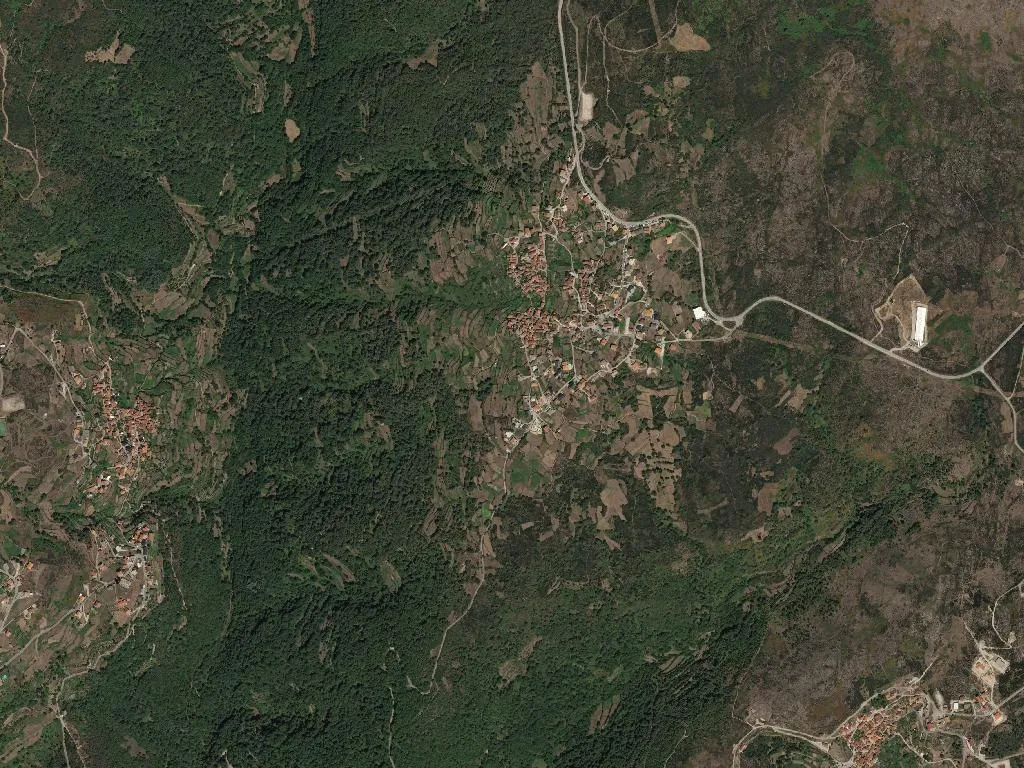
Full article about Picão e Ermida: Cheese, Cork Oaks & Soap-Scented Mist
At 901 m, Castro Daire’s quiet parish swaps cruise crowds for slow-milk cheese and smoke-cured ham.
Hide article Read full article
901 Metres and a Soap Factory
The fog fastens itself to cork oaks and heather like a tongue on broken skin. At 901 m the air is not always thin—sometimes it is laced with detergent dust when the wind swings east and drags the factory’s scent over the ridge. Dawn is different: the smell of wet earth drags you straight back to bare feet in a grandmother’s vegetable patch. Silence is never absolute; a low, constant note of water moves through the plastic pipes the parish council laid two summers ago, a sound you only notice when the generator stops.
There are 415 names on the roll, but the place breathes with fewer lungs. At least thirty of those addresses belong to weekenders who lock the shutters on Sunday night. Of the 27 children the census claims, four arrive only in August, stepping off the Intercidades at Entroncamento with Lisbon haircuts and suitcases full of screen-time.
Height and Flavour
Altitude explains the milk. Up here the grass grows slowly, sugars concentrate, and the cheese arrives at the dairy in Castro Daire with nearly 45 % fat. The Gralheira kid (PDO) is technically from the next parish, yet the same terracotta troughs and chestnut leaves fatten the animals here too. Black pigs still roam the castanhais, their hams cured over oak and then smoked in living-room chimneys until March. Visitors who wander in are not the Douro cruise crowd; they arrive with mis-read maps and an appetite for whatever appears.
There are two guesthouses, not three. One belongs to Amélia, who traded a Parisian accounts office for a granite house and a wood-fired hot tub. The other is Tonho’s son’s project—he painted the corner house matte-white, installed Wi-Fi and called it “slow living”. Both fill up with Lisbon lawyers who whisper about burnout over milky coffee.
On the Torres Detour
The Torres variant of the Camino Portugués sneaks through the parish, but the walkers who climb this far are the ones who deliberately missed the Central route. Yellow arrows sprayed by Zé Mário are fading; the real traffic is on the mountain-club trail that drops to the Fragas de São Simão gorge, where quartzite cliffs give way to a view that erases every memory of the A25.
Rye is still sown—just enough for the dark, dense broa that appears at every breakfast table. Flax has almost vanished, though 82-year-old Elvira keeps a 1940s loom in her cellar and sells hand-woven tea towels for €40 to anyone who understands what they are touching.
Granite is stubborn here, dark and mottled with oxidation; schist flakes into plates that village children use as make-believe dinnerware. When the sun slips behind the 1,382 m bulk of Montemuro, the light passes from honey to slate-blue before switching off entirely. Then the neighbour’s yard lamps click on and the hillside becomes a scatter of small, illuminated theatres: a family spooning soup, a television strobing cyan, a child brushing teeth at an open window.