Full article about Chestnut smoke & granite silence in Reriz–Gafanhão
Castro Daire’s merged villages trade tractors for footpaths, kid for Michelin-free Sundays
Hide article Read full article
Granite Interrupts
Granite intrudes between the chestnut trunks as rudely as a stranger cutting into conversation. Those walls, shoulder-high above the lane, still trace the terraces where my grandfather insisted potatoes “grew with a view”. At 600 m, even August dawns arrive fleece-cool; by ten the sun exacts payment like a magistrate.
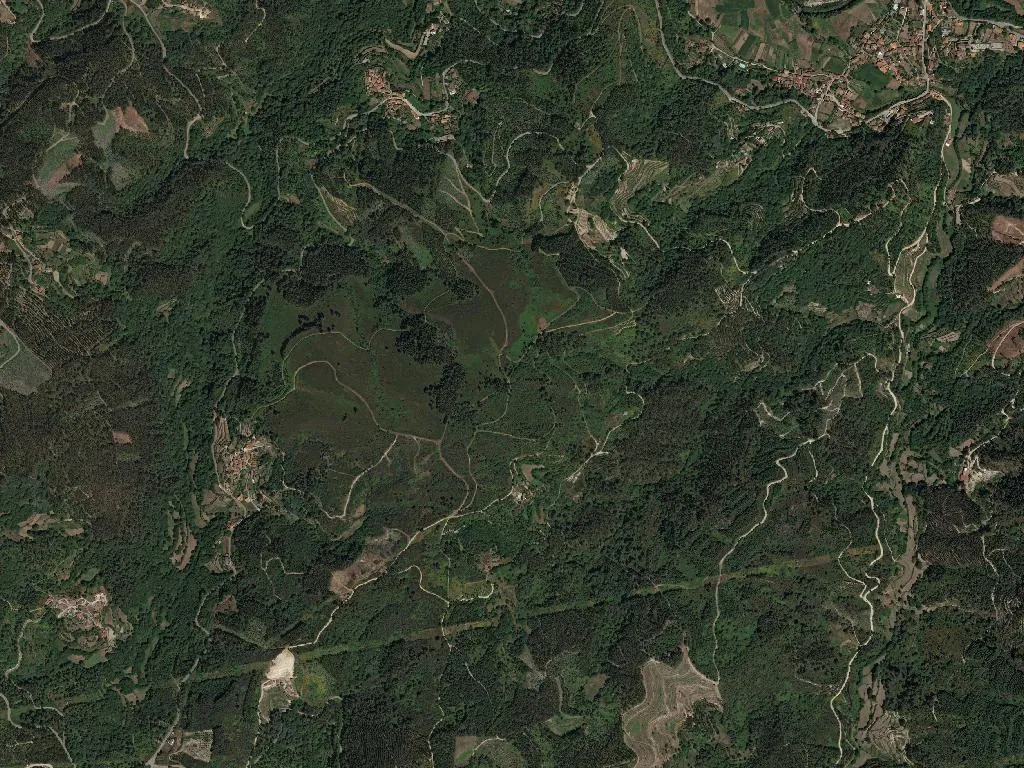
Reriz and Gafanhão were merged on paper in 2013, yet locals know exactly where one village ends and the other begins. Spread across 22 km² of the Montemuro foothills, the silence is measurable: the faint scrape of a key turning in an abandoned house. Of 724 registered residents, half seem to occupy Crispim’s café on Sundays; the rest have relocated to Viseu, France or Switzerland, itineraries that rarely loop back.
What you’ll eat
Kid appears on no blackboard as “IGP”; it is simply Zé’s, reared on his own scrub, acquainted with every chestnut tree. Veal comes from animals that spend their days negotiating granite outcrops in the water meadows—stones the size of giants’ molars. Come November, smoke the colour of blue ink rises from stone chimneys, smelling of oak and postponed rain. The chouriço that emerges needs no social-media campaign—just cornmeal bread and a properly pulled imperial.
What you’ll see
The Torres footpath—an alternative variant of the Camino—crosses the ridge above the villages, but this is no Porto bottleneck. Pilgrims arrive here with blistered feet and wolfish appetites. Yellow dashes are painted directly onto schist: go this way, but don’t complain if you get lost—getting lost is part of the tariff. You may meet Maria heading to her cabbage plot; she’ll offer water, or a fig if the season allows. Hospitality is not a strategy, merely custom.
What remains
Nine ruins have fresh curtains. Outsiders—Lisbon architects, a German ceramicist—bought cheap, injected light where roofs had collapsed, and pay for coffee like everyone else. The young still leave after secondary school, yet those who stay can map every badger track, every mobile dead-zone. In 2024 that cartography is a kind of wealth.
Night settles; wind combs the chestnut leaves like an unfinished sentence. Down the slope a hearth flares, smoke climbing vertically before it vanishes—no theatrics. Crispim locked up an hour ago, but knock and he’ll reopen. World affairs are settled over a fino and a bowl of lupins while, outside, the ridge does what it has always done: waits for tomorrow, neither early nor late.