Full article about Walnut staffs echo through São Joaninho’s valley
In Castro Daire’s highest parish, men still bend walnut into sacred João staffs
Hide article Read full article
Where the valley waits for the walnut to bend
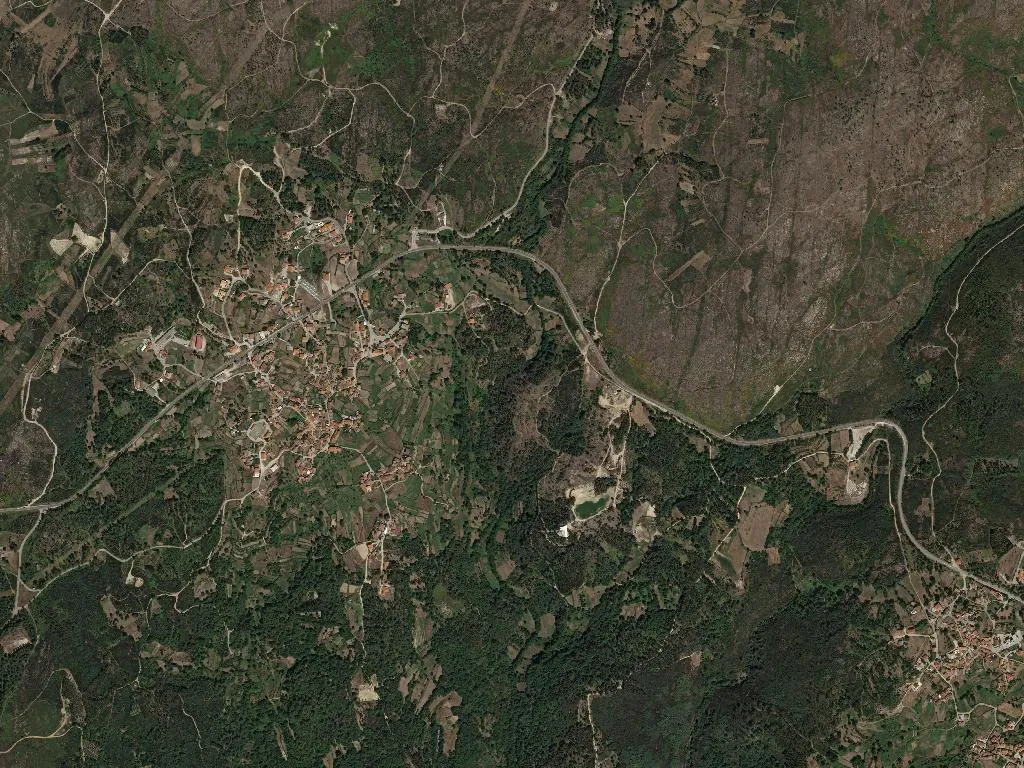
The drums arrive before the procession: a low, deliberate pulse that rolls up the schist flanks of the valley and answers the blackbirds in the chestnut groves. It is late afternoon on the Sunday closest to 24 June and the churchyard of São Joaninho is filling with men carrying carved walnut staffs, each one weighed, swapped and appraised like a dowry. At 715 m the air is thin enough to carry both smoke and sound; oak-fire and roasting kid drift upwards in a single, slow plume while the Ribeira valley below dissolves into a water-colour wash of green and slate.
The staff that names the place
This is the only parish left in Castro Daire where the traditional bordão de São João is still made. The wood is cut from valley-side walnut, steamed, bent and left to season until the curve sets naturally—seven winters, sometimes eight. No-one hurries the process; you cannot force a tree to remember the shape of a human hand. Inside the 1568 granite church the gilded baroque altarpiece glints against bare stone like a reliquary of light, while outside the 1743 cross keeps its own patient calendar, the date still legible on the base despite two centuries of Atlantic rain.
Footprints on the same ground
Yellow scallops and blue arrows of the Torres Way are daubed on the gateposts of the PR4 loop that leaves the village, climbs through heather and pyrenean oak, and returns eight kilometres later having touched three centuries in as many hours. The path detours to the 1892 chapel of Nossa Senhora da Conceição, rebuilt after a hay-loft spark became inferno, then drops to a water-mill restored in 2004 whose paddles still grind the maize that feeds the village broa. A single-arch iron-rib bridge, riveted in 1873, spans the stream in two strides; by 08.00 the granite setts are slick with dew and the plateau wind insists on a scarf even in June. From the natural belvedere above the cemetery the Vouga valley unrolls westward, a pleated succession of gorse, strawberry-tree and broom where the dartford warbler keeps hidden time.
Clay pot and Dão in the glass
Lafões kid is braised overnight in terracotta with a bottle of parish Dão—Adega da Levada’s entire annual run of 3,000 dark, granite-cool reds. The same pot yields rojões punched through with sweet paprika and garlic, served beside butter-bean soup laced with village chouriço. At O Parque café the corn bread arrives hot, wrapped in a tea-towel with slices of mountain cheese that António has been coaxing from raw goat’s milk since 1978. In December anise biscuits and squash jam scented with quill cinnamon appear for the Conceição fair; on the night of 5 January the Cantar dos Reis quartet shuffle through 348 doors singing “Ó que linda manjareira”, a melody carried by grandmothers since gramophones were science-fiction. Forty-eight hours later the Entrudo ends the cycle—woollen masks, cowbells, and the last glass of red before Lent.
Between the feasts, life reverts to a quieter score: the click of iron hoops on the village bowling lane, hams sweetening in the eaves from June to February, the river talking to itself under the 1873 span. Somewhere down-slope a young walnut straightens in the wind, practising patience.