Full article about Viseu: Dawn Bells Over Granite Time
Cathedral chimes echo above Roman stones and Renaissance panels in Portugal’s layered heart.
Hide article Read full article
Viseu: Footsteps on Granite
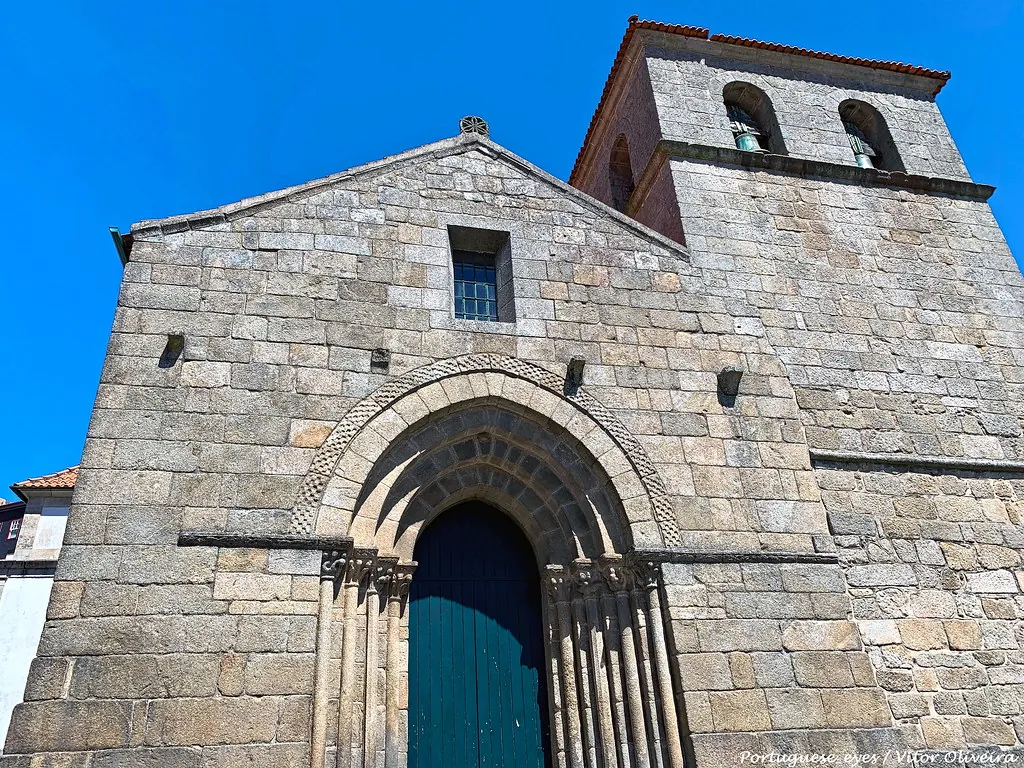
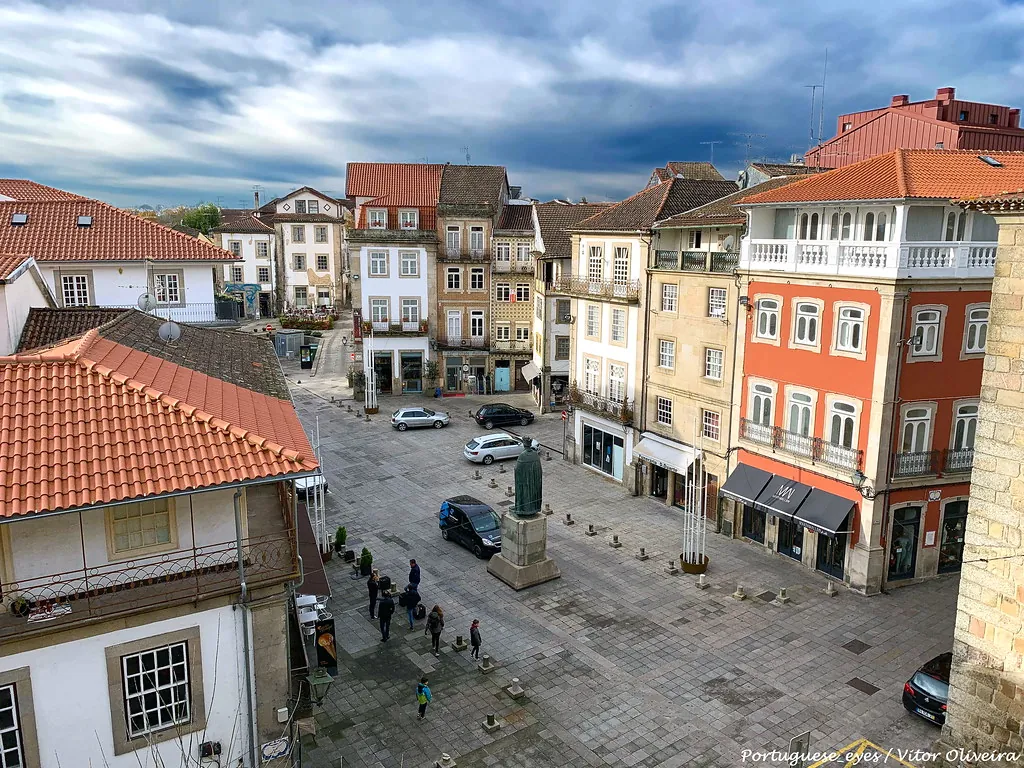
The cathedral bell strikes before you see the tower. A low, bronze note rolls across the stone apron of the Sé, spills down the alleys and dissolves among slate roofs. Dawn, and the granite is still storing last night’s cold; run a palm across a façade and your skin comes away freckled with mineral dew. Half-way along Rua Formosa a glass panel lets you peer through the pavement to a first-century Roman wall lying less than a metre beneath your shoes. In Viseu you walk on layer-cake time.
Pavement of Empires
The Romans called it Vissaium, a crossroads between Mérida and Guarda, Coimbra and Salamanca. Two gates survive from the seven that once locked the fifteenth-century walls: Porta do Soar and Porta dos Cavaleiros. Step beneath the latter and sound collapses – the square’s hum vanishes, replaced by the scrape of your own soles on uneven cobbles. Excavations begun in the 1920s by archaeologist José Coelho mapped a forum, baths and cemeteries, sketching the skeleton of a regional capital. Outside town, the three perfect arches of Pêro Viseu bridge still carry foot traffic over the Ribeira da Meimoa, two millennia of water having polished the stone to river-pebble smoothness. At Paranho de Besteiros a 130-metre stretch of Roman roadway remains in its original width, cart-ruts carved ankle-deep into the rock.
Renaissance Light in the Nave
The cathedral rises like a geological accident, rebuilt in strata since the twelfth century. Beside it, the episcopal palace turned Museu Grão Vasco is the country’s only national museum of Renaissance art outside Lisbon or Porto. Inside, the canvases of Vasco Fernandes (c. 1475-1542) trap the same granite-filtered light you breathe outside: ochres, bottle greens, flesh tones that seem to pulse. His workshop partner Gaspar Vaz completes the conversation. Climb the tower and you’ll find the 1838 clock gifted by Queen Maria II still ticking with its original escapement – audible only when the wind drops and the square empties. Downhill, the seventeenth-century Misericórdia church flashes cobalt-indigo azulejos that catch the morning sun like polished slate. In the Santa Maria do Couto quarter, granite lintels still carry medieval coats of arms; fingertips can trace each carved ridge.
Kid Goat and Dão in a Clay Pot
The aroma arrives first – sweet paprika and rendered pork fat. Lunch is rojão, diced pork fried until the edges caramelise, but the dish that pins Viseu to the map is chanfana: goat (or billy-goat) slow-braised in clay with local red wine, its ink-dark sauce soaked up by Coval maize bread torn by hand. The city’s restaurants can, on any given day, assemble a seven-item charcuterie board of protected produce: runny-centre Serra da Estrela DOP cheese, warm Requeijão DOP, Serra lamb, Gralheira kid, Arouquesa beef, Lafões veal. In the glass, Dão reds – Touriga Nacional and Alfrocheiro – grip the palate with schist-sharpened tannins; Encruzado and Malvasia whites slide alongside the cheese as if composed in the same key. Convent sweets finish the score: egg-yolk “cigars”, golden thread fios-de-ovos, Vouzela pastries and the misleadingly named bolo podre – “rotten cake” – dense with nuts and port-soaked fruit.
Forests, Viaducts and Tunnel Silence
Perched at 437 m between the Estrela and Caramulo massifs, Viseu inhales Atlantic air. Fontelo Park, an 18-hectare arboretum planted by Benedictines in the 1500s, works as an urban forest where temperature drops six degrees beneath 300-year-old chestnuts. Rent a bike and the Ecopista do Dão carries you 47 km south-west to Santa Comba Dão along the old railway bed, through iron viaducts and tunnels where sudden cold clamps around you and tyre noise ricochets off wet schist. Beyond the cuttings, Dão vineyards and cork-oak scrub stretch across granite plateaux scored by streams.
Night reclaims the cathedral square. The 1838 clock fires nine strokes; each one lingers against the stone, reluctant to fade. What you carry away from Viseu is not silence but the after-vibration – the moment when granite continues to sing once the bell is still.